
Exodus 2:1-4 is about how despite being faced with adversity and danger, God’s presence and providence can protect and guide individuals towards fulfilling their destiny and purpose.
1 Now a man from the house of Levi went and took as his wife a Levite woman.
2 The woman conceived and bore a son, and when she saw that he was a fine child, she hid him three months.
3 When she could hide him no longer, she took for him a basket made of bulrushes and daubed it with bitumen and pitch. She put the child in it and placed it among the reeds by the river bank.
4 And his sister stood at a distance to know what would be done to him.
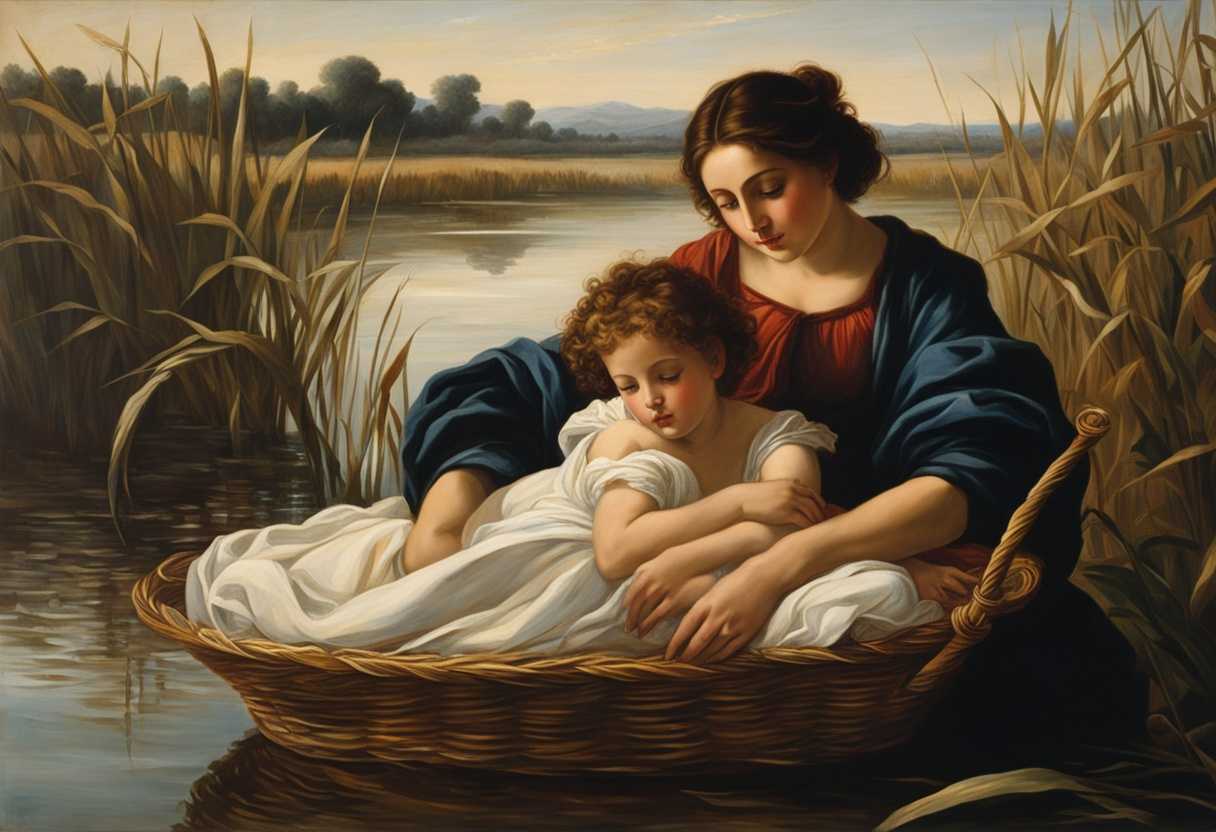
Setting the Scene for Exodus 2:1-4
In Exodus chapter 2, we find ourselves at the banks of the Nile River in ancient Egypt. The scene is set with a Hebrew woman named Jochebed, who has just given birth to a baby boy. Due to the cruel decree of Pharaoh to kill all Hebrew male babies, Jochebed is faced with a heart-wrenching decision. In a desperate attempt to save her son, she places him in a basket made of reeds and waterproofed with tar, and then sets him afloat on the Nile River.
As the basket gently floats along the river, we see Miriam, the baby’s sister, watching from a distance to ensure her brother’s safety. The tension is palpable as the baby’s fate hangs in the balance. Meanwhile, Pharaoh’s daughter, who has come to the river to bathe, notices the basket among the reeds. Filled with compassion, she sends her maidservant to retrieve it. When she sees the baby inside, she is immediately drawn to him and decides to adopt him as her own, unknowingly saving the child from the fate that awaited so many other Hebrew baby boys.
The setting is one of contrast and tension, with the lush banks of the Nile River providing a serene backdrop to the dramatic events unfolding. The convergence of these characters – Jochebed, Miriam, Pharaoh’s daughter, and the baby Moses – sets the stage for a remarkable story of courage, faith, and divine intervention.
What is Exodus 2:1-4 about?
This powerful passage from Exodus unveils the extraordinary beginnings of one of the most iconic figures in biblical history, Moses. The narrative portrays the intertwined themes of divine providence, courage, and deliverance. As we delve into the text, we confront the poignant image of a helpless infant placed in a basket, set afloat in the perilous waters of the Nile. Isn’t it remarkable how even in the face of immense danger, God’s protective hand is at work, orchestrating events to ensure the safety of his chosen servant? Moses’s rescue story serves as a steadfast testament to the unwavering faith and sacrifice of his family. Can you imagine the profound trust it must have taken for his mother to place him in that basket, entrusting his well-being to the unknown currents of the river? This act of faith sets in motion a series of events that will ultimately culminate in Moses’s pivotal role as a leader and liberator for the Israelites. It is a reminder that even in the midst of uncertainty, we must have faith that God’s plans for us are greater than we can comprehend.
Understanding what Exodus 2:1-4 really means
The Book of Exodus, the second book of the Bible, recounts the Israelites’ departure from Egypt. In Exodus 2:1-4, we are introduced to the birth of Moses, a significant figure who would later lead the Israelites out of Egyptian bondage. The verses begin with the union of two members of the tribe of Levi, a tribe designated for religious duties, highlighting the lineage from which Moses would come.
The birth of Moses is marked by his mother’s recognition of his beauty and potential, leading her to hide him for three months to protect him from Pharaoh’s decree. This act of maternal instinct and faith sets the stage for the extraordinary events that would follow. Placing Moses in a makeshift ark and entrusting him to the river’s currents, his mother demonstrates a profound trust in God’s providence amidst adversity.
The vigilance of Moses’ sister, who watches over him from afar, underscores the family’s deep bond and hope for his safety. This familial unity and determination to protect the child reflect themes of love, faith, and resilience that resonate across time and cultures. The story of Moses’ birth serves as a poignant reminder of the lengths to which parents will go to safeguard their children and the unwavering trust they place in God’s plan.
In Hebrews 11:23, Moses’ parents’ faith and courage are commended, emphasizing the importance of trusting in God’s guidance even in the face of daunting challenges. Psalm 139:13-14 further reinforces the inherent value and beauty of every individual, echoing the sentiment embodied in Moses’ mother’s actions. These passages invite reflection on the sanctity of life and the profound impact of parental love and faith.
The narrative of Moses’ birth continues to resonate today, prompting us to consider the enduring themes of faith, courage, and parental devotion. In a world marked by uncertainty and adversity, the story encourages us to emulate the unwavering faith and hope displayed by Moses’ family. Just as Moses’ mother took bold steps to protect her child, individuals today are inspired to act with faith and courage in the face of challenges, trusting in a higher power’s providence.
In contemplating the account of Moses’ early life, we find a timeless message of resilience and trust in God’s plan. It calls us to approach our own trials with the same unwavering faith and determination, drawing strength from the enduring example of Moses’ family. May we be encouraged by their story to face adversity with courage, hope, and a steadfast belief in the guiding hand of God.
How can we trust in God’s timing and plan?
We can trust in God’s timing and plan by acknowledging that He is always working behind the scenes in our lives. Just like in Exodus 2:1-4, where God had a specific timeline and plan in place for Moses’ life even before he was born, we can rest assured that God’s timing is perfect. Even when things may seem uncertain or delayed to us, we can have faith that God’s timing is always right on schedule. We see how God’s plan unfolds in ways we may not expect by looking at the story of Moses being placed in a basket and saved by Pharaoh’s daughter. We may not always understand why certain things are happening in our lives, but we can trust that God has a purpose and a plan that will ultimately work out for our good. Trusting in God’s timing means surrendering our own desires and timelines and believing that He knows what is best for us. We ultimately need to let go of our need for control and trust in God’s sovereignty to have faith in His timing and plan. We can have confidence that God is watching over us at every step of our journey, just as God cared for and protected Moses in his infancy. When we align our hearts with His will and trust in His timing, we can experience peace and assurance knowing that He is always at work for our good.
Application
Just like Moses’ mother risked everything to protect him, let’s summon our own courage to stand up for what is right. Embrace the challenge of advocating for justice, even when faced with difficulties. Let’s draw inspiration from her bravery and make a difference in our world. Will you rise to the occasion and boldly fight for what is good and just?

Reverend Michael Johnson is an experienced Church Minister with a profound expertise in spirituality and guidance. With a serene presence and a compassionate heart, he has faithfully served his congregation for over 20 years, leading them on a spiritual journey towards inner peace and enlightenment. Reverend Johnson’s extensive knowledge of religious philosophies and profound understanding of human nature have made him a trusted confidant and mentor to many, as he seamlessly weaves his profound wisdom into life teachings. Reverend Johnson’s calming demeanor and empathetic nature continue to uplift and heal souls, nurturing a sense of unity and tranquility within his community.