
Exodus 2:15-21 is about Moses’s escape from Egypt and his journey to Midian where he helps the daughters of the priest of Midian, highlighting God’s providence in ensuring Moses’s safety and guiding him to his destiny as a leader of the Israelites.
15 When Pharaoh heard of it, he sought to kill Moses. But Moses fled from Pharaoh and stayed in the land of Midian. And he sat down by a well.
16 Now the priest of Midian had seven daughters, and they came and drew water and filled the troughs to water their father’s flock.
17 Now the shepherds came and drove them away, but Moses stood up and saved them, and watered their flock.
18 When they came home to their father Reuel, he said, “How is it that you have come home so soon today?”
19 They said, “An Egyptian delivered us out of the hand of the shepherds and even drew water for us and watered the flock.”
20 He said to his daughters, “Then where is he? Why have you left the man? Call him, that he may eat bread.”
21 And Moses was content to dwell with the man, and he gave Moses his daughter Zipporah.
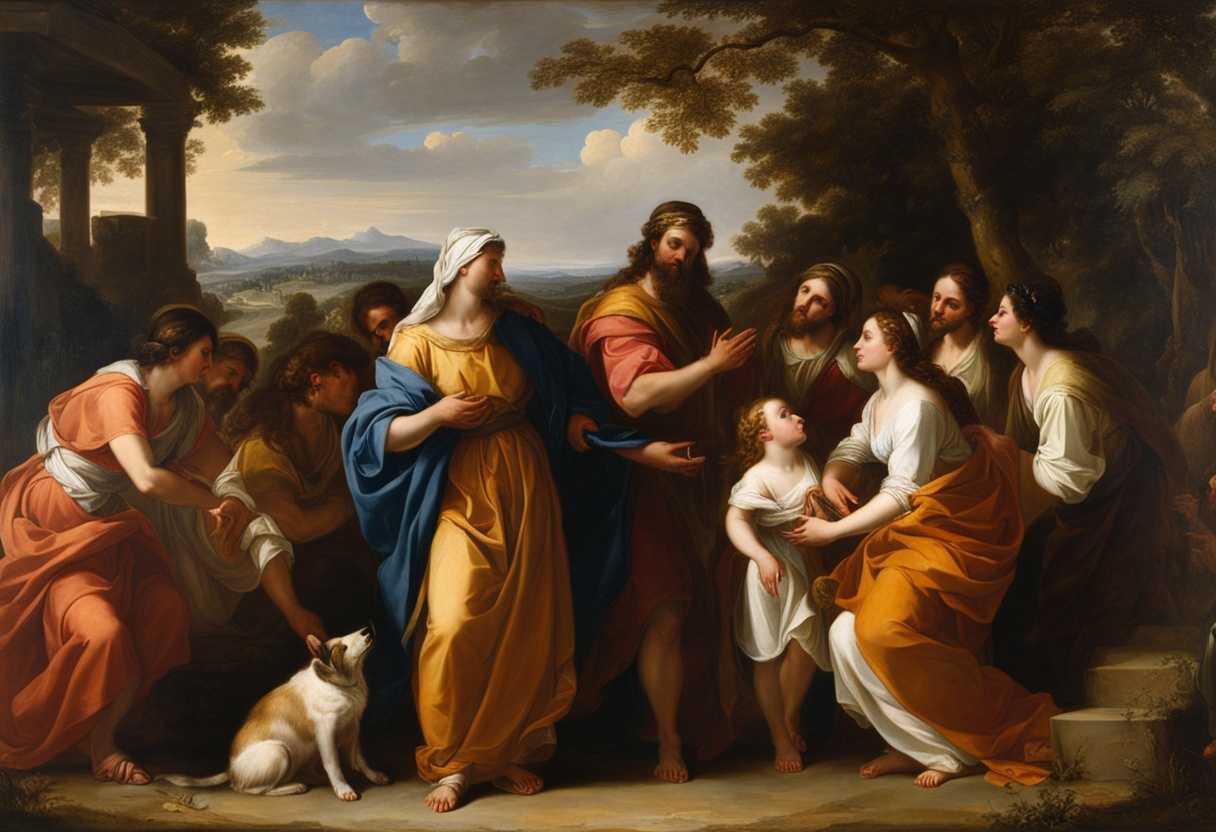
Setting the Scene for Exodus 2:15-21
In Exodus 2:15-21, we find Moses fleeing from Egypt after he had killed an Egyptian who was beating a Hebrew slave. He arrived in the land of Midian and sat down by a well. The scene is set in the desert, with the scorching sun beating down on the sandy landscape. The well is a central gathering place for the women of Midian who come to draw water for their flocks.
As Moses sits by the well, exhausted and unsure of what his future holds, he is approached by seven sisters who have come to water their father’s flock. Their names are Zipporah, Tirzah, Hoglah, Milcah, Noah, and Mahlah. They are strong and independent women, unafraid to stand up for themselves and their rights. They are intrigued by the stranger sitting by the well and are not afraid to engage him in conversation.
The sisters are impressed by Moses’ gallantry when he helps them water their flock, and they invite him to their home to meet their father, Reuel. This encounter marks the beginning of a new chapter in Moses’ life, as he finds refuge and a new purpose in the land of Midian. The scene at the well is a turning point for Moses, leading him on a path that will ultimately shape the destiny of the Israelites.
What is Exodus 2:15-21 about?
Moses goes through a period of transformation and finds a new purpose in his life in this verse. After fleeing Egypt, Moses finds himself in Midian, where he helps Reuel’s daughters by defending them from shepherds at a well. This act of kindness and bravery shows us that even when we feel lost or uncertain, we can still make a positive impact in the lives of others. Moses is welcomed into Reuel’s home and eventually marries his daughter Zipporah as a result of his actions. This union symbolizes a new beginning for Moses, a fresh start in a foreign land where he can build a family and start anew. The birth of his son further reinforces this idea of renewal and growth, as Moses takes on the role of a father and a leader in his own right.
Through Moses’ journey from fleeing Egypt to starting a family in Midian, we can learn the importance of resilience, kindness, and embracing new opportunities. Just like Moses, we may face challenges and setbacks in life, but it’s how we respond to them that shapes our future. We can find new paths and purposes that lead us towards fulfillment and growth by being courageous, compassionate, and open to change.
Understanding what Exodus 2:15-21 really means
In Exodus 2:15-21, we witness a pivotal moment in Moses’ life as he flees from Pharaoh after committing a grave act and finds refuge in Midian. This escape marks a significant shift for Moses, transitioning from a place of privilege to one of uncertainty and exile. As he sits by a well, a seemingly mundane act, we see the symbolism of wells in the Bible as sources of life and provision, hinting at Moses’ future role as a provider and leader.
Moses’ encounter with the daughters of Reuel at the well showcases his innate sense of justice and compassion. By assisting them and standing up against injustice, Moses demonstrates qualities crucial for his future leadership. This act of kindness not only aids the daughters but also sets the stage for Moses’ integration into a new community and eventual marriage to Zipporah.
The parallel with other biblical passages, such as Genesis 24:11-20 and John 4:7-15, further emphasizes the significance of wells as sites of divine encounters and acts of kindness. These connections highlight the themes of hospitality, providence, and the transformative power of small gestures in shaping significant life outcomes.
For contemporary audiences, Moses’ journey from adversity to a new beginning serves as a beacon of hope. Just as he found a new purpose in Midian, individuals today can draw strength from his resilience in the face of challenges and uncertainties. The importance of acts of kindness is underscored, reminding us that even small gestures can lead to profound and life-altering changes in our lives and the lives of others.
The well in this passage symbolizes God’s provision and guidance, reassuring us of divine presence and care even in unfamiliar and daunting circumstances. It serves as a reminder that in times of uncertainty, we can trust in God’s leading and provision, guiding us towards our intended path and purpose.
Consider a scenario where a young woman, facing a career setback, volunteers at a shelter and encounters a mentor who helps her discover a new path. This anecdote mirrors Moses’ journey, illustrating how unexpected acts of kindness and encounters can lead to transformative outcomes and new beginnings.
In conclusion, Exodus 2:15-21 teaches us valuable lessons on resilience, the impact of kindness, and the importance of trusting in divine providence. It encourages us to view challenges as opportunities for growth, remain open to unexpected encounters, and recognize God’s guiding hand in our lives through acts of service and compassion.
How can we show kindness to strangers in need?
Moses showed kindness to a stranger in need in the story of Exodus 2:15-21. He rescued the daughters of Jethro, a priest of Midian, when they were being mistreated at a well by other shepherds. Through his actions, Moses demonstrated compassion and solidarity with strangers in need. Similarly, we can show kindness to strangers by being aware of their struggles and actively seeking ways to help.
One way to show kindness to strangers in need is by offering assistance without expecting anything in return. This selfless act of kindness can have a significant impact on someone who is going through a difficult time. Small gestures such as offering a listening ear, providing a meal, or lending a helping hand can go a long way in showing compassion to strangers in need. We can cultivate a culture of kindness and empathy towards those who are facing challenges in their lives by following the example set by Moses in Exodus.
Furthermore, showing kindness to strangers in need can also involve advocating for justice and equality. We can create a more inclusive and compassionate society where everyone feels valued and supported by speaking up against injustice and discrimination. Through our actions and words, we can be a source of comfort and assistance to those who are marginalized or oppressed, just as Moses stood up for the daughters of Jethro.
Application
Let’s take a lesson from Exodus 2:15-21 and embrace the courage to stand up for what’s right. Like Moses did for Jethro’s daughters, let’s extend a helping hand to those in need. It’s our duty to combat injustice with compassion and bravery. Will you be the light in the darkness, the one who brings kindness and support to those around you?

Reverend Michael Johnson is an experienced Church Minister with a profound expertise in spirituality and guidance. With a serene presence and a compassionate heart, he has faithfully served his congregation for over 20 years, leading them on a spiritual journey towards inner peace and enlightenment. Reverend Johnson’s extensive knowledge of religious philosophies and profound understanding of human nature have made him a trusted confidant and mentor to many, as he seamlessly weaves his profound wisdom into life teachings. Reverend Johnson’s calming demeanor and empathetic nature continue to uplift and heal souls, nurturing a sense of unity and tranquility within his community.