
Exodus 2:15 is about Moses fleeing Egypt after killing an Egyptian taskmaster, illustrating how God’s timing and sovereignty are at work even in moments of fear, confusion, and exile.
15 When Pharaoh heard of it, he sought to kill Moses. But Moses fled from Pharaoh and stayed in the land of Midian. And he sat down by a well.
Setting the Scene for Exodus 2:15
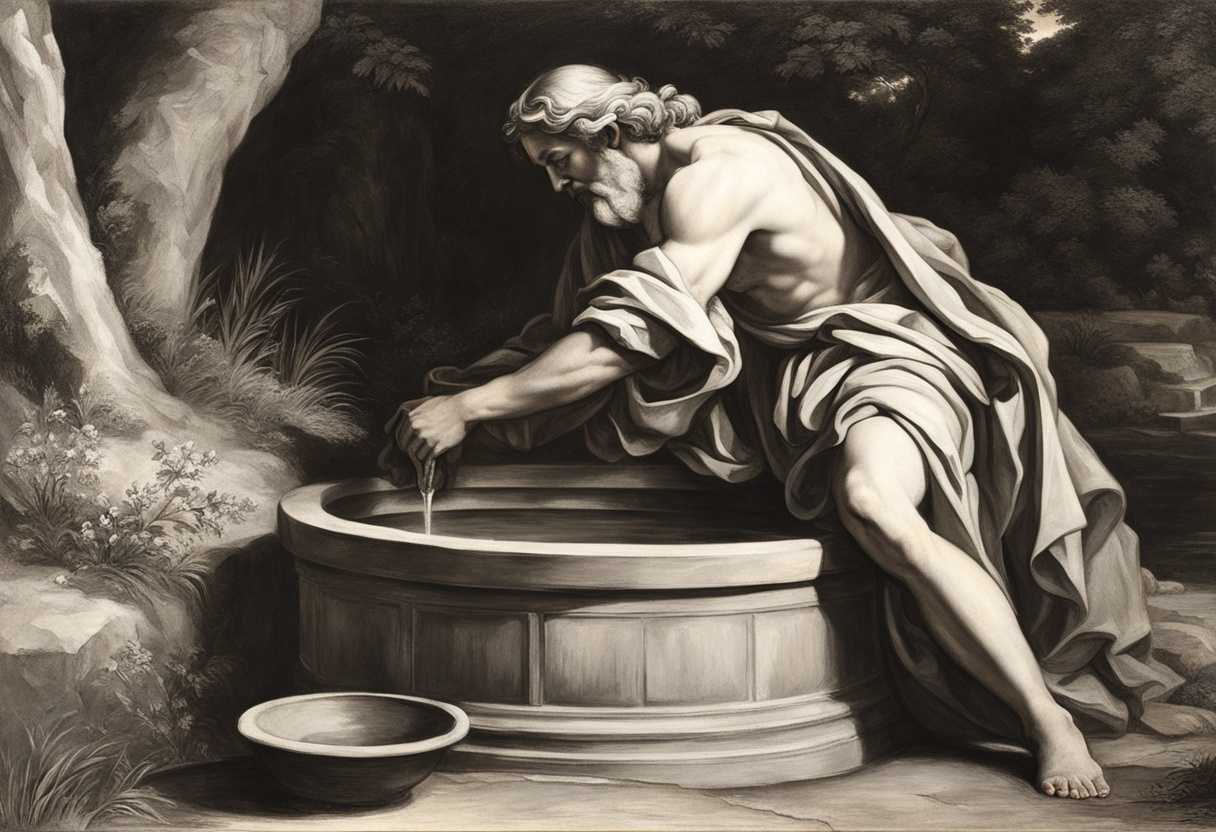
In Exodus chapter 2, we find Moses fleeing from Egypt after he had killed an Egyptian who was beating a Hebrew slave. He arrived in the land of Midian and sat down by a well. This well was a common meeting place for the women of the area who would come to draw water for their flocks. As Moses sat there, he witnessed a group of shepherds driving away the daughters of Jethro, the priest of Midian, who had come to draw water for their father’s flock.
Among the daughters was Zipporah, who caught Moses’ attention. He stood up to defend the women and helped them water their flock. Impressed by his actions, the women returned home early and told their father about the stranger who had helped them. Jethro invited Moses to their home, where he eventually married Zipporah and lived with them for many years.
The scene at the well was a pivotal moment in Moses’ life, as it marked the beginning of his time in Midian and his eventual call by God to lead the Israelites out of Egypt. The dusty surroundings of the well, the sound of sheep bleating, and the warm hospitality of Jethro’s family all played a part in shaping Moses’ journey and his destiny.
What is Exodus 2:15 about?
We witness the unfolding of a divine plan through the actions of a flawed and yet chosen individual as we reflect on this verse. Despite Moses’ act of violence, which led him to flee Egypt, we see how God’s hand is at work behind the scenes, guiding events towards a greater purpose. It prompts us to ponder the complexities of God’s plans and how they can sometimes involve unexpected twists and turns.
Have you ever experienced moments in your own life where things seemed to go awry, only for them to later reveal a deeper meaning or purpose? It’s in these moments of confusion and uncertainty that we can find solace in the belief that there may be a greater plan at play, just as Moses did when he fled Egypt. The story of Moses reminds us that even in our imperfections and mistakes, God can still use us to fulfill His purposes and bring about positive change in the world.
So, as we journey through our own struggles and challenges, let us take comfort in the knowledge that God’s plan for us is unfolding, even if we may not always see it clearly. We too can trust that our own paths, no matter how winding or difficult, are leading us towards a purpose greater than ourselves, just as Moses eventually found his calling and became a great leader.
Understanding what Exodus 2:15 really means
In the narrative of Moses, Exodus 2:15 captures a crucial juncture in his life’s journey. Fleeing Egypt after a violent altercation, Moses finds himself on the run from Pharaoh’s wrath, seeking refuge in the land of Midian. This escape marks a significant shift for Moses, transforming him from a privileged prince to a fugitive in a foreign land, setting the stage for his remarkable destiny.
The phrase “When Pharaoh heard of this, he tried to kill Moses” vividly portrays the immediate peril Moses faced due to his actions. It underscores the gravity of his situation and the drastic measures he had to take to ensure his safety. This moment of crisis serves as a reminder that our choices can have profound consequences, sometimes leading us down unexpected paths.
As Moses flees from Pharaoh and settles in Midian, we witness a narrative of seeking refuge and embarking on a new chapter. This act of escape symbolizes the courage to leave behind familiarity and comfort in pursuit of a higher calling. In our own lives, we may encounter situations that necessitate leaving behind the known for the unknown, trusting in the possibility of renewal and growth.
Hebrews 11:24-27 reflects on Moses’ faith and his decision to forsake the pleasures of Egypt for the sake of God’s people. This passage resonates with the theme of sacrifice and obedience, highlighting the transformative power of faith in guiding life-altering decisions. Acts 7:29-30 further elaborates on Moses’ journey, emphasizing the divine timing and purpose behind his flight to Midian, reinforcing the notion that God’s plans unfold in unexpected ways.
In contemporary times, individuals grapple with similar dilemmas of facing consequences, seeking refuge, and embracing new beginnings. Just as Moses navigated uncertainty and danger, we too must confront the outcomes of our actions and make choices that align with our values and beliefs. The story of Moses fleeing to Midian serves as a poignant reminder that amidst adversity, there lies the potential for renewal and divine intervention.
Consider a parallel in modern life—a professional who, after a misstep at work, decides to leave their lucrative job for a fresh start in a different field. This bold move, though daunting, leads them to discover their true passion and purpose, mirroring Moses’ journey of exile and eventual divine calling. Like Moses, they find solace and direction in unfamiliar territory, embracing the unknown with faith and resilience.
In contemplating Exodus 2:15, we are encouraged to embrace moments of uncertainty as opportunities for growth and transformation. Just as Moses found sanctuary in Midian and encountered God’s presence, we too can find reassurance in the midst of upheaval, trusting in the promise of new beginnings and divine purpose.
How can we respond when facing injustice?
When facing injustice, we can look to examples from the story of Moses in Exodus 2:15. Moses steps in to defend a fellow Israelite being mistreated by an Egyptian in this verse. This action demonstrates the importance of standing up against injustice and oppression. It is a reminder that we should not turn a blind eye when we witness wrongdoing, but instead, we should take a stand and advocate for justice for ourselves and others. We can follow Moses’ example by speaking out against wrongdoings and advocating for change in the face of injustice. We can use our voices, resources, and actions to confront oppression and inequality. This verse teaches us the value of actively working towards justice and standing up for those who are being treated unfairly. It reminds us of the importance of solidarity and support for those who are marginalized or oppressed. We are ultimately called to be proactive in our response in the face of injustice. We should not remain passive or indifferent when we see others being mistreated. Instead, we should seek to actively address the injustices we encounter, just as Moses did in this verse. We can work towards creating a more equitable and compassionate society by taking a stand against injustice.
Application
Just as Moses bravely stood against injustice, let us be bold in our fight against oppression today. Let us not shy away from confronting inequities but rather, let us be agents of change in our workplace, home, and society. It is time to rise up and make a difference, to be the voice for the voiceless and the hope for the oppressed. Will you join the movement for justice and equality, or will you remain silent in the face of injustice?

Reverend Michael Johnson is an experienced Church Minister with a profound expertise in spirituality and guidance. With a serene presence and a compassionate heart, he has faithfully served his congregation for over 20 years, leading them on a spiritual journey towards inner peace and enlightenment. Reverend Johnson’s extensive knowledge of religious philosophies and profound understanding of human nature have made him a trusted confidant and mentor to many, as he seamlessly weaves his profound wisdom into life teachings. Reverend Johnson’s calming demeanor and empathetic nature continue to uplift and heal souls, nurturing a sense of unity and tranquility within his community.