
Exodus 2:23-25 is about the Israelites crying out to God in their suffering, highlighting the importance of their faith and trust in Him to eventually deliver them from oppression.
23 During those many days the king of Egypt died, and the people of Israel groaned because of their slavery and cried out for help. Their cry for rescue from slavery came up to God.
24 And God heard their groaning, and God remembered his covenant with Abraham, with Isaac, and with Jacob.
25 God saw the people of Israel—and God knew.
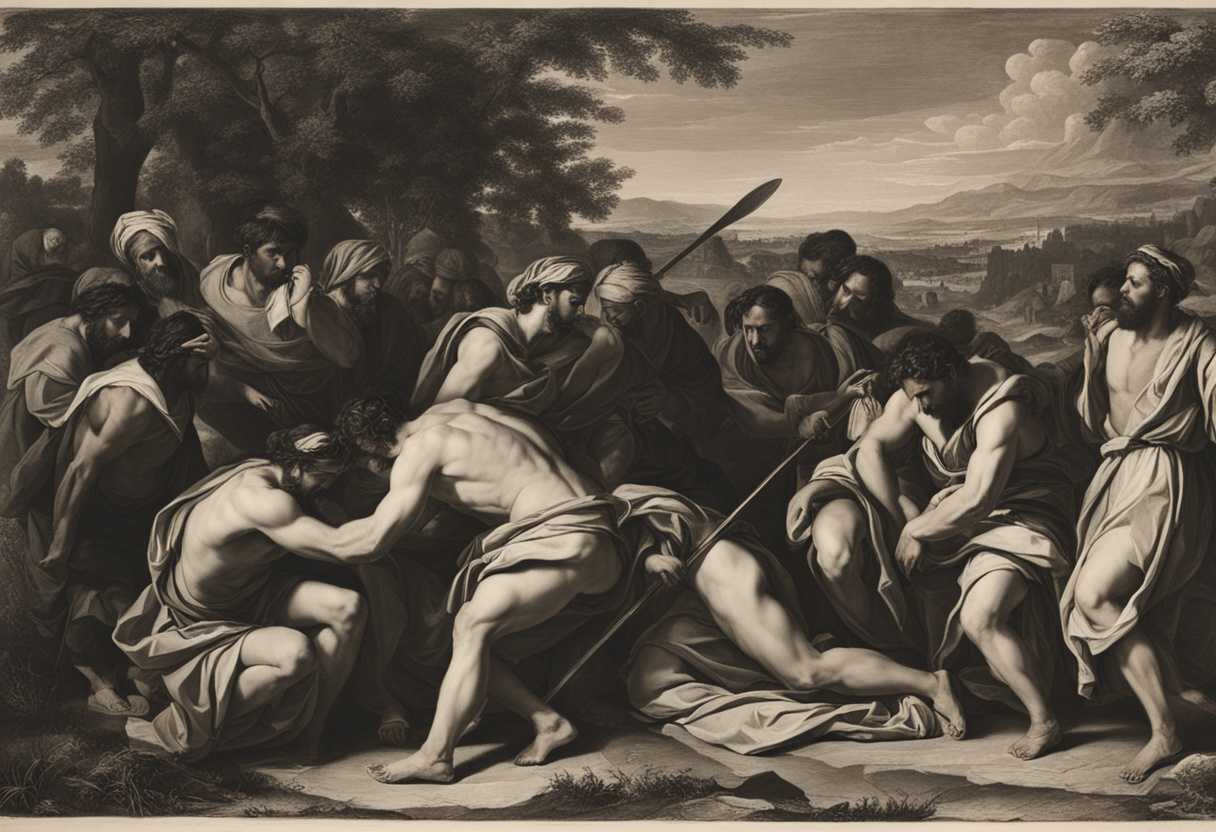
Setting the Scene for Exodus 2:23-25
The scene in Exodus 2:23-25 takes place in the land of Egypt, during a time when the Israelites were enslaved by the Egyptians. The Israelites had been enduring harsh labor and oppression under the rule of Pharaoh, who feared their growing numbers and had ordered the killing of all Hebrew baby boys. Amidst this backdrop of suffering and despair, we find the Israelites crying out to God for help and deliverance from their bondage.
In this scene, we see a group of Israelites gathered together, their faces marked with exhaustion and desperation. Among them are individuals like Moses, who had been born during a time when Hebrew baby boys were being killed, but miraculously saved and raised in the house of Pharaoh’s daughter. Now, as a grown man, Moses is beginning to understand his identity as a Hebrew and feels a deep connection to his people’s suffering.
The surroundings are bleak and oppressive, with the sounds of Egyptian taskmasters and the cries of the Israelite slaves filling the air. The scene is set against the backdrop of a vast and imposing Egyptian landscape, with the Israelites huddled together in their makeshift dwellings, seeking solace and hope in their shared faith and prayers to God. It is in this moment of collective lamentation and supplication that we see the beginning of God’s response to the cries of His people, setting the stage for the unfolding of His divine plan for their deliverance.
What is Exodus 2:23-25 about?
God’s compassion and faithfulness towards His people are powerfully depicted in this verse. Despite the suffering and oppression the Israelites are facing in slavery, God does not remain distant or indifferent. Instead, He hears their cries for help and is moved by their pain. This demonstrates God’s deep love and concern for His people, showing that He is attentive to their suffering and actively working on their behalf.
Furthermore, God’s remembrance of His covenant with the Israelites highlights His commitment to His promises. Even in the midst of hardship, God does not forget His relationship with His people. This serves as a reminder of God’s faithfulness and reliability, reassuring us that He will always uphold His end of the covenant and remain steadfast in His love and support for us. We reflect on this verse, pondering the ways in which God hears our own cries and remembers His promises to us. It prompts us to consider how God is present in our struggles and challenges, offering us comfort, hope, and reassurance. This verse reminds us that we serve a God who is compassionate, attentive, and faithful, walking alongside us in every circumstance.
Understanding what Exodus 2:23-25 really means
In Exodus 2:23-25, we are transported to a time of great suffering for the Israelites, who were enslaved in Egypt. The backdrop of oppression and hardship sets the stage for a profound display of God’s compassion and faithfulness. As the Israelites groaned in their slavery and cried out, their desperate pleas for help rose to God. This vivid imagery conveys the depth of their pain and their fervent longing for deliverance, painting a picture of a people in dire need of rescue.
The phrase “Their cry for help because of their slavery went up to God” underscores a fundamental truth about God’s character – He is attentive to the cries of His people. This simple yet profound statement reminds us that God is not distant or indifferent to human suffering; rather, He is intimately involved and deeply concerned with the plight of His children. The subsequent response from God, as He heard their groaning and remembered His covenant, highlights His unwavering faithfulness to His promises.
God’s active involvement in the lives of the Israelites, as depicted in the verse “God looked on the Israelites and was concerned about them,” serves as a powerful reassurance of His compassion. This portrayal of God as a caring and empathetic Father reminds us that He is not a passive observer but a loving and involved participant in our lives. The narrative in these verses showcases God’s responsiveness to the cries of His people, emphasizing His compassion and concern for their well-being.
Drawing parallels to other biblical passages, such as Genesis 15:13-14, Psalm 34:17, and James 5:4, we see a consistent theme of God hearing the cries of His people and delivering them from their troubles. These verses echo the sentiment that God is attentive to the pleas of the oppressed and is actively working on their behalf. The relevance of these passages to contemporary times is evident in the assurance they provide that God hears our cries for help and is moved by our suffering.
In our modern context, these verses serve as a poignant reminder that God’s faithfulness and compassion endure through all generations. They offer comfort to those facing trials and tribulations, assuring them that God is aware of their struggles and is working for their good. Just as God remembered His covenant with the Israelites, He remembers His promises to us and remains steadfast in His commitment to His people.
Consider a person grappling with a prolonged illness, feeling isolated and unheard in their suffering. These verses can offer solace, reminding them that God hears their cries and is concerned about their pain. The narrative of God’s compassion and faithfulness in Exodus serves as a beacon of hope, guiding us to trust in His promises and find comfort in His unwavering care for His children. In conclusion, Exodus 2:23-25 stands as a testament to God’s enduring love, compassion, and attentiveness to the cries of His people, urging us to place our trust in His unfailing promises.
How can we seek God’s help in times of suffering?
We can seek God’s help in times of suffering by first acknowledging our distress and turning our hearts towards Him. We too can pour out our hearts in prayer, expressing our pain, fears, and troubles to God, just as the Israelites cried out to Him because of their suffering. Through our sincere communication with God, we invite His presence into our suffering and open ourselves to His comfort and guidance. Seeking God’s help in times of suffering involves an act of surrender and trust in His loving and sovereign nature. We can place our burdens at His feet and rely on His provision by recognizing His power to intervene and His compassion towards us. We allow God to work in our lives, bringing healing, peace, and strength in the midst of our struggles as we release our control and place our hope in His faithfulness.
Application
Just as a diligent employee responds promptly to their team’s needs at work, let’s show the same level of attentiveness to our loved ones’ cries for help. Reflect on Exodus 2:23-25 and remember that listening and responding compassionately is crucial, both in our personal and professional lives. Today, let’s take a stand to be the supportive pillar someone needs in their stormy seas. How will you answer the call for help in your midst?

Reverend Michael Johnson is an experienced Church Minister with a profound expertise in spirituality and guidance. With a serene presence and a compassionate heart, he has faithfully served his congregation for over 20 years, leading them on a spiritual journey towards inner peace and enlightenment. Reverend Johnson’s extensive knowledge of religious philosophies and profound understanding of human nature have made him a trusted confidant and mentor to many, as he seamlessly weaves his profound wisdom into life teachings. Reverend Johnson’s calming demeanor and empathetic nature continue to uplift and heal souls, nurturing a sense of unity and tranquility within his community.