
Exodus 3-4 is about God revealing Himself to Moses through the burning bush, demonstrating His chosen people’s liberation from bondage and the power of divine presence.
1 Now Moses was keeping the flock of his father-in-law, Jethro, the priest of Midian, and he led his flock to the west side of the wilderness and came to Horeb, the mountain of God.
2 And the angel of the Lord appeared to him in a flame of fire out of the midst of a bush. He looked, and behold, the bush was burning, yet it was not consumed.
3 And Moses said, “I will turn aside to see this great sight, why the bush is not burned.”
4 When the Lord saw that he turned aside to see, God called to him out of the bush, “Moses, Moses!” And he said, “Here I am.”
5 Then he said, “Do not come near; take your sandals off your feet, for the place on which you are standing is holy ground.”
6 And he said, “I am the God of your father, the God of Abraham, the God of Isaac, and the God of Jacob.” And Moses hid his face, for he was afraid to look at God.
7 Then the Lord said, “I have surely seen the affliction of my people who are in Egypt and have heard their cry because of their taskmasters. I know their sufferings,
8 and I have come down to deliver them out of the hand of the Egyptians and to bring them up out of that land to a good and broad land, a land flowing with milk and honey, to the place of the Canaanites, the Hittites, the Amorites, the Perizzites, the Hivites, and the Jebusites.
9 And now, behold, the cry of the people of Israel has come to me, and I have also seen the oppression with which the Egyptians oppress them.
10 Come, I will send you to Pharaoh that you may bring my people, the children of Israel, out of Egypt.”
11 But Moses said to God, “Who am I that I should go to Pharaoh and bring the children of Israel out of Egypt?”
12 He said, “But I will be with you, and this shall be the sign for you, that I have sent you: when you have brought the people out of Egypt, you shall serve God on this mountain.”
13 Then Moses said to God, “If I come to the people of Israel and say to them, ‘The God of your fathers has sent me to you,’ and they ask me, ‘What is his name?’ what shall I say to them?”
14 God said to Moses, “I am who I am.” And he said, “Say this to the people of Israel: ‘I am has sent me to you.’”
15 God also said to Moses, “Say this to the people of Israel: ‘The Lord, the God of your fathers, the God of Abraham, the God of Isaac, and the God of Jacob, has sent me to you.’ This is my name forever, and thus I am to be remembered throughout all generations.
16 Go and gather the elders of Israel together and say to them, ‘The Lord, the God of your fathers, the God of Abraham, of Isaac, and of Jacob, has appeared to me, saying, “I have observed you and what has been done to you in Egypt,
17 and I promise that I will bring you up out of the affliction of Egypt to the land of the Canaanites, the Hittites, the Amorites, the Perizzites, the Hivites, and the Jebusites, a land flowing with milk and honey.”
18 And they will listen to your voice, and you and the elders of Israel shall go to the king of Egypt and say to him, ‘The Lord, the God of the Hebrews, has met with us; and now, please let us go a three days’ journey into the wilderness, that we may sacrifice to the Lord our God.’
19 But I know that the king of Egypt will not let you go unless compelled by a mighty hand.
20 So I will stretch out my hand and strike Egypt with all the wonders that I will do in it; after that he will let you go.
21 And I will give this people favor in the sight of the Egyptians; and when you go, you shall not go empty,
22 But each woman shall ask of her neighbor, and any woman who lives in her house, for silver and gold jewelry, and for clothing. You shall put them on your sons and on your daughters. So you shall plunder the Egyptians.”
1 Then Moses answered, “But behold, they will not believe me or listen to my voice, for they will say, ‘The Lord did not appear to you.’”
2 The Lord said to him, “What is that in your hand?” He said, “A staff.”
3 Then he said, “Throw it on the ground.” So he threw it on the ground, and it became a serpent, and Moses ran from it.
4 But the Lord said to Moses, “Put out your hand and catch it by the tail”—so he put out his hand and caught it, and it became a staff in his hand—
5 “that they may believe that the Lord, the God of their fathers, the God of Abraham, the God of Isaac, and the God of Jacob, has appeared to you.”
6 The Lord said furthermore to him, “Now put your hand inside your cloak.” So he put his hand inside his cloak, and when he took it out, his hand was leprous like snow.
7 Then he said, “Put your hand back inside your cloak.” So he put his hand back inside his cloak, and when he took it out, behold, it was restored like the rest of his flesh.
8 Then the Lord said to Moses, “If they will not believe you or listen to the first sign, they may believe the latter sign.
9 But if they will not believe even these two signs or listen to your voice, you shall take some water from the Nile and pour it on the dry ground, and the water that you shall take from the Nile will become blood on the dry ground.”
10 But Moses said to the Lord, “Oh, my Lord, I am not eloquent, either in the past or since you have spoken to your servant, but I am slow of speech and of tongue.”
11 Then the Lord said to him, “Who has made man’s mouth? Who makes him mute, or deaf, or seeing, or blind? Is it not I, the Lord?
12 Now therefore go, and I will be with your mouth and teach you what you shall speak.
13 But he said, “Oh, my Lord, please send someone else.”
14 Then the anger of the Lord was kindled against Moses and he said, “Is there not Aaron, your brother, the Levite? I know that he can speak well. Behold, he is coming out to meet you, and when he sees you, he will be glad in his heart.
15 You shall speak to him and put the words in his mouth, and I will be with your mouth and with his mouth, and will teach you both what to do.
16 He shall speak for you to the people, and he shall be your mouth, and you shall be as God to him.
17 And take in your hand this staff, with which you shall do the signs.”
18 Moses went back to Jethro his father-in-law and said to him, “Please let me go back to my brothers in Egypt to see whether they are still alive.” And Jethro said to Moses, “Go in peace.”
19 And the Lord said to Moses in Midian, “Go back to Egypt, for all the men who were seeking your life are dead.”
20 So Moses took his wife and his sons and had them ride on a donkey, and went back to the land of Egypt. And Moses took the staff of God in his hand.
21 The Lord said to Moses, “When you go back to Egypt, see that you do before Pharaoh all the miracles that I have put in your power. But I will harden his heart, so that he will not let the people go.
22 Then you shall say to Pharaoh, ‘Thus says the Lord, Israel is my firstborn son,
23 and I say to you, “Let my son go that he may serve me.” If you refuse to let him go, behold, I will kill your firstborn son.’”
24 At a lodging place on the way the Lord met him and sought to put him to death.
25 Then Zipporah took a flint and cut off her son’s foreskin and touched Moses’ feet with it and said, “Surely you are a bridegroom of blood to me.”
26 So he let him alone. It was then that she said, “A bridegroom of blood,” because of the circumcision.
27 The Lord said to Aaron, “Go into the wilderness to meet Moses.” So he went and met him at the mountain of God and kissed him.
28 And Moses told Aaron all the words of the Lord with which he had sent him to speak, and all the signs that he had commanded him to do.
29 Then Moses and Aaron went and gathered together all the elders of the people of Israel.
30 Aaron spoke all the words that the Lord had spoken to Moses and did the signs in the sight of the people.
31 And the people believed; and when they heard that the Lord had visited the people of Israel and that he had seen their affliction, they bowed their heads and worshiped.
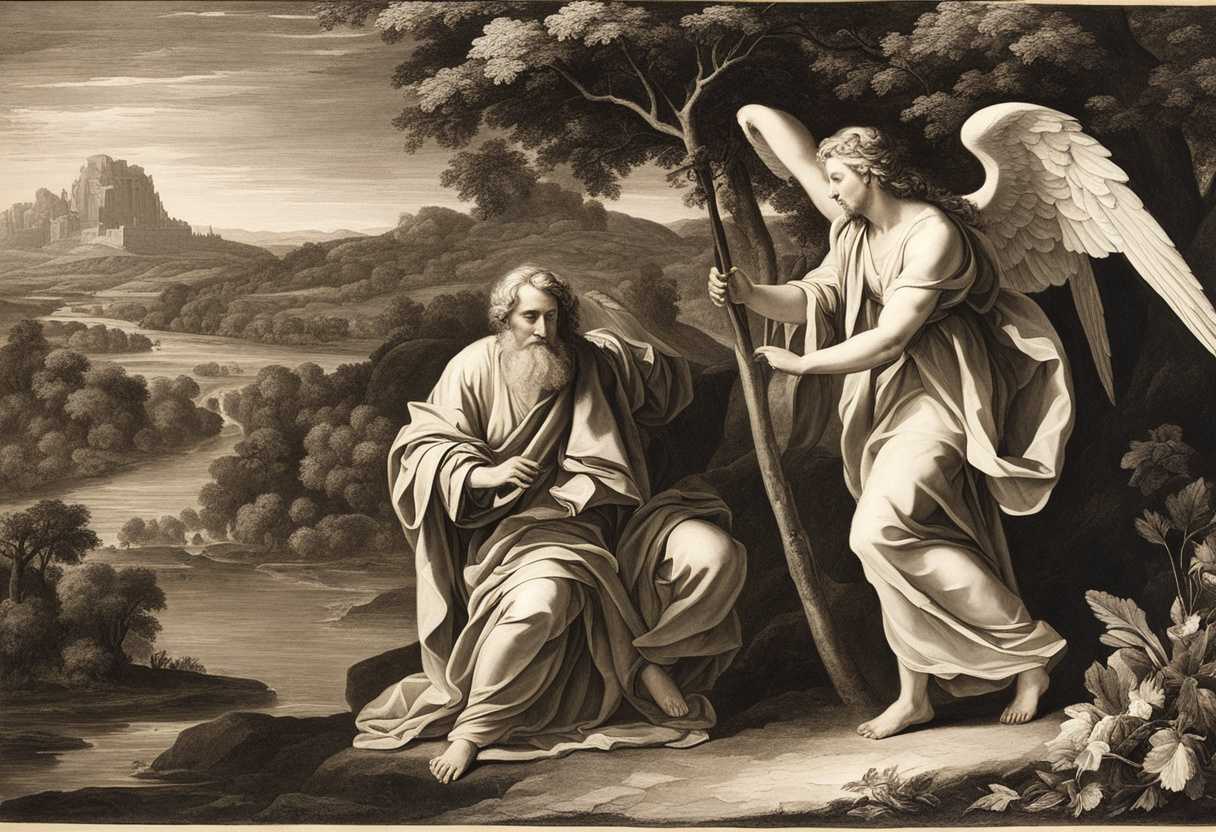
Setting the Scene for Exodus 3-4
In Exodus 3-4, we find Moses, a former prince of Egypt who had fled to Midian after killing an Egyptian taskmaster. He is now living a humble life as a shepherd, tending to his father-in-law Jethro’s flock. One day, as he leads the sheep to the far side of the wilderness, he comes to Horeb, the mountain of God. It is here that he encounters a burning bush that is not consumed by the flames. Curious, Moses approaches the bush, and it is then that he hears the voice of God calling out to him.
Surrounded by the vast and rugged landscape of the desert, Moses stands in awe as God reveals Himself to him from within the burning bush. The presence of the divine is palpable, and Moses is filled with a mixture of fear and wonder. God instructs Moses to remove his sandals, for the ground he is standing on is holy. In this sacred moment, God commissions Moses to go back to Egypt and lead the Israelites out of slavery. Overwhelmed by the enormity of the task before him, Moses hesitates and raises doubts about his ability to fulfill this mission. Yet, God reassures him and promises to be with him every step of the way, providing signs and wonders to confirm His presence and power.
What is Exodus 3-4 about?
This powerful verse reminds us that sometimes we may doubt our own abilities or feel hesitant to take on challenges, just like Moses did when God called him to lead the Israelites out of Egypt. Despite Moses’ initial doubts and insecurities, God reassured him and provided him with the necessary tools and strength to carry out this monumental task.
This verse serves as a powerful reminder that God equips those He calls. It teaches us that even when we feel inadequate or unsure of ourselves, we can trust in God’s plan and rely on His guidance to lead us through the challenges we face. We too can find strength and courage in knowing that God is always there to support us in our own journeys, just as God equipped Moses with everything he needed to fulfill his purpose.
So, the next time you find yourself questioning your abilities or feeling daunted by a daunting task, remember the story of Moses. Trust in God’s plan for you, lean on His strength, and know that He will equip you with everything you need to overcome whatever obstacles lie in your path.
Understanding what Exodus 3-4 really means
In the book of Exodus, chapters 3 and 4 recount a profound encounter between Moses and God through the burning bush. This event serves as a pivotal moment in both Israel’s history and Moses’ life, setting the stage for the liberation of the Israelites from Egypt. The burning bush symbolizes God’s eternal presence and power, as it burned without being consumed, showcasing His unchanging nature and authority. When God instructs Moses to remove his sandals because the ground is holy, it underscores the sanctity of God’s presence and the reverence due to Him.
One of the most significant phrases in this passage is God’s declaration, “I am who I am,” signifying His self-identification and emphasizing His eternal and self-sufficient nature. Through this statement, God reveals His incomprehensible essence and sovereignty. Moreover, God’s acknowledgment of the suffering of the Israelites in Egypt demonstrates His compassion and awareness of human struggles. By commissioning Moses to confront Pharaoh and lead the Israelites to freedom, God exemplifies His call to individuals to be instruments of deliverance and change in the world.
This narrative resonates with other biblical accounts of divine callings, such as Isaiah’s vision in Isaiah 6:1-8, Jeremiah’s call in Jeremiah 1:4-10, and Saul’s conversion in Acts 9:1-19. These stories highlight God’s intimate knowledge of His chosen ones and His transformative power in their lives. They serve as reminders that God’s call is personal, purposeful, and transformative, shaping the course of individuals’ lives and impacting the world around them.
The relevance of Moses’ encounter with God extends to people today in various ways. Just as God was present with Moses in the burning bush, He is present with us in our daily lives, guiding, comforting, and empowering us. Each person, like Moses, has a unique calling and purpose ordained by God, which may require stepping out in faith and obedience, even in the face of uncertainty or inadequacy. Furthermore, God’s compassion and commitment to deliverance, as seen in His response to the Israelites’ suffering, assure us that He is aware of our struggles and actively working for our liberation and redemption.
In contemporary times, individuals often find themselves grappling with feelings of inadequacy or unpreparedness when faced with daunting challenges or callings. However, like Moses, who initially hesitated but eventually embraced his mission with God’s guidance, many can draw strength and direction from their faith in God. By trusting in God’s presence, provision, and purpose for their lives, individuals can overcome their doubts and fears, stepping into the roles and responsibilities to which they are called.
In conclusion, the story of Moses and the burning bush serves as a timeless reminder of God’s presence, calling, and compassion in the lives of His people. It encourages individuals to trust in God’s guidance and purpose for their lives, knowing that He equips and empowers them to fulfill their unique roles in His divine plan. As we reflect on this narrative, may we consider how God might be calling each of us to serve and make a difference in the world today, embracing His transformative work in and through us.
What does it mean to hear and obey God’s call?
To hear and obey God’s call means to pay attention and actively listen to His voice when He calls upon us. It involves being mindful of His presence in our lives and having a receptive heart to His instructions. We demonstrate our faith and trust in God’s guidance and direction for our lives by following His call.
When we obey God’s call, we align our actions and decisions with His will, walking in a path of righteousness and obedience. It involves surrendering our own desires and submitting to His higher purpose and plan for us. We show our love and devotion to God by obeying His call, acknowledging His sovereignty and authority over our lives.
Responding to God’s call requires faith, courage, and a willingness to step out in obedience, even when faced with uncertainty or challenges. It may involve making sacrifices, stepping out of our comfort zones, or going against the expectations of the world. But in following God’s call, we can experience His faithfulness, provision, and blessings in our lives as we walk in alignment with His divine will.
Application
Embrace the powerful message from Exodus 3-4 that showcases God’s faithfulness and strength in fulfilling promises. Dive into the story of how God revealed Himself to Moses, igniting a calling within him. Allow this tale to spark a fire within you to listen closely to God’s plan for you, to have faith in His direction, and boldly walk into the path He has crafted solely for you. How will you respond to God’s beckoning in your life today?

Reverend Michael Johnson is an experienced Church Minister with a profound expertise in spirituality and guidance. With a serene presence and a compassionate heart, he has faithfully served his congregation for over 20 years, leading them on a spiritual journey towards inner peace and enlightenment. Reverend Johnson’s extensive knowledge of religious philosophies and profound understanding of human nature have made him a trusted confidant and mentor to many, as he seamlessly weaves his profound wisdom into life teachings. Reverend Johnson’s calming demeanor and empathetic nature continue to uplift and heal souls, nurturing a sense of unity and tranquility within his community.