
Exodus 32:1-14 is about the consequences of idolatry and the merciful intercession of Moses on behalf of the Israelites who had strayed away from God by worshiping a golden calf, highlighting the importance of repentance and forgiveness in the relationship between God and his people.
1 When the people saw that Moses delayed to come down from the mountain, the people gathered themselves together to Aaron and said to him, “Up, make us gods who shall go before us. As for this Moses, the man who brought us up out of the land of Egypt, we do not know what has become of him.”
2 So Aaron said to them, “Take off the rings of gold that are in the ears of your wives, your sons, and your daughters, and bring them to me.”
3 So all the people took off the rings of gold that were in their ears and brought them to Aaron.
4 And he received the gold from their hand and fashioned it with a graving tool and made a golden calf. And they said, “These are your gods, O Israel, who brought you up out of the land of Egypt!”
5 When Aaron saw this, he built an altar before it. And Aaron made a proclamation and said, “Tomorrow shall be a feast to the Lord.”
6 And they rose up early the next day and offered burnt offerings and brought peace offerings. And the people sat down to eat and drink and rose up to play.
7 And the Lord said to Moses, “Go down, for your people, whom you brought up out of the land of Egypt, have corrupted themselves.
8 They have turned aside quickly out of the way that I commanded them.
9 And the Lord said to Moses, “I have seen this people, and behold, it is a stiff-necked people.
10 Now therefore let me alone, that my wrath may burn hot against them and I may consume them, in order that I may make a great nation of you.
11 But Moses implored the Lord his God and said, “O Lord, why does your wrath burn hot against your people, whom you have brought out of the land of Egypt with great power and with a mighty hand?
12 Why should the Egyptians say, ‘With evil intent did he bring them out, to kill them in the mountains and to consume them from the face of the earth’? Turn from your burning anger and relent from this disaster against your people.
13 Remember Abraham, Isaac, and Israel, your servants, to whom you swore by your own self, and said to them, ‘I will multiply your offspring as the stars of heaven, and all this land that I have promised I will give to your offspring, and they shall inherit it forever.’”
14 And the Lord relented from the disaster that he had spoken of bringing on his people.
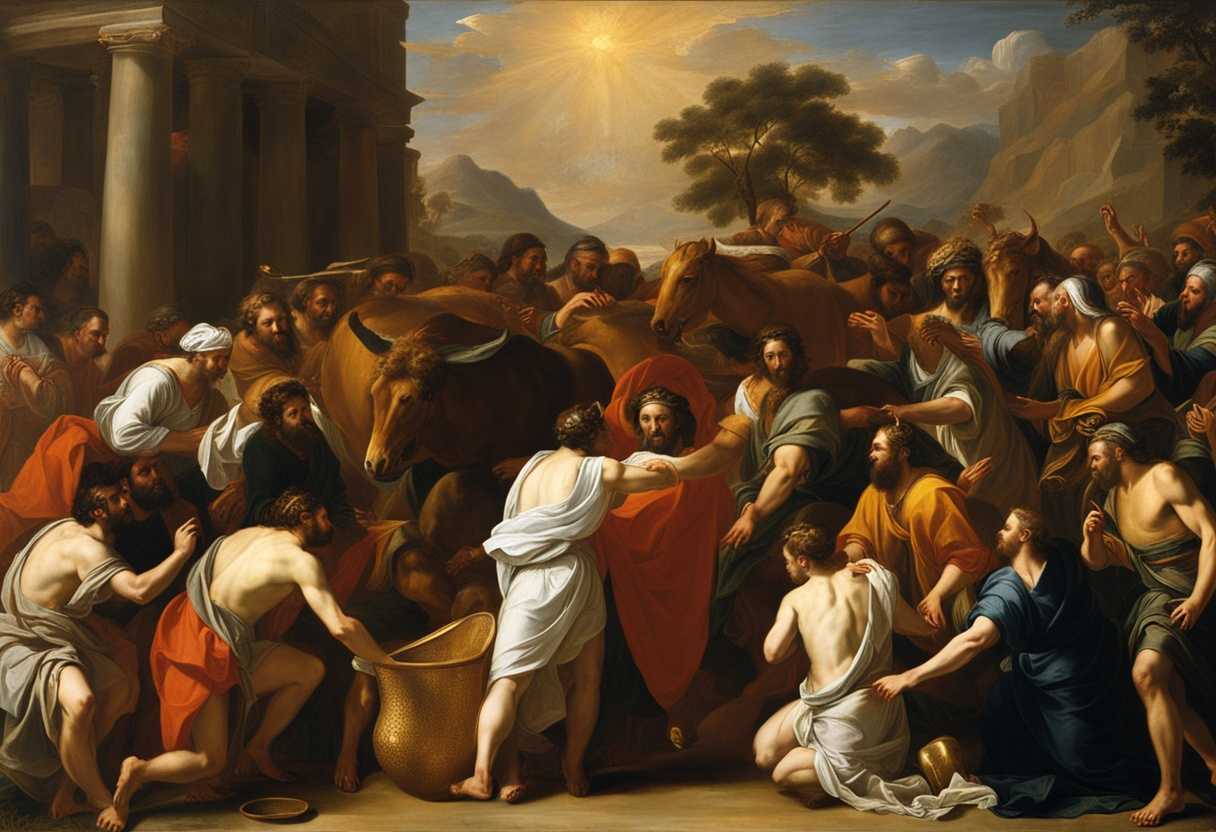
Setting the Scene for Exodus 32:1-14
The scene in Exodus 32:1-14 takes place at the foot of Mount Sinai, shortly after Moses had ascended the mountain to receive the Ten Commandments from God. The Israelites, led by Aaron, grew restless during Moses’ absence and began to doubt his return. Feeling anxious and uncertain, they approached Aaron and demanded that he make them gods to lead them. Aaron, succumbing to the pressure, asked the people to bring their gold jewelry, which he then fashioned into a golden calf.
The surroundings are filled with a sense of unease and impatience as the Israelites gather around the golden calf, seeking reassurance and guidance in the absence of Moses. The atmosphere is tense, with murmurs of doubt and fear spreading among the people. The golden calf stands as a stark contrast to the presence of God on the mountain, symbolizing the Israelites’ wavering faith and their inclination towards idolatry.
Moses, unaware of the scene unfolding below, is on the mountain receiving the commandments from God. As he descends and witnesses the idolatry and revelry surrounding the golden calf, he is filled with righteous anger and breaks the stone tablets. Through his intercession and plea to God, Moses ultimately prevents the complete destruction of the Israelites, highlighting his role as a mediator between the people and God.
What is Exodus 32:1-14 about?
This verse captures a pivotal moment in the relationship between the Israelites and God. The Israelites, while Moses was receiving the Ten Commandments from God on Mount Sinai, succumbed to temptation and created a golden calf to worship. This act of idolatry infuriated God, who was ready to unleash his wrath upon the people. However, Moses, as a true leader and intermediary between the people and God, steps in and intercedes on behalf of the Israelites. He pleads with God to show them mercy, to remember the covenant He made with their ancestors, and to forgive their transgressions.
This verse highlights the power of prayer and intercession. It showcases Moses’ deep connection with God and his unwavering faith in His mercy and forgiveness. Despite the grave sin committed by the Israelites, Moses stands before God, not making excuses for their actions, but appealing to God’s inherent nature of love and compassion. This moment serves as a powerful reminder that even in our darkest moments of sin and disobedience, there is always hope for redemption through sincere repentance and the intercession of a faithful leader. It prompts us to reflect on our own roles as mediators and advocates for those in need of God’s grace and mercy.
Understanding what Exodus 32:1-14 really means
In Exodus 32:1-14, we witness a pivotal moment in the journey of the Israelites, where impatience and lack of faith lead them astray. As Moses is on Mount Sinai receiving the commandments from God, the people grow restless and demand Aaron to create gods for them. This impulsive act reveals their wavering faith and ingratitude for the miraculous deliverance from Egypt.
The phrase “When the people saw that Moses was so long in coming down from the mountain” underscores the impatience and doubt that crept into the hearts of the Israelites. Despite experiencing God’s mighty deeds, they quickly forget His faithfulness and seek immediate solutions. This serves as a cautionary tale for us today, reminding us to trust in God’s timing even when it seems delayed.
The request for gods to lead them reflects a regression into idolatry, a recurring struggle for the Israelites. Aaron’s declaration, “These are your gods, Israel, who brought you up out of Egypt,” not only defies God but also reveals the fickle nature of human allegiance. It prompts us to reflect on our own tendencies to prioritize worldly desires over our relationship with the true God.
Drawing parallels to modern times, we can see how idolatry manifests in subtler forms such as materialism, success, or relationships that take precedence over our devotion to God. Just as the Israelites sought tangible symbols of divinity, we too can be drawn to worship false gods that promise immediate gratification but ultimately lead to spiritual emptiness.
Moses’ intercession for the wayward Israelites highlights the power of prayer and advocacy in seeking God’s mercy. His plea for God to relent from His anger demonstrates the importance of repentance and seeking forgiveness. This narrative encourages us to emulate Moses’ role as intercessors for those who have strayed and to approach God with contrite hearts.
In conclusion, the story of the golden calf serves as a poignant reminder of the dangers of impatience, idolatry, and the enduring need for faith and repentance. It challenges us to examine our own hearts, prioritize our relationship with God above all else, and trust in His unfailing mercy and grace. Just as Moses stood in the gap for the Israelites, may we also intercede for others and seek God’s forgiveness with humility and sincerity.
Are we seeking God’s will or our own desires?
The Israelites in the passage you mentioned were seeking their own desires rather than God’s will. They had turned away from following God’s commandments and instead chose to worship a golden calf, an idol they had created. This act of idolatry and disobedience stemmed from their impatience and desire for immediate gratification, rather than seeking and trusting in God’s guidance and timing.
Similarly, in our own lives, we can easily be swayed by our own desires and worldly pleasures, instead of seeking and submitting to God’s will. It is important for us to continuously align our hearts and minds with God’s desires, through prayer, studying His word, and seeking wise counsel. When we prioritize seeking God’s will above our own desires, we can experience the peace and fulfillment that comes from following His perfect plan for our lives.
Application
Pause and consider those times when you’ve drifted from your true path. It’s time to reconnect with your faith and seek forgiveness. Just as in our daily lives, staying true to God requires dedication and steadfastness. Will you choose to rekindle that connection today and let go of distractions standing in your way?

Reverend Michael Johnson is an experienced Church Minister with a profound expertise in spirituality and guidance. With a serene presence and a compassionate heart, he has faithfully served his congregation for over 20 years, leading them on a spiritual journey towards inner peace and enlightenment. Reverend Johnson’s extensive knowledge of religious philosophies and profound understanding of human nature have made him a trusted confidant and mentor to many, as he seamlessly weaves his profound wisdom into life teachings. Reverend Johnson’s calming demeanor and empathetic nature continue to uplift and heal souls, nurturing a sense of unity and tranquility within his community.