
Exodus 32:1-4 is about the Israelites succumbing to impatience and temptation by creating a golden calf and worshipping it, highlighting the dangers of idolatry and faithlessness.
1 When the people saw that Moses delayed to come down from the mountain, the people gathered themselves together to Aaron and said to him, “Up, make us gods who shall go before us. As for this Moses, the man who brought us up out of the land of Egypt, we do not know what has become of him.”
2 So Aaron said to them, “Take off the rings of gold that are in the ears of your wives, your sons, and your daughters, and bring them to me.”
3 So all the people took off the rings of gold that were in their ears and brought them to Aaron.
4 And he received the gold from their hand and fashioned it with a graving tool and made a golden calf. And they said, “These are your gods, O Israel, who brought you up out of the land of Egypt!”
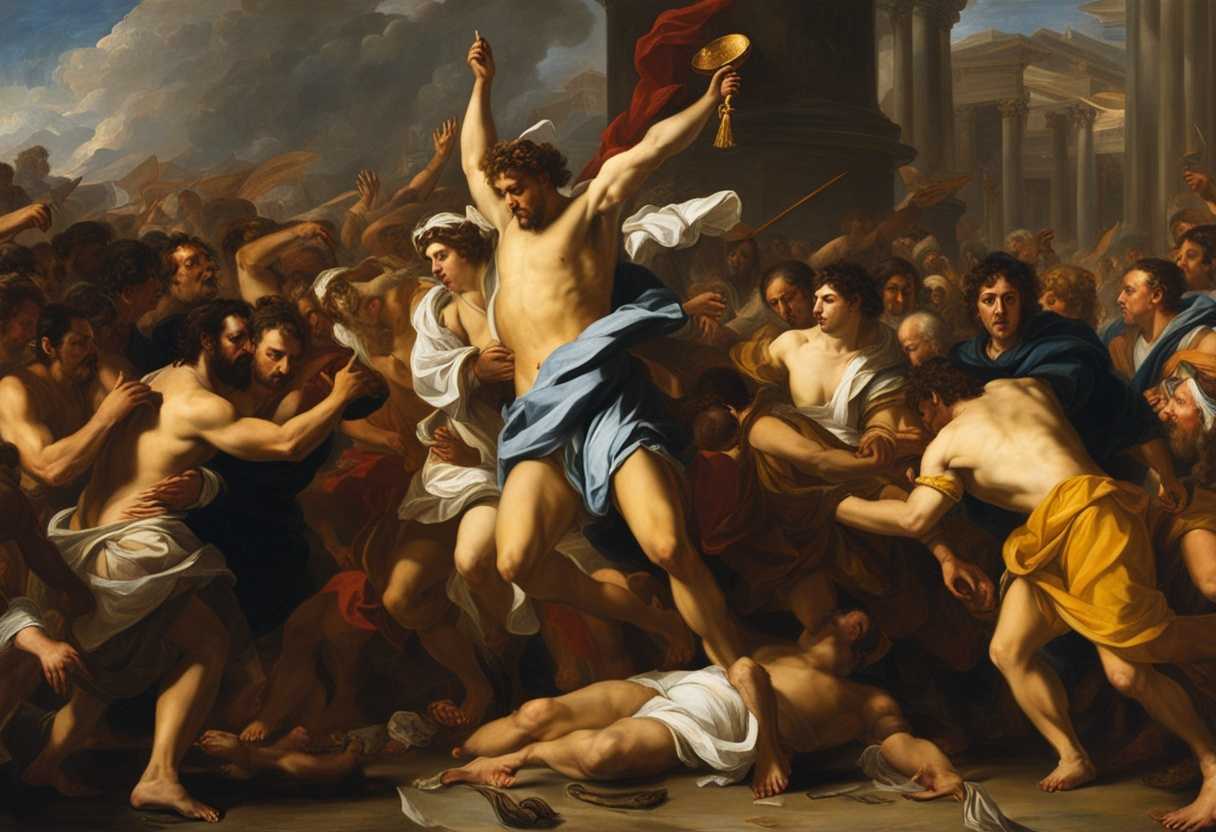
Setting the Scene for Exodus 32:1-4
The scene in Exodus 32:1-4 takes place shortly after Moses had gone up Mount Sinai to receive the Ten Commandments from God. The Israelites, led by Aaron, grew restless in Moses’ absence and began to doubt whether he would return. They gathered around Aaron and demanded that he make them gods to lead them. Feeling the pressure, Aaron asked the people to bring him their gold earrings, which he then fashioned into a golden calf.
The setting is in the camp of the Israelites at the base of Mount Sinai. The atmosphere is tense and chaotic as the people grow increasingly impatient and anxious about Moses’ prolonged absence. The golden calf stands prominently in the center, surrounded by a crowd of Israelites who are dancing and worshiping it. Aaron, feeling the weight of the situation, tries to appease the people by complying with their demands, despite knowing it goes against God’s commandments.
As the scene unfolds, the air is filled with the sound of revelry and idolatrous worship, contrasting sharply with the solemnity of the mountain where Moses is receiving divine instructions. The golden calf glitters in the sunlight, a stark symbol of the Israelites’ wavering faith and their tendency to turn away from God in times of uncertainty.
What is Exodus 32:1-4 about?
Oh, what a striking reminder of the human tendency to stray from the path of righteousness! This verse serves as a cautionary tale, highlighting the consequences of idolatry and the danger of placing worldly desires above our devotion to God. It prompts us to reflect on our own lives and consider whether we might be unknowingly worshipping our own “golden calves” – be it material possessions, status, or other fleeting pleasures that distract us from our faith.
Imagine the disappointment and grief God must feel when His people turn away from Him, defying His commandments and choosing false gods. This verse challenges us to examine our own hearts and actions, urging us to prioritize our relationship with God above all else. We should learn from the Israelites’ mistake and strive to remain steadfast in our faith, always seeking to honor and glorify God in all that we do. Walking in alignment with His will, not chasing after the temporary allure of earthly idols, brings true fulfillment and blessings.
Understanding what Exodus 32:1-4 really means
The Israelites, gathered at the foot of Mount Sinai, found themselves in a moment of uncertainty and impatience. As they awaited Moses’ return from receiving the divine commandments, their faith wavered, and they turned to Aaron, demanding gods to lead them. This impulsive request reveals a lack of trust in the unseen God and a desire for immediate, tangible guidance. Aaron, collecting gold from the people, crafted a golden calf, which the Israelites then worshipped, committing a grave act of idolatry.
“When the people saw that Moses was so long in coming down from the mountain,” signifies the impatience and doubt that plagued the Israelites. Their quick abandonment of faith in the face of uncertainty serves as a cautionary tale for believers today. The plea, “Come, make us gods who will go before us,” echoes the human tendency to seek visible, immediate solutions rather than trusting in God’s unseen hand guiding their lives. The declaration, “These are your gods, Israel, who brought you up out of Egypt,” starkly illustrates the sin of idolatry, attributing divine acts to man-made constructs.
In Deuteronomy 9:16, Moses recounts the gravity of the Israelites’ sin, emphasizing the swift descent into corruption. Psalm 106:19-21 mourns the people’s forgetfulness of God’s wonders, exchanging His glory for a mere image. Paul, in 1 Corinthians 10:7, warns against idolatry, using the golden calf incident as a cautionary example for the Corinthians and modern believers alike.
Today, impatience and a lack of faith remain prevalent challenges. In a world that values immediacy, the story of the golden calf reminds us to trust in God’s timing, even when answers seem delayed. While golden calves may not adorn our homes, modern idolatry takes various forms, such as materialism, career pursuits, or relationships. This narrative prompts introspection on the idols we may unknowingly elevate above God in our lives.
Imagine someone facing financial struggles who resorts to unethical means for quick relief, mirroring the Israelites’ impulsive actions. This anecdote underscores the importance of maintaining faith and integrity, even in adversity. The account of the golden calf serves as a poignant lesson on the perils of impatience, the significance of unwavering faith, and the insidious nature of idolatry. It urges us to trust in God’s timing, keeping our focus on Him, and resisting the allure of quick fixes or misplaced trust.
Are we worshiping true God or mere idols?
The Israelites turn away from the true God in this passage and instead construct an idol in the form of a golden calf. The people chose to worship this false image rather than the one true God who had led them out of Egypt. The act of creating and worshipping this calf was a clear violation of the first commandment, which instructs us not to have any other gods before the true God.
This passage serves as a warning to us about the dangers of idolatry and the temptations to worship false gods or idols in place of the one true God. It reminds us to remain faithful and devoted to the Lord, steering clear of any idols that may distract us from pure worship. We too must be vigilant in ensuring that we are worshipping the true God and not getting entangled in worshipping mere idols of our own making, just as the Israelites succumbed to the allure of the golden calf. This passage ultimately challenges us to reflect on our own worship practices and consider whether we are truly worshiping the one true God or if we have allowed any idols to take His place in our lives. It prompts us to realign our hearts and minds to focus on God alone, ensuring that our worship is directed towards Him and Him alone.
Application
In life’s fast-paced hustle, let’s not get sidetracked like the Israelites with their golden calf. Let’s stay steadfast in our faith, holding onto God tight even when things seem uncertain. Will you choose to anchor yourself in faith when faced with challenges, or will you be swayed by worldly solutions that lead you astray?

Reverend Michael Johnson is an experienced Church Minister with a profound expertise in spirituality and guidance. With a serene presence and a compassionate heart, he has faithfully served his congregation for over 20 years, leading them on a spiritual journey towards inner peace and enlightenment. Reverend Johnson’s extensive knowledge of religious philosophies and profound understanding of human nature have made him a trusted confidant and mentor to many, as he seamlessly weaves his profound wisdom into life teachings. Reverend Johnson’s calming demeanor and empathetic nature continue to uplift and heal souls, nurturing a sense of unity and tranquility within his community.