
Exodus 32:15-20 is about Moses descending from Mount Sinai, witnessing the Israelites’ worship of a golden calf, breaking the tablets of the Ten Commandments in anger, symbolizing the people’s betrayal and violation of their covenant with God.
15 Then Moses turned and went down from the mountain with the two tablets of the testimony in his hand, tablets that were written on both sides; on the front and on the back they were written.
16 The tablets were the work of God, and the writing was the writing of God, engraved on the tablets.
17 Now when Joshua heard the noise of the people as they shouted, he said to Moses, “There is a noise of war in the camp.”
18 But he said, “It is not the sound of shouting for victory, or the sound of the cry of defeat, but the sound of singing that I hear.”
19 And as soon as he came near the camp and saw the calf and the dancing, Moses’ anger burned hot, and he threw the tablets out of his hands and broke them at the foot of the mountain.
20 He took the calf that they had made and burned it with fire and ground it to powder and scattered it on the water and made the people of Israel drink it.
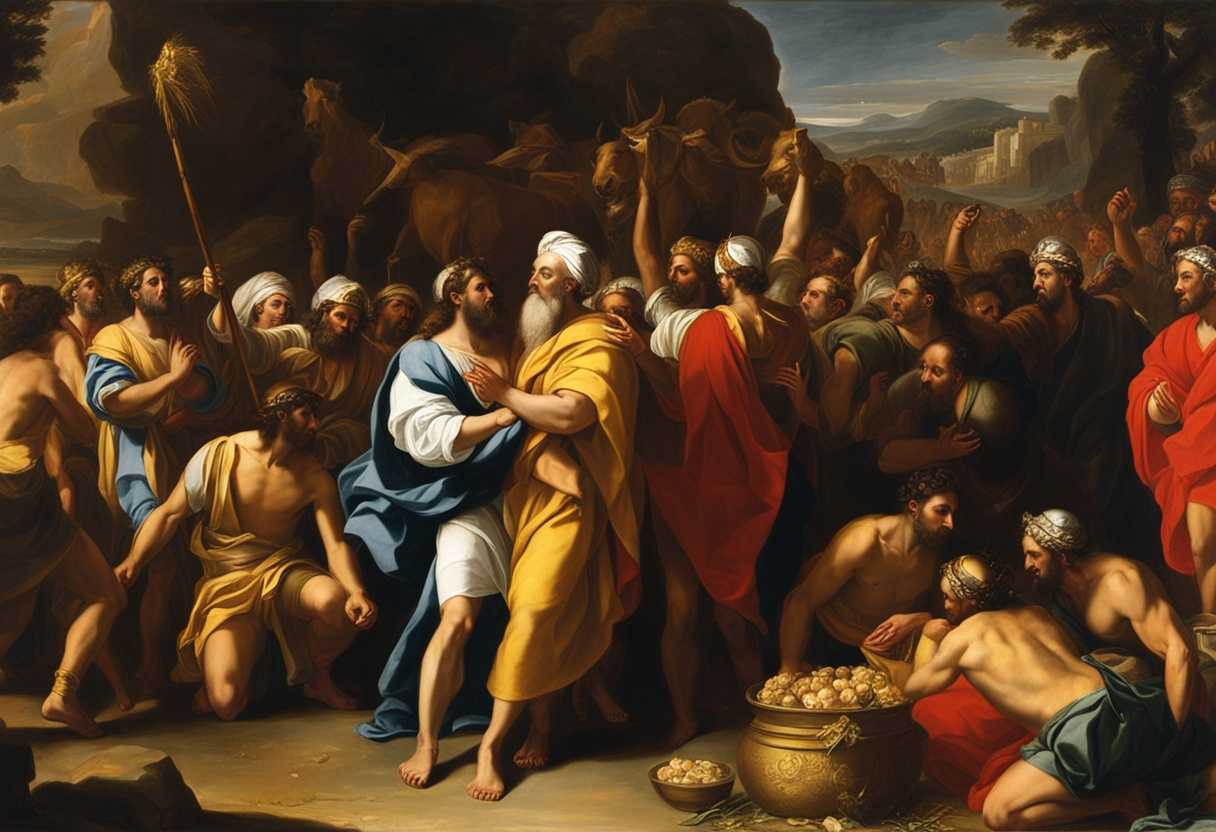
Setting the Scene for Exodus 32:15-20
The scene described in Exodus 32:15-20 takes place at the foot of Mount Sinai, where Moses had been communing with God for forty days and forty nights. As Moses descends the mountain carrying the two tablets of the Ten Commandments, he is accompanied by his assistant Joshua. The two men are filled with anticipation and a sense of duty as they approach the camp of the Israelites, unaware of the grave sin that has been committed in their absence.
Upon reaching the camp, Moses witnesses the Israelites engaging in idolatry and revelry, worshipping a golden calf they had fashioned in defiance of God’s commandments. In his righteous anger, Moses shatters the tablets at the sight of such disobedience. The atmosphere is tense as Moses confronts Aaron, who had played a role in the creation of the idol. The people are filled with fear and shame as Moses burns the calf, grinds it into powder, scatters it in the water, and makes the Israelites drink it as a form of punishment for their transgression. The scene is one of chaos and repentance, as the consequences of the Israelites’ actions become clear in the presence of their leader and God’s chosen messenger.
What is Exodus 32:15-20 about?
Can you imagine the intense feelings that Moses must have experienced in that moment of anger and disappointment? The breaking of the tablets symbolizes the severity of the Israelites’ betrayal of God’s commandments. It serves as a powerful visual representation of the broken relationship between the people and their divine laws.
Moses’ actions also highlight the consequences of idolatry and disobedience. He shows that the covenant between God and the Israelites has been breached by shattering the tablets, and that there are real repercussions for turning away from the teachings and guidance of the divine. This moment serves as a powerful reminder of the importance of faith, loyalty, and obedience in maintaining a strong connection with the divine.
So, as we reflect on this verse, let us consider the significance of the broken tablets and the lessons they teach us about the consequences of straying from our beliefs and commitments. Let us honor our spiritual obligations and remain steadfast in our devotion to what is truly sacred and meaningful in our lives.
Understanding what Exodus 32:15-20 really means
In Exodus 32:15-20, we witness a pivotal moment as Moses descends from Mount Sinai carrying the two tablets of the covenant law, only to discover the Israelites engaging in idolatry by worshiping a golden calf. This stark contrast between God’s divine communication through the tablets and the people’s disobedience highlights the fragility of faith and the allure of false gods. The tablets, representing God’s law and order, were not mere objects but a tangible connection to the Almighty, engraved with His commands as a covenant with His people.
As Moses beheld the scene of revelry and idol worship, his reaction was one of profound disappointment and righteous anger. He shattered the tablets, symbolizing the breaking of the covenant due to the people’s sin. This act of destruction was not a mere tantrum but a symbolic gesture of the consequences of turning away from God. By burning the golden calf, Moses demonstrated the need for repentance and the eradication of all idols that stand in the way of true worship.
The parallels between this ancient account and our modern lives are striking. While we may not bow down to golden calves, idolatry manifests in various forms today, such as the pursuit of wealth, success, or relationships that take precedence over our relationship with God. Just as Moses called the Israelites to repentance, we are urged to examine our hearts and turn away from our modern idols, recommitting ourselves to God’s commandments and His will for our lives.
The gravity of idolatry and the sanctity of God’s law are timeless truths that resonate across generations. In Deuteronomy 9:17, we see Moses breaking the tablets again, underscoring the severity of the people’s sin. The recurring theme of idolatry is also evident in 1 Kings 12:28-30, where Jeroboam leads Israel astray with golden calves. Even in the New Testament, Paul warns in Romans 1:22-23 about the dangers of exchanging the glory of God for created things, echoing the ancient sin of idol worship.
Consider a modern-day scenario where someone prioritizes their career above all else, neglecting their family and faith in the process. This individual may reach a breaking point, akin to Moses witnessing the golden calf, prompting a reevaluation of priorities and a return to what truly matters. Just as Moses took drastic action to confront idolatry, we are called to confront the idols in our lives and realign ourselves with God’s will.
In conclusion, the account of the golden calf in Exodus serves as a poignant reminder of the perils of idolatry, the necessity of repentance, and the enduring significance of God’s commandments. Let us heed this ancient lesson, examining our hearts for hidden idols and reaffirming our commitment to God, who alone deserves our worship and devotion.
Are we prioritizing material possessions over spiritual fulfillment?
The passage in Exodus 32:15-20 serves as a reminder of the consequences of prioritizing material possessions over spiritual fulfillment. The Israelites succumb to the temptation of worshipping the golden calf in this passage, turning away from their spiritual connection with God in exchange for a physical, material object. This action ultimately leads to their downfall and reprimand.
The verse demonstrates the danger of allowing material possessions to take precedence over spiritual growth and fulfillment. When individuals prioritize wealth, status, or possessions above their spiritual well-being, they may stray from their faith and lose sight of what truly matters. It serves as a cautionary tale to reflect on our own values and intentions, reminding us to nurture our spiritual connection above all else.
Instead of getting caught up in the pursuit of material wealth or possessions, it is essential to prioritize spiritual fulfillment and inner peace. We can find lasting contentment and purpose beyond material gain by focusing on strengthening our relationship with our faith and living in alignment with our values. This passage highlights the importance of maintaining a balanced perspective and not losing sight of the spiritual aspects of our lives amidst the distractions of the material world.
Application
Reflecting on Exodus 32:15-20, we are reminded of the dangers of straying from God’s path. Let’s commit to regularly assessing our choices against His guidance. It’s time to purge any distractions that may be weakening our connection to the divine. Will you rise to the challenge and cleanse your life of anything that obstructs your spiritual journey?

Reverend Michael Johnson is an experienced Church Minister with a profound expertise in spirituality and guidance. With a serene presence and a compassionate heart, he has faithfully served his congregation for over 20 years, leading them on a spiritual journey towards inner peace and enlightenment. Reverend Johnson’s extensive knowledge of religious philosophies and profound understanding of human nature have made him a trusted confidant and mentor to many, as he seamlessly weaves his profound wisdom into life teachings. Reverend Johnson’s calming demeanor and empathetic nature continue to uplift and heal souls, nurturing a sense of unity and tranquility within his community.