
Exodus 32:19-20 is about Moses expressing his anger and disappointment at the Israelites for worshipping the golden calf, symbolizing the consequences of idolatry and the breaking of the covenant with God.
19 And as soon as he came near the camp and saw the calf and the dancing, Moses’ anger burned hot, and he threw the tablets out of his hands and broke them at the foot of the mountain.
20 He took the calf that they had made and burned it with fire and ground it to powder and scattered it on the water and made the people of Israel drink it.
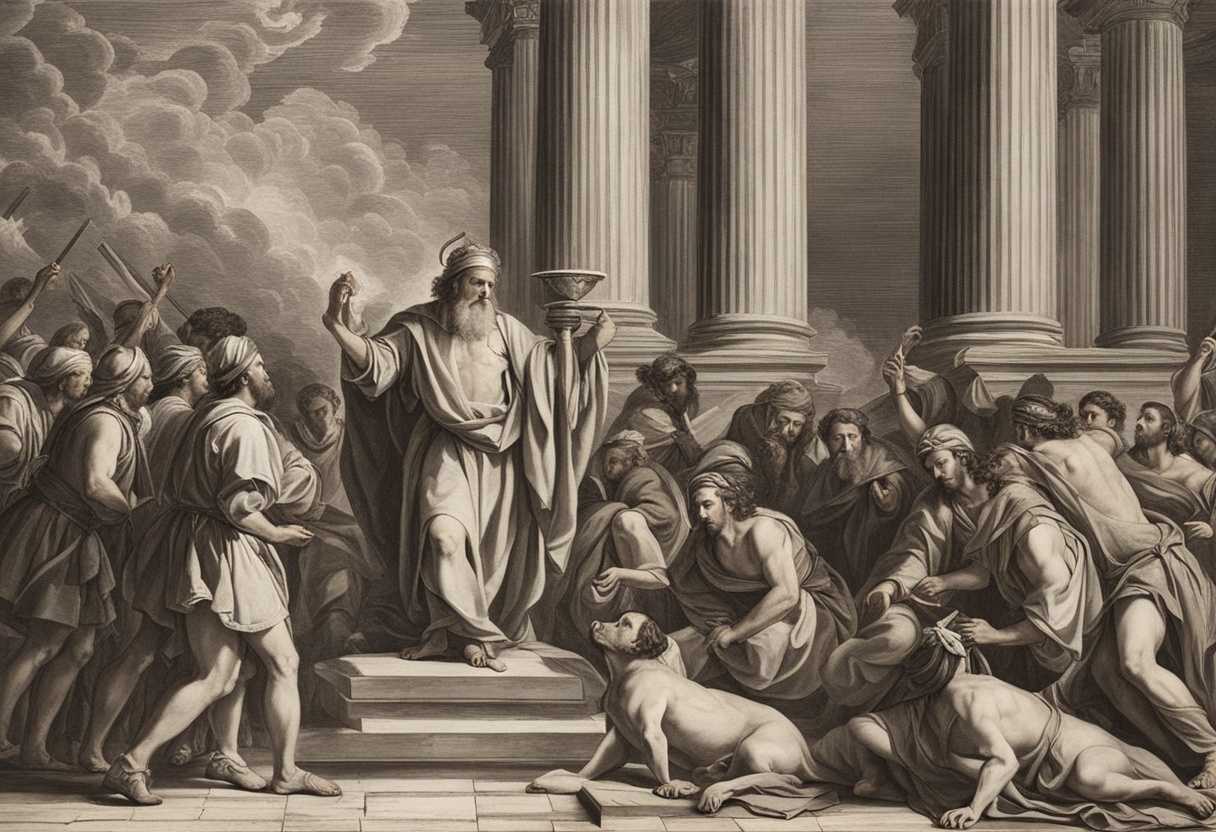
Setting the Scene for Exodus 32:19-20
The scene described in Exodus 32:19-20 takes place at the foot of Mount Sinai, where Moses had gone up to receive the Ten Commandments from God. The Israelites, led by Aaron, grew impatient during Moses’ absence and asked Aaron to make them a god to worship. Aaron collected their gold jewelry and fashioned a golden calf, which the people began to worship and offer sacrifices to.
As Moses descended the mountain with the tablets of the law in his hands, he saw the people dancing around the golden calf in revelry. In his anger, he threw the tablets to the ground, shattering them. Moses then took the calf, burned it, ground it into powder, scattered it on water, and made the Israelites drink it as a punishment for their idolatry.
The scene is chaotic and tense, with the Israelites caught in the act of worshipping a false god, and Moses, filled with righteous anger, confronting them for their betrayal of the one true God. The surroundings are likely dusty and dry, with the mountain looming in the background, serving as a stark reminder of the presence of God and the covenant that the people had just broken.
What is Exodus 32:19-20 about?
Isn’t it intriguing how this verse showcases the depth of God’s relationship with His people? Imagine the scene when Moses, after receiving the Ten Commandments from God, encounters the people worshipping a golden calf. This act of idolatry goes against the very core of their covenant with God. Moses destroys the golden calf, physically dismantling the false idol and signifying God’s intolerance towards anything that comes between Him and His people.
It’s a powerful reminder of the purity of faith and the importance of staying true to God’s teachings. Through this act, Moses emphasizes the singular devotion that God demands from His people and the severe consequences of straying from His path. God’s jealousy is not born out of pettiness but out of a desire for a genuine and unwavering relationship with His creations. The destruction of the golden calf serves as a symbol of God’s uncompromising stance on idolatry and His expectation for His people to prioritize their faith above all else.
Understanding what Exodus 32:19-20 really means
In Exodus 32:19-20, we witness a pivotal moment in the narrative where Moses, upon descending from Mount Sinai with the tablets of the covenant law, is confronted with the sight of the Israelites worshipping a golden calf. This act of idolatry stirs a righteous anger within Moses, symbolized by the burning of his anger. The throwing and breaking of the tablets signify the shattering of the covenant due to the people’s sin, highlighting the severity of their actions. The subsequent burning, grinding to powder, and scattering of the idol on the water, which the Israelites are made to drink, serve as powerful symbols of the complete eradication and internalization of sin.
This event serves as a stark reminder of the Israelites’ quick turn to disobedience shortly after their deliverance from Egypt, emphasizing the fickle nature of human faithfulness. The gravity of their sin is further underscored in related biblical passages such as Deuteronomy 9:17-21, where Moses intercedes for the people, and in 1 Corinthians 10:7, where Paul warns against idolatry using the golden calf incident as a cautionary tale. Psalm 106:19-23 also reflects on this idolatry, highlighting Moses’ role in averting God’s wrath through his actions.
The relevance of this narrative to people today is profound. While physical idol worship may not be prevalent, modern idolatry can manifest in various forms such as materialism or the pursuit of success at the expense of spiritual priorities. Moses’ righteous anger teaches us about the importance of confronting sin and injustice boldly, mirroring the need for accountability and integrity in our actions. The consequences faced by the Israelites serve as a stark reminder that sin carries serious repercussions, necessitating repentance and a turning back to God.
Consider a scenario where a community leader uncovers unethical practices within their team. Their immediate reaction mirrors Moses’ response – a mix of anger and disappointment, leading to decisive action to address the wrongdoing and emphasize the importance of integrity. This anecdote illustrates the significance of confronting and rectifying sin, even in contemporary contexts. Reflecting on this narrative prompts us to examine our lives for areas where we may be prioritizing something above God, and challenges us to respond to sin and injustice in our communities with the same fervor as Moses.
In conclusion, by delving into the depth of Moses’ actions and the gravity of the golden calf incident, we are reminded of the importance of faithfulness to God and the severe consequences of idolatry. Let us reflect on our own lives, considering how we respond to sin and injustice, and strive to emulate Moses’ unwavering commitment to righteousness and accountability.
How can we avoid worshiping false idols today?
One way to avoid worshiping false idols today is by recognizing the dangers of placing our trust and faith in material possessions, fame, or worldly success. Instead of seeking fulfillment and validation from these temporary and superficial sources, we can turn to a higher power or inner strength for guidance and support. We can avoid falling into the trap of idolizing things that ultimately hold no true value or purpose by focusing on values such as compassion, integrity, and humility.
Another way to steer clear of worshiping false idols is by cultivating a sense of gratitude and mindfulness in our daily lives. We can prevent ourselves from constantly chasing after the next big thing that promises fleeting satisfaction by appreciating the blessings and gifts we already have. Practicing gratitude can help us remain grounded in what truly matters, making it easier to resist the allure of false idols that only serve to distract us from our authentic selves and higher truths.
Lastly, surrounding ourselves with a supportive community of like-minded individuals who share our beliefs and values can also help protect us from the temptation of worshiping false idols. We can find strength and guidance in moments of doubt or vulnerability by building strong connections with others who encourage us to stay true to our principles and aspirations. Together, we can hold each other accountable and remind one another of the importance of staying on a path of genuine worship and reverence.
Application
In the fast-paced world we live in, distractions can easily lead us astray from what truly matters. Take a moment to reflect on your actions and make sure they align with your values. Just as in a busy work schedule or a chaotic family life, staying true to your beliefs in the midst of temptations is crucial. Will you choose to hold onto your integrity and resist the alluring path of wrongdoing?

Reverend Michael Johnson is an experienced Church Minister with a profound expertise in spirituality and guidance. With a serene presence and a compassionate heart, he has faithfully served his congregation for over 20 years, leading them on a spiritual journey towards inner peace and enlightenment. Reverend Johnson’s extensive knowledge of religious philosophies and profound understanding of human nature have made him a trusted confidant and mentor to many, as he seamlessly weaves his profound wisdom into life teachings. Reverend Johnson’s calming demeanor and empathetic nature continue to uplift and heal souls, nurturing a sense of unity and tranquility within his community.