
Exodus 32:21-24 is about Moses questioning Aaron regarding the golden calf idol the Israelites made, highlighting the consequences of idolatry and the weakness of human faith when faced with temptation.
21 And Moses said to Aaron, “What did this people do to you that you have brought such a great sin upon them?”
22 And Aaron said, “Let not the anger of my lord burn hot. You know the people, that they are set on evil.
23 For they said to me, ‘Make us gods who shall go before us. As for this Moses, the man who brought us up out of the land of Egypt, we do not know what has become of him.’
24 So I said to them, ‘Let any who have gold take it off.’ So they gave it to me, and I threw it into the fire, and out came this calf.”
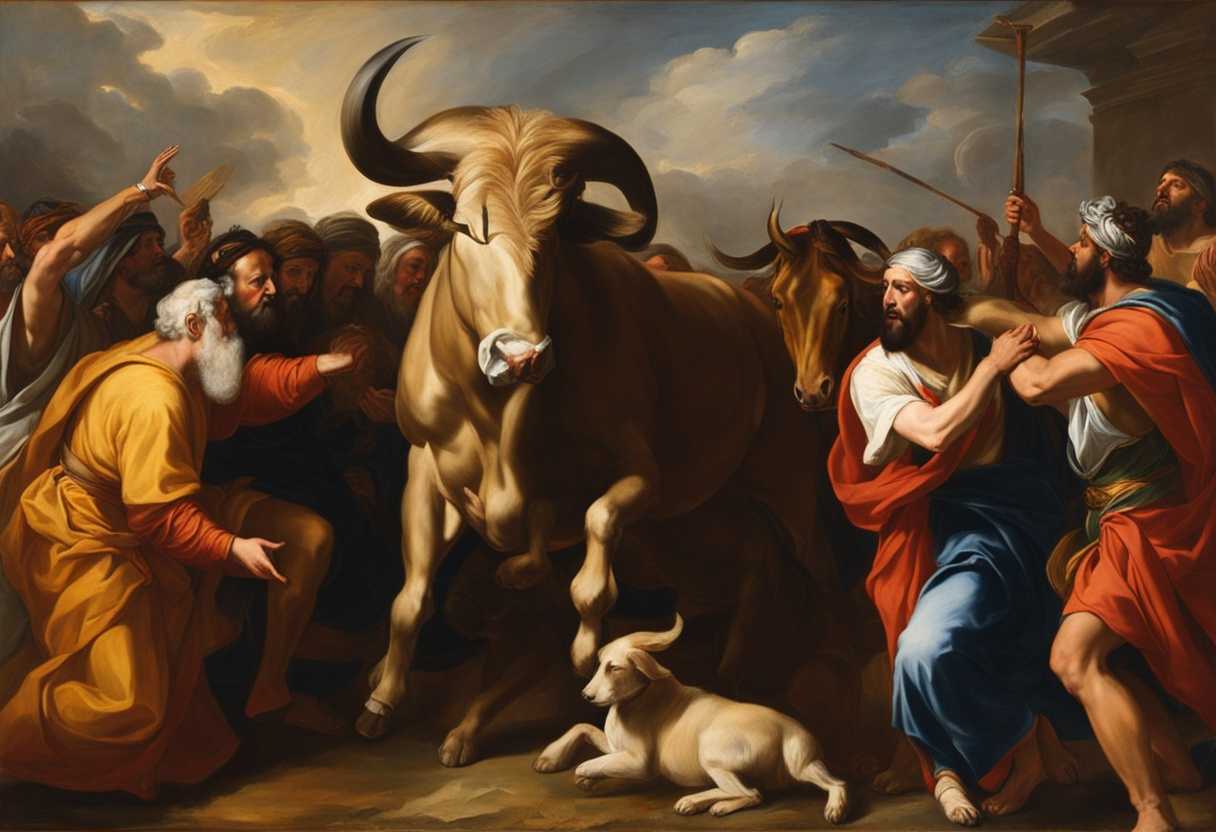
Setting the Scene for Exodus 32:21-24
In Exodus 32:21-24, we find ourselves in the midst of a tense and pivotal moment in the wilderness with Moses and Aaron. The Israelites, led by Aaron, have just fashioned a golden calf to worship in place of the unseen God who brought them out of Egypt. As Moses descends from Mount Sinai with the tablets of the Ten Commandments in hand, he is met with the sight of the people reveling in idolatry and disobedience.
Moses, filled with righteous anger and disbelief at the betrayal of the covenant, confronts Aaron about the golden calf. Aaron, in an attempt to deflect blame, explains that the people demanded a god to lead them, and he succumbed to their pressure by collecting their gold and fashioning the idol. The scene is charged with tension as Moses grapples with the gravity of the situation and the need to intercede on behalf of the people before God’s wrath is unleashed.
Surrounded by the vast expanse of the wilderness, with Mount Sinai looming in the background, Moses and Aaron stand at a crossroads of faith and fidelity. The air is thick with the weight of their choices, as they navigate the delicate balance between justice and mercy in the face of the people’s transgressions. This moment serves as a powerful reminder of the consequences of straying from the path of righteousness and the enduring faithfulness of God in the midst of human frailty.
What is Exodus 32:21-24 about?
A powerful example of accountability and responsibility within a close relationship is seen in this verse. Moses, as a leader, confronts his brother Aaron for creating a golden calf which goes against their beliefs and values. This interaction emphasizes the importance of standing up for what is right and addressing wrongdoing, even if it means holding a loved one accountable for their actions. It shows that no one is above reproach, not even family, when it comes to upholding moral standards and staying true to one’s beliefs. This verse prompts us to consider our own roles in our relationships and communities as we reflect on it. Are we willing to speak up against actions that go against our core values, even if it means confronting those we care about? Do we hold ourselves and others accountable for their actions, even when it is difficult or uncomfortable? Integrity and moral courage are essential in maintaining a strong and righteous community, where individuals are held responsible for their actions and where accountability is valued above all else.
Understanding what Exodus 32:21-24 really means
In the narrative of the Golden Calf in Exodus 32:21-24, we witness a pivotal moment where Moses questions Aaron about his involvement in the grave sin of idol worship. The probing inquiry, “What did these people do to you, that you led them into such great sin?” underscores the weight of leadership and the profound impact it can have on those being led astray. It prompts us to consider the influence we wield over others and the responsibility that comes with it. How often do we, like Aaron, find ourselves in positions of leadership, facing choices that can either guide others towards righteousness or lead them down a path of wrongdoing?
Aaron’s response, “Do not be angry, my lord. You know how prone these people are to evil,” reveals a common tendency to deflect blame onto external factors rather than taking personal responsibility. It raises the question of how often we attribute our failings to circumstances or the actions of others, rather than acknowledging our own role in the outcomes we face. Are we quick to point fingers when confronted with our mistakes, or do we possess the humility to admit our faults and seek redemption?
The Israelites’ impatience and lack of faith in God’s timing are palpable in their demand to Aaron, “Make us gods who will go before us.” This impulsive desire for immediate solutions resonates with the human inclination towards instant gratification and tangible results. How often do we, like the Israelites, seek quick fixes to our problems, forsaking trust in God’s providence and wisdom? This passage challenges us to reflect on our own tendencies towards impatience and the need for steadfast faith in God’s guidance.
Aaron’s feeble excuse, “I threw it into the fire, and out came this calf!” epitomizes the absurd lengths to which we may go to absolve ourselves of guilt. His attempt to downplay his role in the creation of the idol serves as a cautionary tale against the dangers of evading accountability. How often do we resort to similar tactics of minimizing our culpability rather than facing the consequences of our actions with honesty and integrity?
As we contemplate the lessons embedded in this passage, we are reminded of the timeless themes of leadership, responsibility, and human nature that continue to resonate in our lives today. Whether in religious, professional, or personal contexts, the call to uphold integrity, take ownership of our choices, and trust in God’s guidance remains ever relevant. May we heed the warnings of Aaron’s shortcomings and strive to emulate Moses’ unwavering commitment to righteousness and accountability in our own journeys of faith and leadership.
How can we effectively address and repent from idolatry?
We can effectively address and repent from idolatry by recognizing that the act of idolatry involves putting something else before God in our lives. This can be anything that we prioritize or value more than our relationship with God, whether it be material possessions, status, relationships, or even our own desires. To repent from idolatry, we must acknowledge where we have placed these idols in our hearts and lives and intentionally choose to give God the rightful place of priority and worship.
Repentance involves a change of heart and mind, turning away from idolatrous behavior and turning towards God in pursuit of a deeper relationship with Him. This may require us to let go of the things or desires that have taken precedence over our worship of God. Through sincere repentance, we seek God’s forgiveness and ask for His strength to resist the temptation of idolatry in the future. We can actively work towards breaking free from the grips of idolatry and experiencing the fullness of His presence and blessings by committing ourselves to placing God above all else in our lives.
Application
Just as Moses didn’t shy away from confronting the Israelites’ disobedience, we must also boldly confront the wrongs around us. Let’s be like Moses, fearlessly championing what is right in our work and family circles. When we witness injustice or moral dilemmas, let’s not hesitate to act. Will you rise up like Moses did, transcending fear to make a difference in your world?

Reverend Michael Johnson is an experienced Church Minister with a profound expertise in spirituality and guidance. With a serene presence and a compassionate heart, he has faithfully served his congregation for over 20 years, leading them on a spiritual journey towards inner peace and enlightenment. Reverend Johnson’s extensive knowledge of religious philosophies and profound understanding of human nature have made him a trusted confidant and mentor to many, as he seamlessly weaves his profound wisdom into life teachings. Reverend Johnson’s calming demeanor and empathetic nature continue to uplift and heal souls, nurturing a sense of unity and tranquility within his community.