
Exodus 32:31-32 is about Moses interceding on behalf of the Israelites, offering himself as a sacrifice to atone for their sin of worshiping the golden calf, demonstrating his deep love and devotion to his people.
32 Then Moses returned to the Lord, and said, “Alas, this people has sinned a great sin. They have made for themselves gods of gold.
32 But now, if you will forgive their sin—but if not, please blot me out of your book that you have written.”
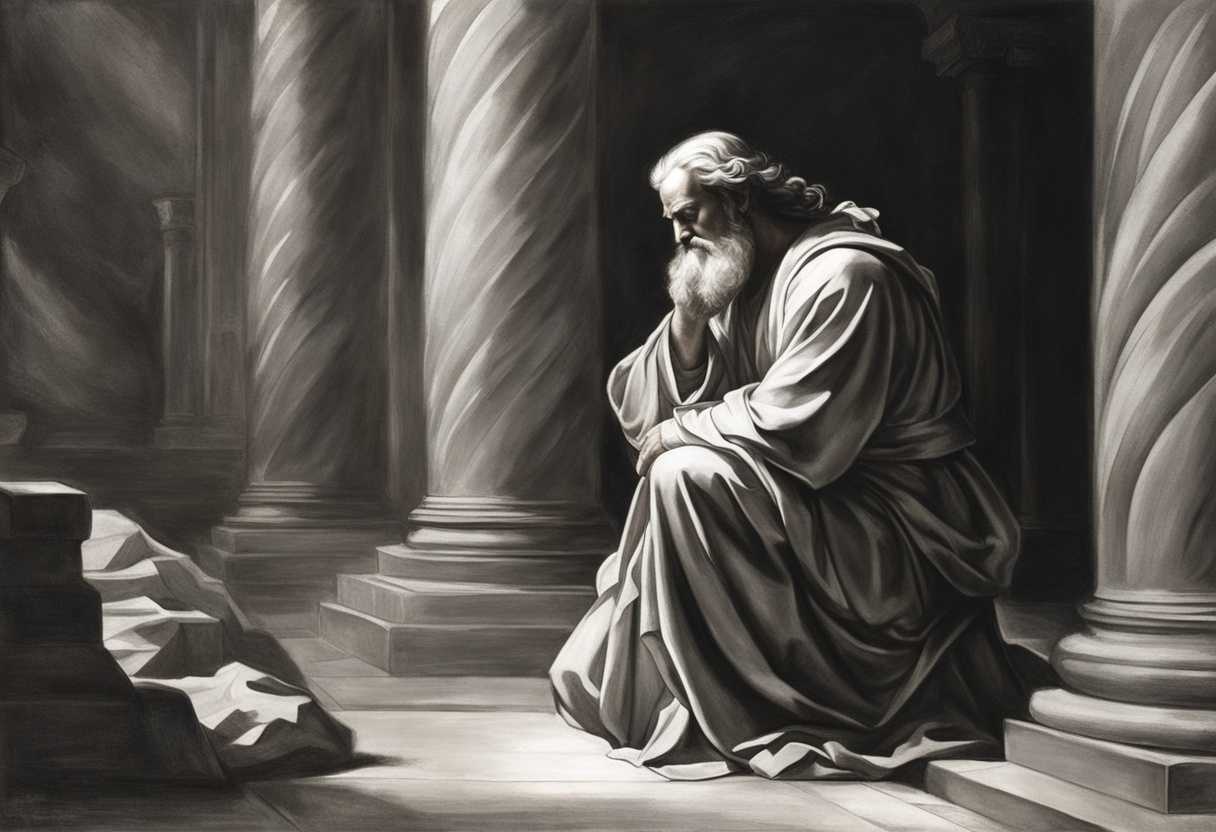
Setting the Scene for Exodus 32:31-32
The scene in Exodus 32:31-32 takes place after the Israelites have sinned by creating and worshiping a golden calf while Moses was on Mount Sinai receiving the Ten Commandments from God. In this moment, Moses has returned from the mountain and is confronted with the grave sin of his people. He is deeply troubled by their actions and the consequences they will face because of their disobedience to God.
Surrounded by the vast desert landscape of Mount Sinai, Moses stands before the Israelites, who are filled with shame and fear. He intercedes on their behalf, pleading with God to forgive them and spare them from the punishment they deserve. Despite the gravity of their sin, Moses shows his deep love and compassion for his people, willing to sacrifice his own relationship with God if it means saving the Israelites from destruction.
The tension in the air is palpable as Moses wrestles with the weight of the situation, torn between his loyalty to God and his desire to see his people redeemed. It is a powerful moment of intercession and redemption, showcasing the profound faith and leadership of Moses in the face of adversity.
What is Exodus 32:31-32 about?
Moses performs an incredible act of selflessness and compassion in this verse. He is willing to sacrifice his own relationship with God, offering to be blotted out from God’s book of life, to save the people of Israel from their sin. This selfless act showcases Moses’ deep love for his people and his unwavering dedication to their well-being. He is willing to put his own life on the line for the sake of others, embodying the true essence of leadership and self-sacrifice. We reflect on this verse, prompting us to consider the depth of our own compassion and willingness to serve others. Do we possess the same level of selflessness as Moses, putting the needs of others above our own desires? How far are we willing to go to help those around us, even if it means sacrificing our own comfort or security? Moses’ actions serve as a powerful example for us to emulate in our own lives, inspiring us to act with kindness, generosity, and empathy towards others, even in the face of adversity or personal sacrifice.
Understanding what Exodus 32:31-32 really means
The Book of Exodus narrates the Israelites’ journey from slavery in Egypt to the Promised Land, led by Moses. In Exodus 32, while Moses receives the Ten Commandments on Mount Sinai, the Israelites fashion a golden calf to worship. Witnessing this idolatry, Moses pleads with God to forgive the people’s grave sin, acknowledging its severity.
Moses’s words, “Oh, what a great sin these people have committed,” reveal his deep understanding of the seriousness of idol worship. He then implores God, saying, “But now, please forgive their sin,” showcasing his role as an intercessor and his profound compassion for his community. Furthermore, Moses offers to be “blotted out of the book” if God does not forgive the people, displaying remarkable selflessness and leadership.
This passage resonates with other biblical verses, such as Psalm 51:1-2, where David seeks mercy for his transgressions, and Romans 9:3, where Paul expresses a willingness to be cursed for his people’s sake. Jesus’s words in John 15:13 about laying down one’s life for friends also echo the sacrificial love demonstrated by Moses.
Today, we are reminded to emulate Moses’s intercessory role by praying and advocating for others, showing compassion and seeking God’s mercy on their behalf. Acknowledging our sins is crucial for repentance and reconciliation with God, following Moses’s example of humility. Moreover, Moses’s selflessness and readiness to sacrifice for his people inspire us to prioritize the needs of others over our own desires.
Consider a scenario where a community leader discovers a grave mistake within their group. Instead of shunning or blaming them, the leader steps up, admits the error, and pleads for mercy on their behalf. This act of selflessness and advocacy can motivate the community to take responsibility, seek forgiveness, and ultimately experience healing and restoration.
In conclusion, Exodus 32:31-32 teaches us about intercession, the gravity of sin, and the power of selfless leadership. It urges us to be compassionate advocates, acknowledge our faults, and be willing to make sacrifices for the greater good. Let us reflect on Moses’s actions and strive to embody such qualities in our own lives.
Do we intercede for the forgiveness of others’ sins?
Moses intercedes for the forgiveness of the Israelites’ sin of worshiping the golden calf in the verses you mentioned. He asks God to forgive them or to blot him out of His book instead. This shows us that it is possible to intercede for the forgiveness of others’ sins. However, it is important to note that ultimately, forgiveness comes from God, and our intercession should be in alignment with His will and purposes. We, as believers, can and should intercede for the forgiveness of others’ sins. We can pray for their repentance, restoration, and reconciliation with God. It is an act of love and compassion to stand in the gap for others who have gone astray, just as Moses did for the Israelites. Our prayers can have a powerful impact on those we intercede for, as we bring their needs before a gracious and merciful God who is willing to forgive.
Intercession for the forgiveness of others’ sins should be done with humility, faith, and a genuine desire for their spiritual well-being. It should be done with the understanding that God’s mercy is ultimately what brings forgiveness, and we are simply aligning our hearts and prayers with His will. We demonstrate our love for others and our trust in God’s redemptive power to bring about transformation and reconciliation.
Application
In a world where distractions and temptations are rampant, it’s easy to lose sight of our spiritual journey. Like Moses, let’s stand in the gap for our loved ones who may have drifted away from their faith. Let’s be the guiding light, offering our prayers and love to lead them back to the path of righteousness. Will you join me in being a beacon of hope and love for those in need of spiritual guidance?

Reverend Michael Johnson is an experienced Church Minister with a profound expertise in spirituality and guidance. With a serene presence and a compassionate heart, he has faithfully served his congregation for over 20 years, leading them on a spiritual journey towards inner peace and enlightenment. Reverend Johnson’s extensive knowledge of religious philosophies and profound understanding of human nature have made him a trusted confidant and mentor to many, as he seamlessly weaves his profound wisdom into life teachings. Reverend Johnson’s calming demeanor and empathetic nature continue to uplift and heal souls, nurturing a sense of unity and tranquility within his community.