
Exodus 32:32-33 is about Moses’ willingness to sacrifice his own place in the Book of Life in order to intercede for the forgiveness of the people of Israel who had sinned against God.
32 But now, if you will forgive their sin—but if not, please blot me out of your book that you have written.”
33 But the Lord said to Moses, “Whoever has sinned against me, I will blot out of my book.
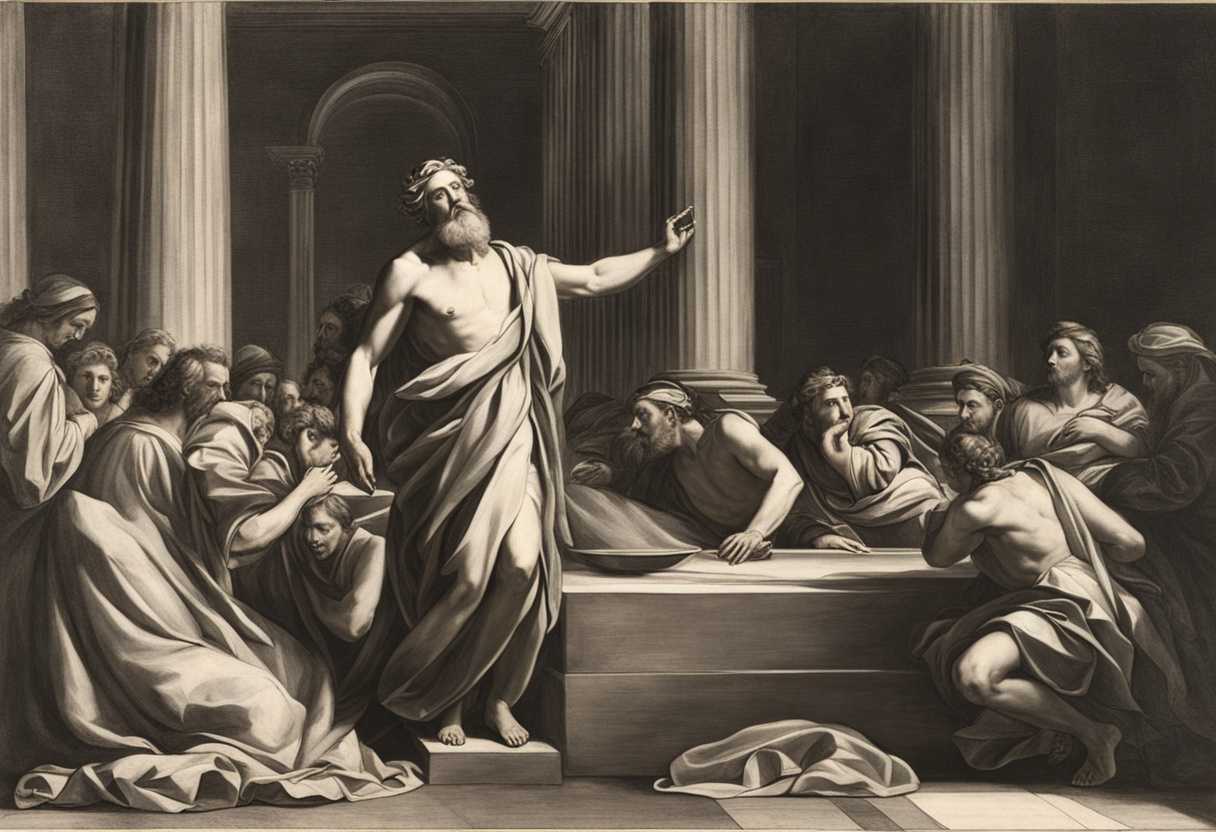
Setting the Scene for Exodus 32:32-33
In Exodus 32:32-33, we find Moses standing before God on Mount Sinai, interceding on behalf of the Israelites who had sinned by creating and worshiping a golden calf. The scene is tense and dramatic, with Moses pleading with God to forgive the people for their transgressions. The air is thick with the weight of the Israelites’ disobedience, and the future of the nation hangs in the balance.
Surrounded by the rugged beauty of the mountain, Moses stands as a mediator between the people and God. The Israelites, who had been led out of Egypt by Moses with great signs and wonders, had quickly turned away from the one true God to worship a false idol. Despite their faithlessness, Moses, in his deep love for his people, bravely steps forward to ask for God’s mercy and forgiveness. The gravity of the situation is palpable as Moses puts his own relationship with God on the line to advocate for the wayward Israelites.
As the wind whips around the mountain and the clouds gather overhead, Moses’ words echo through the rocky terrain, his heart heavy with the burden of leadership. In this pivotal moment, the fate of the Israelites hangs in the balance, and Moses’ faith and courage are put to the ultimate test as he pleads for God’s grace and guidance.
What is Exodus 32:32-33 about?
Moses offers to be blotted out from God’s book for the sake of the people’s sin in this powerful verse from the Bible. This profound offer embodies the depths of Moses’ love and compassion for his community. It speaks to the sacrificial nature of true leadership and the willingness to bear the consequences of others’ actions.
God’s response, however, serves as a reminder of individual accountability and the consequences of our own choices. Despite Moses’ noble gesture, God holds each person responsible for their own actions. This verse sheds light on the importance of personal responsibility and the need for each individual to own up to their mistakes and seek forgiveness. Reflecting on this verse prompts us to consider the true essence of leadership, the depth of our compassion for others, and the significance of taking responsibility for our own actions. It challenges us to examine our own values and actions, asking ourselves if we are willing to bear the burdens of others, and if we are ready to be held accountable for our own decisions.
Understanding what Exodus 32:32-33 really means
In Exodus 32:32-33, we witness a poignant moment where Moses, in a selfless act of leadership and intercession, offers to have his name blotted out of God’s book in exchange for the forgiveness of the Israelites who had sinned by worshipping the golden calf. This gesture of Moses, saying, “Blot me out of your book,” reveals the depth of his love and responsibility as a leader. It showcases a willingness to sacrifice his own standing with God for the sake of his people, embodying true selflessness and care.
On the other hand, God’s response, “Whoever has sinned against me I will blot out of my book,” underscores the principle of personal accountability. Each individual is held responsible for their actions before God. This notion of accountability resonates throughout the Bible, emphasizing the importance of righteousness and the consequences of one’s choices.
The parallel passages in Psalm 69:28 and Revelation 3:5 further illuminate the concept of the book of life. Psalm 69:28 speaks of being blotted out of the book of life for unrighteousness, highlighting the significance of living a righteous life. In contrast, Revelation 3:5 offers hope and assurance to the faithful, promising that their names will not be blotted out but acknowledged before God and His angels.
The relevance of these verses extends to our lives today. They remind us of our personal responsibility for our actions, just as the Israelites were held accountable for their worship of the golden calf. Moreover, Moses’ act of intercession serves as a powerful example of selfless leadership and compassion, qualities that are crucial in our modern world where leadership is often tested.
These verses also bring to light the delicate balance between divine justice and mercy. While God’s justice demands accountability, His mercy offers forgiveness and redemption to those who seek it. This balance challenges us to reflect on our own actions, strive for righteousness, and embrace the power of intercession and compassion in our relationships and communities.
To illustrate the profound impact of these principles, consider a teacher faced with students who have cheated on an exam. One student, innocent of cheating, steps forward to take the blame to protect their friends. The teacher, recognizing the student’s integrity, addresses each student’s actions individually, mirroring Moses’ intercession and God’s response. This anecdote underscores the importance of personal accountability and the transformative power of selfless love in resolving conflicts and fostering understanding.
In conclusion, Exodus 32:32-33 offers valuable insights into the responsibilities of leadership, the significance of personal accountability, and the harmonious interplay of justice and mercy in our relationship with God. These verses challenge us to examine our own conduct, aspire towards righteousness, and embrace the virtues of intercession and compassion in our interactions with others.
Do our actions affect our spiritual standing with God?
Yes, our actions do have an impact on our spiritual standing with God. Moses is offering to give up his place in the book of life for the sake of the Israelites who had sinned in the context of these verses. This shows that individuals can intercede on behalf of others and their actions can affect the forgiveness and blessings of God upon a group of people.
Moses’ willingness to sacrifice his own standing with God highlights the importance of taking responsibility for our actions and seeking forgiveness when we have fallen short. We can improve our spiritual standing and demonstrate our dedication to living in accordance with God’s will by actively turning away from sin and seeking reconciliation with God. These verses ultimately emphasize the significance of our actions in determining our relationship with God. While God is ultimately the judge of our hearts, our actions are a reflection of our commitment to Him and can influence the way He responds to us.
Application
In a world where we are all connected like colleagues in a bustling office, let us take on the noble duty of being the dedicated employee who goes above and beyond for our coworkers. Just as Moses pleaded for his people, so too can we advocate for others in need of support and kindness. Will you step up to be the champion in the workplace of life, showing up for one another in times of trial and triumph?

Reverend Michael Johnson is an experienced Church Minister with a profound expertise in spirituality and guidance. With a serene presence and a compassionate heart, he has faithfully served his congregation for over 20 years, leading them on a spiritual journey towards inner peace and enlightenment. Reverend Johnson’s extensive knowledge of religious philosophies and profound understanding of human nature have made him a trusted confidant and mentor to many, as he seamlessly weaves his profound wisdom into life teachings. Reverend Johnson’s calming demeanor and empathetic nature continue to uplift and heal souls, nurturing a sense of unity and tranquility within his community.