
Exodus 32:9-14 is about Moses pleading with God to show mercy to the people of Israel despite their worship of the golden calf, highlighting God’s capacity for forgiveness and willingness to relent from bringing disaster upon his people when interceded for.
9 And the Lord said to Moses, “I have seen this people, and behold, it is a stiff-necked people.
10 Now therefore let me alone, that my wrath may burn hot against them and I may consume them, in order that I may make a great nation of you.
11 But Moses implored the Lord his God and said, “O Lord, why does your wrath burn hot against your people, whom you have brought out of the land of Egypt with great power and with a mighty hand?
12 Why should the Egyptians say, ‘With evil intent did he bring them out, to kill them in the mountains and to consume them from the face of the earth’? Turn from your burning anger and relent from this disaster against your people.
13 Remember Abraham, Isaac, and Israel, your servants, to whom you swore by your own self, and said to them, ‘I will multiply your offspring as the stars of heaven, and all this land that I have promised I will give to your offspring, and they shall inherit it forever.’”
14 And the Lord relented from the disaster that he had spoken of bringing on his people.
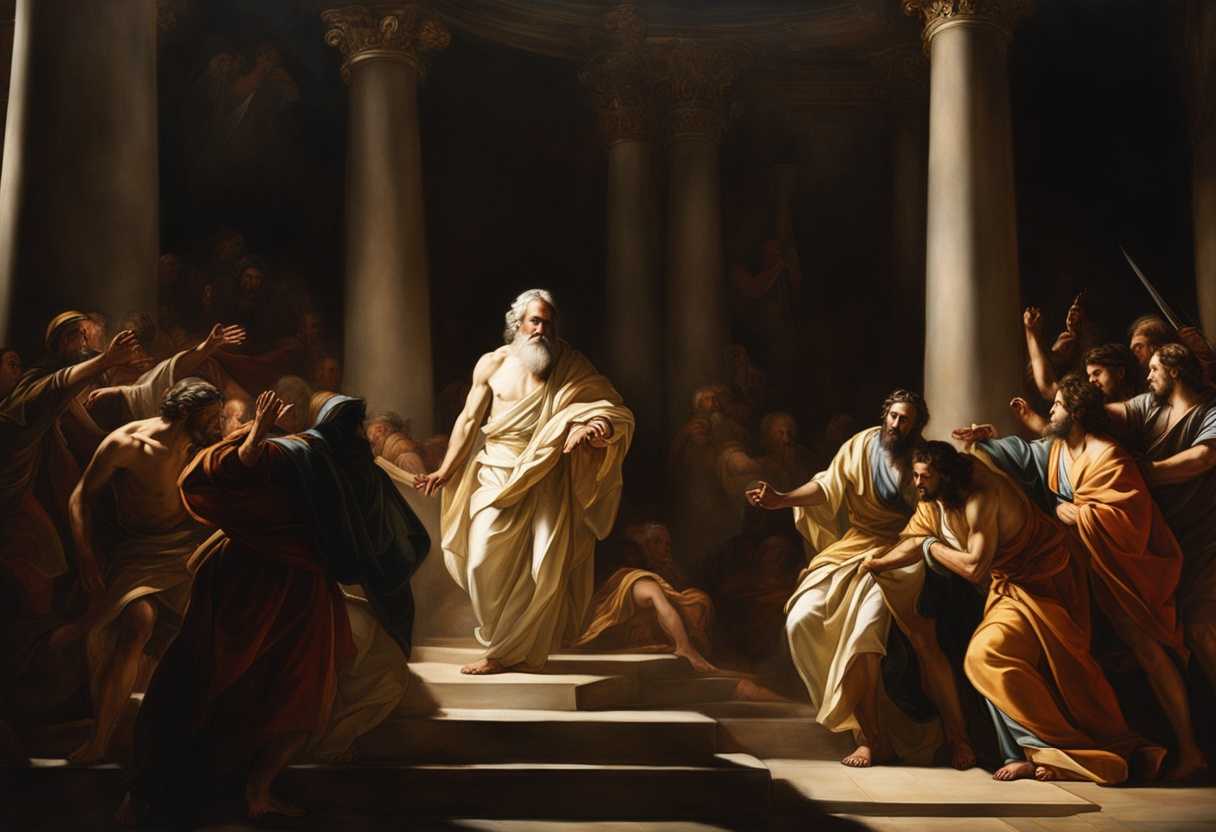
Setting the Scene for Exodus 32:9-14
The scene in Exodus 32:9-14 takes place at the foot of Mount Sinai, where Moses had gone up to receive the Ten Commandments from God. The Israelites, led by Aaron, grew impatient during Moses’ absence and decided to create a golden calf to worship as their god. As Moses descended the mountain with the tablets of the law in hand, he was met with the sight of the people dancing and worshiping the idol they had fashioned.
Moses was accompanied by his brother Aaron, who had played a significant role in the creation of the golden calf. The Israelites, who had been delivered from slavery in Egypt by God’s mighty hand, were now engaging in idolatry and disobedience. The atmosphere was tense as Moses confronted Aaron and the people for their grievous sin, pleading with God to show mercy and not bring destruction upon them.
The surroundings were dramatic, with the majestic Mount Sinai towering in the background and the camp of the Israelites spread out below. The people were caught in a moment of revelry and idol worship, oblivious to the gravity of their actions. Moses stood as a mediator between the people and God, interceding on behalf of the wayward Israelites and seeking forgiveness for their transgressions.
What is Exodus 32:9-14 about?
Moses takes on the role of advocate on behalf of the Israelites in this verse. Despite their transgressions and unfaithfulness, Moses seeks God’s mercy and forgiveness for his people. This act of intercession highlights Moses’s deep compassion and love for the Israelites, showing his willingness to stand in the gap and plead for their salvation. We, as readers, are called to reflect on the power of intercessory prayer and the importance of advocating for others in their time of need. It prompts us to consider our own capacity to show compassion and mercy to those who may have faltered or gone astray. This verse serves as a reminder of the transformative impact of forgiveness and the grace that can be bestowed upon us when we approach God with a sincere heart, seeking reconciliation and redemption for ourselves and others. It challenges us to emulate Moses’s example of selfless intercession and to approach our relationships with a spirit of reconciliation and understanding.
Understanding what Exodus 32:9-14 really means
In Exodus 32:9-14, we find a pivotal moment in the relationship between God and the Israelites. The context is crucial to understanding the gravity of the situation: the Israelites, freshly liberated from Egypt, find themselves at Mount Sinai under the leadership of Moses. While Moses is receiving the divine commandments, the people, in a moment of impatience and faithlessness, fashion a golden calf to worship—a blatant violation of their covenant with God.
God’s response to this betrayal is one of righteous anger, referring to the Israelites as “stiff-necked people.” This term signifies their stubbornness and unwillingness to heed His commands, reflecting a deeper issue of a hardened heart resistant to change and repentance. The phrase “Let me alone, that my wrath may burn hot against them” underscores the severity of their sin and the consequences it carries. However, amidst this divine anger, there is a profound offer: God proposes to start afresh with Moses, promising to make a great nation from him. This gesture highlights God’s sovereignty and His ability to fulfill His plans through different avenues.
Moses, embodying the role of an intercessor, steps in to plead on behalf of the wayward Israelites. His plea, “Turn from your fierce wrath; relent from this harm to Your people,” showcases the power and significance of intercessory prayer. Moses invokes the memory of Abraham, Isaac, and Israel, appealing to God’s faithfulness and the covenant He made with their forefathers. This act of remembrance emphasizes God’s enduring promises and the importance of acknowledging His past deeds in times of crisis.
The relevance of this passage extends beyond its historical context, resonating with contemporary audiences. The themes of stubbornness and repentance are universal, challenging individuals to examine their own hearts and embrace a spirit of humility and transformation. Moreover, the concept of intercessory prayer emerges as a timeless practice, calling believers to stand in the gap for others just as Moses did for the Israelites. The narrative also underscores God’s unwavering faithfulness despite human failings, offering hope and encouragement to those navigating their faith journeys today.
To illustrate the profound impact of intercession, consider a familial scenario where a disobedient child faces consequences for breaking rules set by a parent. Another sibling intervenes, pleading for mercy on behalf of the erring child. Moved by this advocacy, the parent chooses to show leniency, mirroring Moses’ intercession and God’s response. This anecdote vividly portrays the transformative power of advocacy and the depth of divine mercy, reinforcing the timeless lessons embedded in Exodus 32:9-14.
In conclusion, this passage serves as a poignant reminder of the seriousness of sin, the efficacy of intercessory prayer, and the steadfast faithfulness of God. It prompts introspection, encourages active prayerful support for others, and instills confidence in God’s enduring promises. As we navigate our spiritual journeys, may we heed the lessons from Exodus and strive to embody the virtues of repentance, advocacy, and unwavering trust in the Almighty.
What does genuine repentance and intercession look like?
Genuine repentance involves recognizing the gravity of one’s actions and feeling deep remorse for them. It entails a sincere turning away from sin and a commitment to change one’s ways. Intercession in the context involves standing in the gap for others, pleading with God on their behalf, and seeking His mercy and forgiveness for them.
Intercession is a selfless act of praying for the needs and well-being of others, even when they have wronged us or fallen short. It is a powerful expression of love and compassion, as we lift up others before God and ask for His intervention in their lives. It requires humility, faith, and a genuine desire to see restoration and reconciliation. Moses exemplifies genuine repentance and intercession in Exodus 32:9-14 as he pleads with God to spare the Israelites despite their grave sin of making a golden calf. Through his heartfelt prayers and willingness to stand in the gap for the people, Moses displays a deep concern for their well-being and a humble recognition of their need for God’s mercy and forgiveness.
Application
In this digital age, where distractions are rampant and choices constantly arise, it’s crucial to stay grounded in faith. Just like how we strive for success in our careers or nurture our relationships with loved ones, our relationship with God requires attention and devotion. Let’s not allow the busyness of our lives to cloud our spiritual journey. Will you prioritize reconnecting with Him today, taking a moment to reflect and seek forgiveness?

Reverend Michael Johnson is an experienced Church Minister with a profound expertise in spirituality and guidance. With a serene presence and a compassionate heart, he has faithfully served his congregation for over 20 years, leading them on a spiritual journey towards inner peace and enlightenment. Reverend Johnson’s extensive knowledge of religious philosophies and profound understanding of human nature have made him a trusted confidant and mentor to many, as he seamlessly weaves his profound wisdom into life teachings. Reverend Johnson’s calming demeanor and empathetic nature continue to uplift and heal souls, nurturing a sense of unity and tranquility within his community.