
Exodus 35:30-32 is about the appointment of Bezalel and Oholiab, filled with the Spirit of God, to skillfully craft the sacred items for the Tabernacle, highlighting the importance of divine inspiration and craftsmanship in fulfilling God’s commands.
30 Then Moses said to the people of Israel, “See, the Lord has called by name Bezalel the son of Uri, son of Hur, of the tribe of Judah;
31 and he has filled him with the Spirit of God, with skill, with intelligence, with knowledge, and with all craftsmanship,
32 to devise artistic designs, to work in gold, silver, and bronze,
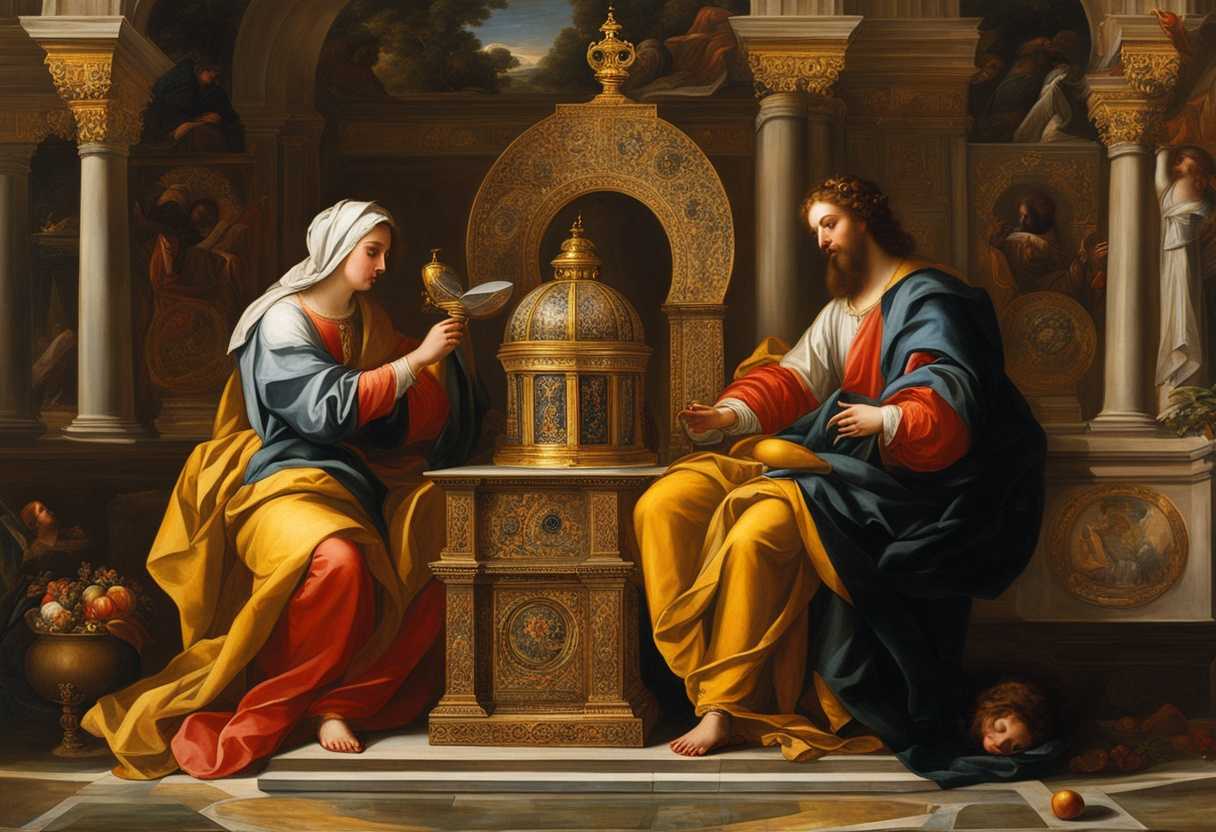
Setting the Scene for Exodus 35:30-32
In the heart of the Israelite camp, nestled at the foot of Mount Sinai, a vibrant scene unfolds as the people gather in anticipation of a monumental task. The air is thick with excitement and purpose, as the sun casts a warm glow over the tents and the rugged terrain surrounding them. Among the throng, two men stand out: Bezalel and Oholiab. Chosen by God, these skilled artisans have been appointed to lead the construction of the Tabernacle, a sacred dwelling place for the Lord. Their hands are calloused from years of labor, yet their eyes sparkle with inspiration, fueled by the divine calling they have received.
Bezalel, the son of Uri from the tribe of Judah, is a master craftsman, renowned for his ability to work with gold, silver, and bronze. His reputation has spread throughout the camp, and the people look to him with admiration and respect. Oholiab, from the tribe of Dan, complements Bezalel’s talents with his own expertise in weaving and embroidery. Together, they embody the spirit of creativity and craftsmanship that God desires for the construction of the Tabernacle. As they gather materials—precious metals, fine linens, and colorful yarns—their hearts are filled with a sense of reverence, knowing that they are not merely building a structure, but creating a space for the divine presence to dwell among them.
Surrounding them, the camp is alive with activity. Families are busy preparing offerings, while children play in the dust, their laughter mingling with the sounds of hammers striking metal and the rustle of fabric. The towering mountain looms in the background, a constant reminder of the covenant God has made with His people. The atmosphere is charged with a sense of unity and purpose, as the Israelites come together to contribute to this sacred project. Each person, whether skilled or unskilled, is encouraged to lend their talents, creating a tapestry of community effort that reflects their devotion to God. In this moment, the camp is not just a temporary dwelling; it is a place where heaven and earth meet, and where the people of Israel are called to participate in the divine plan.
What is Exodus 35:30-32 about?
This verse reveals the profound significance of divine appointment and the gift of craftsmanship. God specifically chooses Bezalel and Oholiab to undertake the monumental task of designing and constructing the Tabernacle, which would serve as a sacred dwelling place for His presence among the Israelites. This act of selection demonstrates that God values not only the end result—an intricate and beautiful structure—but also the skills and talents of individuals who are chosen to execute His divine plan. It prompts us to consider: what skills do we possess that could be used for something greater than ourselves? How might our unique abilities be part of a larger, more meaningful purpose?
Furthermore, there is a powerful message in the empowerment given to Bezalel and Oholiab. God doesn’t merely appoint them; He endows them with the necessary wisdom, understanding, and knowledge to accomplish this monumental task. This raises an interesting point: Have you ever felt a call or a nudge toward a particular path or vocation, yet doubted your ability to succeed? This passage serves as a reminder that when we are tasked with something significant, we are not left to our own devices. God supports us and provides the resources—both spiritual and skill-based—we need to bring His vision to life. It encourages us to step forward in faith, utilizing our God-given abilities, and reminds us that we are equipped for ministry and service according to His purpose. What can we create together if we trust in our skills and God’s appointment?
Understanding what Exodus 35:30-32 really means
In Exodus 35:30-32, we encounter a pivotal moment in the narrative of the Israelites as they prepare to construct the Tabernacle. This passage introduces us to Bezalel and Oholiab, two artisans specifically chosen by God for this sacred task. Their selection underscores a profound truth: God not only calls individuals to serve Him but also equips them with the necessary skills and inspiration to fulfill His divine purposes. This is a powerful reminder that our abilities can be a means of worship and service.
The context of this passage is essential for understanding its significance. The Israelites had just received the Law at Mount Sinai, marking a transformative period in their journey. God’s command to build a dwelling place among them symbolizes His desire for intimacy with His people. The Tabernacle was not merely a structure; it represented God’s presence and His commitment to dwell with His chosen ones. In this light, the roles of Bezalel and Oholiab become even more critical, as they are tasked with creating a space that reflects the holiness and beauty of God.
Key phrases in this passage reveal deeper meanings. When we read that Bezalel and Oholiab were “filled with the Spirit of God,” it signifies that their craftsmanship was not solely based on human skill but was divinely inspired. This concept challenges us to consider how God equips each of us with unique talents for His work. The terms “wisdom, understanding, and knowledge” further illustrate the multifaceted nature of their abilities. Wisdom allows for the effective application of knowledge, while understanding provides insight into the spiritual significance of their work. Together, these qualities highlight that fulfilling God’s mission requires both spiritual depth and practical expertise.
Moreover, this passage resonates with other biblical texts that emphasize the diversity of gifts within the body of Christ. In 1 Corinthians 12:4-7, Paul speaks of the unique abilities given by the Holy Spirit for the common good. Similarly, Ephesians 2:10 reminds us that we are created for good works, reinforcing the idea that our skills are part of God’s overarching plan. These connections encourage us to view our talents as integral to the community of faith, where each contribution is valuable.
In today’s world, where craftsmanship and creativity are often undervalued, this passage serves as a vital reminder. Whether our work is artistic, technical, or service-oriented, it can be an expression of worship. We are called to seek God’s guidance in our endeavors, recognizing that our talents are gifts meant to glorify Him. This perspective can transform how we approach our daily tasks, infusing them with purpose and meaning.
Reflecting on personal experiences can illuminate this truth. I recall a conversation with a talented musician who felt his art lacked significance within the church. He played at local venues but hesitated to share his gift in worship settings. After discussing the calling of Bezalel and Oholiab, he realized that his music could inspire and uplift others, serving as a bridge to God’s presence. By incorporating his music into church events, he discovered the profound impact of using his God-given talent for His glory. This story exemplifies how recognizing our unique abilities can lead to fulfilling God’s purpose in our lives.
In conclusion, the calling of Bezalel and Oholiab serves as a powerful reminder that God equips us with the skills and creativity necessary to fulfill His mission. As we embrace our unique gifts, we participate in the ongoing work of building His kingdom. Let us reflect on how we can use our talents to reflect His glory and draw others closer to Him. How might you use your skills today to serve God and your community?
How can I use my skills for a greater purpose?
To use your skills for a greater purpose, focus on harnessing the unique talents and expertise you possess to contribute to a collective goal. This involves recognizing how your abilities can serve the needs of others, especially in community projects or collaborative efforts that aim to uplift and support various initiatives. You enhance your own growth and enrich the lives of those around you by seeking opportunities where your skills can meet the demands of a greater cause. Engage in projects that align with your passions and can benefit from your specific talents. This could involve volunteering in areas such as education, arts, construction, or social services where your knowledge and experience can make a significant impact. You help build an environment of support and mutual growth by putting your skills to use in ways that promote teamwork and collaboration, empowering others to contribute as well. Cultivating a mindset of generosity and service is essential. Share your knowledge openly, mentor others, and collaborate with like-minded individuals to inspire collective action. You create a ripple effect that encourages others to also leverage their strengths for the greater good. Your commitment to using your skills not just for personal gain, but to enhance the community and support meaningful causes, fosters a spirit of unity and purpose.
Application
Just like a family needs every member to contribute for harmony, your community is waiting for your unique gifts. God doesn’t just call anyone; He prepares you with talents that can make a difference. Think about your skills—how can they light up your church or neighborhood? This is your chance to step up and take action! Are you ready to discover your special role in this incredible journey?

Reverend Michael Johnson is an experienced Church Minister with a profound expertise in spirituality and guidance. With a serene presence and a compassionate heart, he has faithfully served his congregation for over 20 years, leading them on a spiritual journey towards inner peace and enlightenment. Reverend Johnson’s extensive knowledge of religious philosophies and profound understanding of human nature have made him a trusted confidant and mentor to many, as he seamlessly weaves his profound wisdom into life teachings. Reverend Johnson’s calming demeanor and empathetic nature continue to uplift and heal souls, nurturing a sense of unity and tranquility within his community.