
Exodus 3:1-17 is about God calling Moses to lead the Israelites out of slavery in Egypt, highlighting the importance of obedience, faith, and the divine presence in fulfilling God’s plan.
1 Now Moses was keeping the flock of his father-in-law, Jethro, the priest of Midian, and he led his flock to the west side of the wilderness and came to Horeb, the mountain of God.
2 And the angel of the Lord appeared to him in a flame of fire out of the midst of a bush. He looked, and behold, the bush was burning, yet it was not consumed.
3 And Moses said, “I will turn aside to see this great sight, why the bush is not burned.”
4 When the Lord saw that he turned aside to see, God called to him out of the bush, “Moses, Moses!” And he said, “Here I am.”
5 Then he said, “Do not come near; take your sandals off your feet, for the place on which you are standing is holy ground.”
6 And he said, “I am the God of your father, the God of Abraham, the God of Isaac, and the God of Jacob.” And Moses hid his face, for he was afraid to look at God.
7 Then the Lord said, “I have surely seen the affliction of my people who are in Egypt and have heard their cry because of their taskmasters. I know their sufferings,
8 and I have come down to deliver them out of the hand of the Egyptians and to bring them up out of that land to a good and broad land, a land flowing with milk and honey, to the place of the Canaanites, the Hittites, the Amorites, the Perizzites, the Hivites, and the Jebusites.
9 And now, behold, the cry of the people of Israel has come to me, and I have also seen the oppression with which the Egyptians oppress them.
10 Come, I will send you to Pharaoh that you may bring my people, the children of Israel, out of Egypt.”
11 But Moses said to God, “Who am I that I should go to Pharaoh and bring the children of Israel out of Egypt?”
12 He said, “But I will be with you, and this shall be the sign for you, that I have sent you: when you have brought the people out of Egypt, you shall serve God on this mountain.”
13 Then Moses said to God, “If I come to the people of Israel and say to them, ‘The God of your fathers has sent me to you,’ and they ask me, ‘What is his name?’ what shall I say to them?”
14 God said to Moses, “I am who I am.” And he said, “Say this to the people of Israel: ‘I am has sent me to you.’”
15 God also said to Moses, “Say this to the people of Israel: ‘The Lord, the God of your fathers, the God of Abraham, the God of Isaac, and the God of Jacob, has sent me to you.’ This is my name forever, and thus I am to be remembered throughout all generations.
16 Go and gather the elders of Israel together and say to them, ‘The Lord, the God of your fathers, the God of Abraham, of Isaac, and of Jacob, has appeared to me, saying, “I have observed you and what has been done to you in Egypt,
17 and I promise that I will bring you up out of the affliction of Egypt to the land of the Canaanites, the Hittites, the Amorites, the Perizzites, the Hivites, and the Jebusites, a land flowing with milk and honey.”
Setting the Scene for Exodus 3:1-17
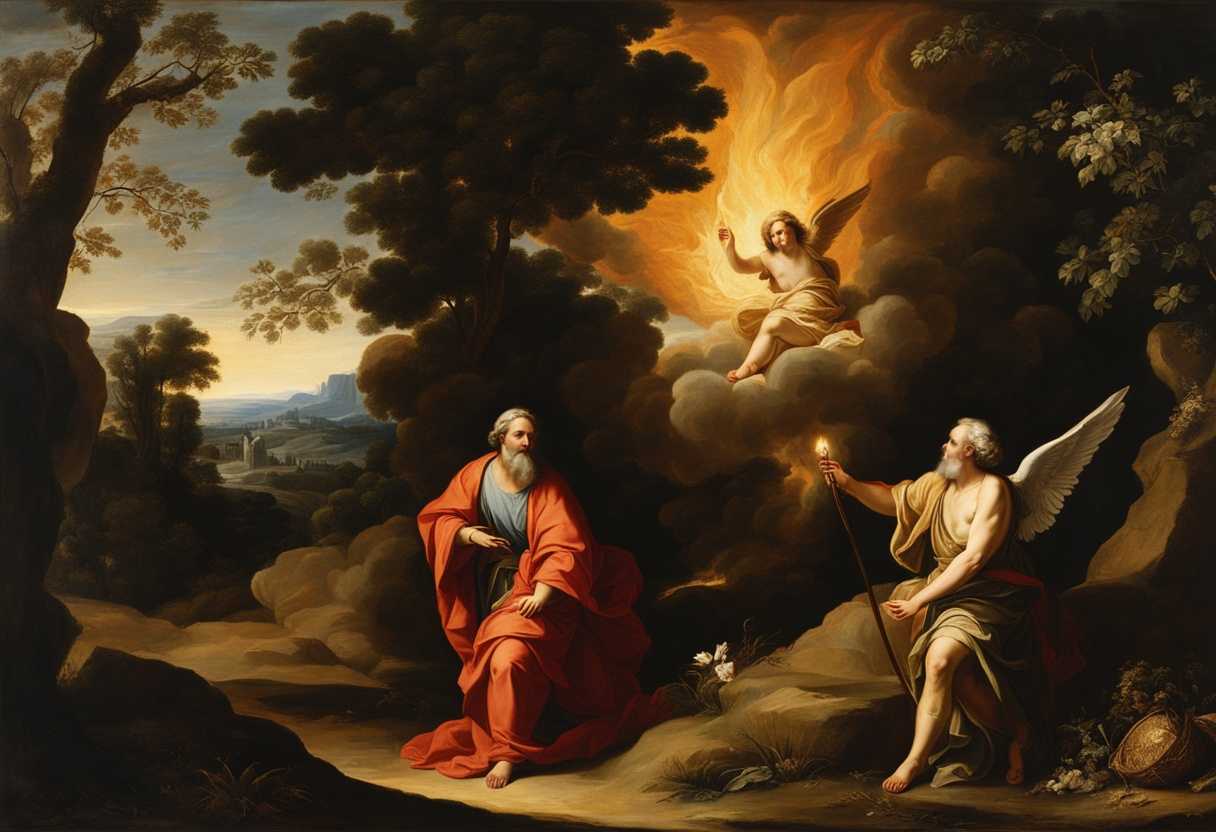
In Exodus chapter 3, we find Moses, a former prince of Egypt turned shepherd, tending to his father-in-law Jethro’s flock in the wilderness near Mount Horeb. It is a quiet and desolate place, with rugged terrain and sparse vegetation. The sun beats down on the rocky landscape, casting long shadows as the sheep graze under Moses’ watchful eye.
As Moses leads the flock further into the wilderness, he comes to a mountain known as the “mountain of God.” It is here that he encounters a remarkable sight – a bush that is burning but is not consumed by the flames. Curious and drawn to the strange phenomenon, Moses approaches the bush and hears the voice of God speaking to him from within it.
The scene is set with Moses, a humble shepherd, standing in awe before the presence of God manifested in the burning bush. This encounter marks the beginning of a pivotal moment in Moses’ life, as God commissions him to lead the Israelites out of slavery in Egypt. The surroundings are stark and awe-inspiring, emphasizing the divine nature of the encounter and the significance of the task that lies ahead for Moses.
What is Exodus 3:1-17 about?
Isn’t it amazing how God chose to communicate with Moses through a burning bush? This miraculous event not only caught Moses’ attention but also conveyed an important message that God was with him and had a special plan for his life. The burning bush symbolizes God’s presence and power, highlighting His ability to work through extraordinary means to accomplish His purpose.
This verse reminds us that God often calls us to step out in faith and embrace the great tasks He has set before us. Just like Moses, we may feel inadequate or uncertain about the challenges ahead, but we can trust that God equips those He calls. The story of Moses and the burning bush is a powerful reminder that God is always with us, guiding us and providing for us as we fulfill His plans for our lives. Through this verse, we are encouraged to listen for God’s calling in our own lives and to trust that He will lead us through whatever challenges may come our way.
Understanding what Exodus 3:1-17 really means
In Exodus 3:1-17, we delve into the profound encounter between Moses and God at the burning bush on Mount Horeb. This pivotal moment marks the commencement of Moses’ divine mission to liberate the Israelites from Egypt’s bondage. As we unpack this passage, we encounter key themes and phrases that resonate with timeless truths and principles.
The vivid imagery of “The angel of the Lord appeared to him in flames of fire from within a bush” symbolizes God’s presence and the sacredness of the ground Moses stood upon. The command to “Take off your sandals, for the place where you are standing is holy ground” underscores the reverence due in the presence of the Almighty. When God declares, “I am the God of your father, the God of Abraham, the God of Isaac, and the God of Jacob,” He establishes a lineage of faithfulness and covenant promises that Moses is now part of.
God’s declaration, “I have indeed seen the misery of my people in Egypt,” reveals His compassionate nature and His intimate awareness of His people’s suffering. Furthermore, His directive to Moses, “I am sending you to Pharaoh to bring my people the Israelites out of Egypt,” signifies a divine call to be a deliverer—a task that seemed insurmountable to Moses, yet God’s empowerment accompanied His call.
This encounter with the burning bush finds resonance in other biblical passages like Genesis 12:1-3, where God calls Abraham, laying the foundation for the covenant that Moses is now a part of. Isaiah 6:1-8 also mirrors Moses’ experience, depicting Isaiah’s vision and call to prophetic ministry. Acts 7:30-34, through Stephen’s retelling, emphasizes the significance of Moses’ encounter in the grand narrative of salvation history.
The relevance of this passage extends to our lives today. Just as God manifested His presence to Moses, He continues to reveal Himself in unexpected ways in our lives. Like Moses, we may feel inadequate for the tasks God sets before us, but His call equips us for the mission. Moreover, God’s compassion and commitment to deliverance, as demonstrated in His concern for the Israelites, assure us of His active involvement in our struggles.
Consider a modern-day parallel where an individual, much like Moses tending sheep, feels adrift in their circumstances. Through a “burning bush” moment—a profound encounter or revelation—they are redirected towards a new purpose and calling, akin to Moses’ transformative experience with God.
The phrases within this passage hold deep significance. The “flames of fire from within a bush” symbolize God’s purifying presence, while the bush remaining unconsumed signifies His eternal nature. The concept of “holy ground” teaches us to acknowledge and honor the sacredness of God’s presence in our daily lives. God’s declaration of seeing the misery of His people reassures us of His intimate concern for our struggles, while His call to Moses underscores the personal nature of His divine assignments and His trust in us to fulfill them.
As we meditate on these themes and phrases, we glean strength and inspiration for our own journeys. We are reminded that God is ever-present, calls us to specific purposes, and extends His compassionate hand in our times of need.
How can we recognize God’s presence in our lives?
One way we can recognize God’s presence in our lives is through experiencing moments of divine calling or revelation. We may also receive signs or messages that lead us to recognize God’s presence and guidance, just as Moses encountered God through a burning bush. These can be in the form of personal experiences, unexpected blessings, or a deep sense of peace and clarity in times of uncertainty.
Furthermore, God’s presence can be recognized through the assurance and strength we receive when facing challenges or struggles. Like how God empowered Moses to confront Pharaoh and lead the Israelites out of Egypt, we may find ourselves equipped with courage, wisdom, and resilience to overcome obstacles in our own lives. We can navigate through difficulties with faith and perseverance by trusting in God’s presence and following His guidance.
Lastly, another way to recognize God’s presence is through the relationships and community that support and uplift us. We may encounter people in our lives who serve as instruments of God’s love, encouragement, and help, just as God sent Aaron to assist Moses in his mission. Through meaningful connections and shared experiences, we can see God’s presence reflected in the compassion and care that others show us, reminding us of His constant presence and support in our lives.
Application
Listen closely, as Moses did, to the call that beckons you to lead and make a difference. Embrace the courage within you, knowing that you are capable of great things. Just like Moses, trust in your abilities and have faith in the path laid out before you. Are you ready to answer the call with determination and faith, ready to lead with strength and grace?

Reverend Michael Johnson is an experienced Church Minister with a profound expertise in spirituality and guidance. With a serene presence and a compassionate heart, he has faithfully served his congregation for over 20 years, leading them on a spiritual journey towards inner peace and enlightenment. Reverend Johnson’s extensive knowledge of religious philosophies and profound understanding of human nature have made him a trusted confidant and mentor to many, as he seamlessly weaves his profound wisdom into life teachings. Reverend Johnson’s calming demeanor and empathetic nature continue to uplift and heal souls, nurturing a sense of unity and tranquility within his community.