
Exodus 3:2-4 is about God revealing Himself to Moses through a burning bush, symbolizing His presence, holiness, and calling for Moses to lead the Israelites out of Egypt.
2 And the angel of the Lord appeared to him in a flame of fire out of the midst of a bush. He looked, and behold, the bush was burning, yet it was not consumed.
3 And Moses said, “I will turn aside to see this great sight, why the bush is not burned.”
4 When the Lord saw that he turned aside to see, God called to him out of the bush, “Moses, Moses!” And he said, “Here I am.”
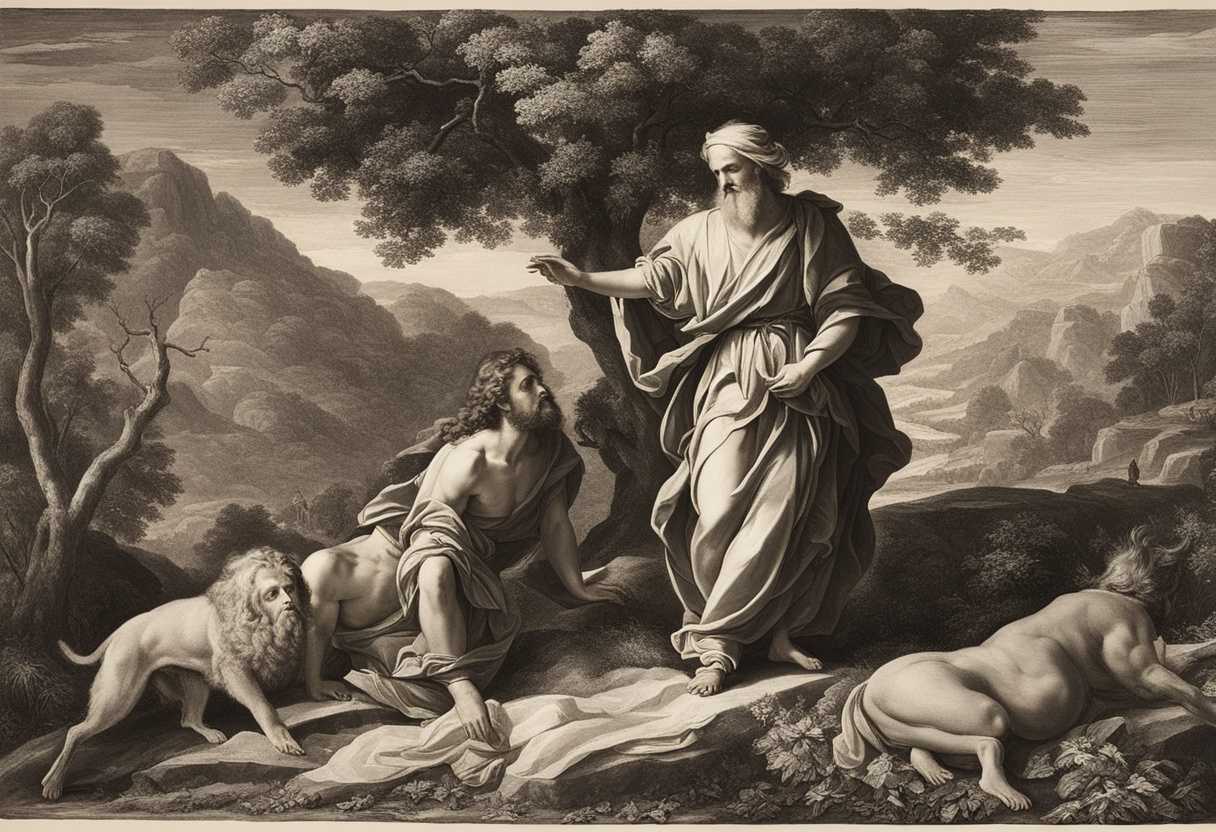
Setting the Scene for Exodus 3:2-4
In Exodus chapter 3, we find Moses, a former prince of Egypt turned shepherd, tending to his father-in-law Jethro’s flock in the wilderness near Mount Horeb. It’s a hot day, and the sun beats down on the rugged terrain as Moses guides the sheep to find grazing spots. The landscape is vast and barren, with rocky outcrops and sparse vegetation dotting the area.
As Moses leads the flock, he comes to a particular mountain, Mount Horeb, also known as the Mountain of God. Suddenly, he notices a strange sight – a bush that is on fire but is not being consumed by the flames. Curious and intrigued, Moses decides to approach the burning bush to investigate further. Little does he know that this seemingly ordinary moment will mark the beginning of a profound encounter with the divine.
As Moses draws near to the burning bush, he hears a voice calling out to him from within the flames. It is the voice of God, instructing Moses to remove his sandals, for he is standing on holy ground. Overwhelmed by the presence of the Almighty, Moses listens as God reveals His plan to deliver the Israelites from their bondage in Egypt and appoints Moses as the leader to carry out this monumental task. This pivotal moment at the burning bush sets in motion a series of events that will shape the course of history for the Israelites and establish Moses as one of the greatest figures in biblical history.
What is Exodus 3:2-4 about?
Imagine standing in front of a burning bush, witnessing a powerful and divine presence that speaks directly to you. This moment marked the beginning of a profound journey for Moses, as God entrusted him with the responsibility of leading His people to freedom. This verse reminds us of the extraordinary ways in which God communicates with His chosen ones and calls them to fulfill a higher purpose.
Through the image of the burning bush, we can see that God’s call to Moses was not a gentle whisper but a bold and undeniable manifestation of His presence. Just like Moses, we too may encounter moments in our lives where we feel called to step out of our comfort zones and embrace a greater purpose. This verse challenges us to reflect on how we can be open to hearing and responding to God’s call, even when it may seem daunting or beyond our abilities. We can rise to the challenges that God places before us and make a meaningful impact on the world around us with faith and courage.
Understanding what Exodus 3:2-4 really means
The passage in Exodus 3:2-4 recounts the momentous encounter between Moses and the burning bush, a pivotal event where God calls Moses to lead the Israelites out of Egypt. This encounter serves as the starting point for Moses’ divine mission, underscoring the sacred nature of his calling. The image of the angel of the Lord appearing in flames of fire within a bush holds profound symbolism, signifying God’s presence and the sanctity of the ground Moses stands on. Fire, a recurring symbol of God’s purifying power in the Bible, underscores the divine nature of the moment.
Moses’ astonishment at the burning bush that remains unconsumed by the flames serves as a miraculous sign, capturing his attention and signaling the extraordinary nature of the impending revelation. This divine intervention hints at the imminent unveiling of God’s purpose for Moses. As God calls out to Moses by name from within the bush, the repetition of his name emphasizes the personal and urgent nature of the divine summons, highlighting the intimate relationship between God and Moses.
The passage resonates with other biblical accounts, such as Isaiah 6:8, where Isaiah responds willingly to God’s call, showcasing a readiness to fulfill the divine mission. Similarly, the conversion of Saul (Paul) in Acts 9:3-6 parallels Moses’ transformative encounter, illustrating how God’s dramatic interventions can redirect lives towards His purposes. These connections underscore the timeless relevance of divine callings and the transformative power of responding to God’s mission.
In contemporary times, the story of the burning bush serves as a poignant reminder of divine callings that beckon individuals to unique roles within their communities. Just as Moses was called to lead the Israelites, people today are also summoned to fulfill specific purposes in their lives. The burning bush narrative encourages individuals to remain vigilant for extraordinary signs that may indicate God’s presence and calling, urging them to cultivate a personal relationship with God, who intimately knows and guides each person.
Consider the modern-day example of Sarah, who, like Moses, experienced a profound calling. Despite her initial hesitations, a persistent urge to volunteer at a local shelter eventually led her to a moment of clarity and peace, akin to Moses’ encounter with the burning bush. Sarah’s realization of her purpose through this “burning bush” moment highlights the importance of attentiveness to divine callings and the transformative impact of heeding God’s guidance.
In conclusion, the story of Moses and the burning bush serves as a compelling narrative that underscores God’s presence, the significance of recognizing His signs, and the personal nature of His call to individuals. It prompts us to listen attentively to our own divine callings, acknowledging that God has a unique plan for each person, inviting us to embrace our roles in His greater purpose.
Do we recognize the presence of God in our lives?
The passage highlights the moment when God revealed Himself to Moses through a burning bush. God made His presence known in a miraculous and unmistakable way in this encounter. Although Moses initially did not recognize the presence of God, he was drawn towards the burning bush and only then did he truly realize the profound encounter he was experiencing. This event serves as a powerful reminder that sometimes God’s presence may not be immediately obvious to us, but if we are attentive and open, we can recognize His hand at work in our lives.
Just like Moses, there are times when we may be going about our daily lives, seemingly unaware of God’s presence. However, God is always present, and He is constantly reaching out to us in various ways, inviting us to a deeper relationship with Him. It is essential for us to be attentive and receptive to the signs of His presence, even when they may not be as dramatic as a burning bush. When we cultivate a habit of listening and looking for God in our everyday experiences, we can better recognize His presence and guidance in our lives. Recognizing the presence of God ultimately requires a disposition of faith and openness. It involves being willing to see beyond the ordinary and to perceive the extraordinary ways in which God is present in our lives. We can deepen our awareness of God’s constant presence and draw closer to Him in gratitude and praise by reflecting on moments where we have encountered His grace, love, and providence.
Application
Reflect on the story of the burning bush in Exodus. Think about the divine signs in our lives. Open your heart to God’s messages. Seek His guidance in all you do. Will you listen and respond to God’s call like Moses did?

Reverend Michael Johnson is an experienced Church Minister with a profound expertise in spirituality and guidance. With a serene presence and a compassionate heart, he has faithfully served his congregation for over 20 years, leading them on a spiritual journey towards inner peace and enlightenment. Reverend Johnson’s extensive knowledge of religious philosophies and profound understanding of human nature have made him a trusted confidant and mentor to many, as he seamlessly weaves his profound wisdom into life teachings. Reverend Johnson’s calming demeanor and empathetic nature continue to uplift and heal souls, nurturing a sense of unity and tranquility within his community.