
2 The Lord said to him, “What is that in your hand?” He said, “A staff.”
3 Then he said, “Throw it on the ground.” So he threw it on the ground, and it became a serpent, and Moses ran from it.
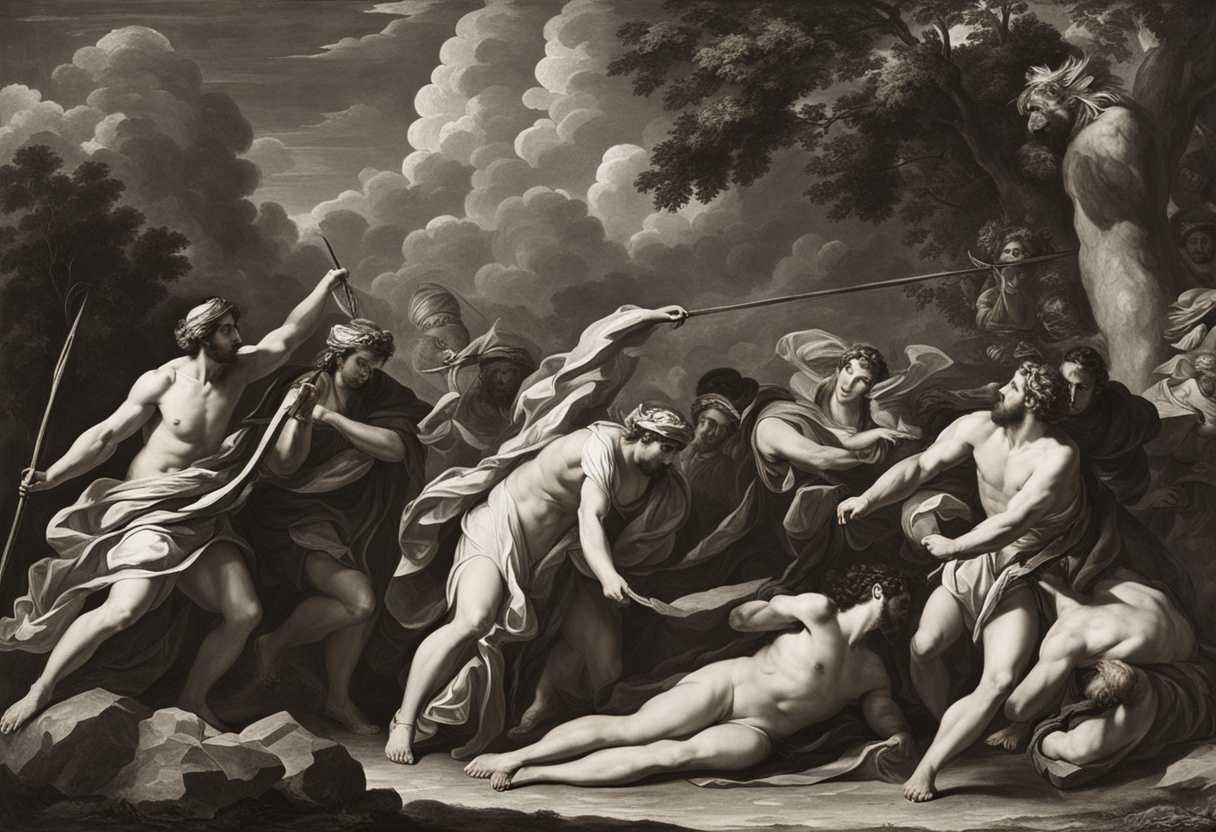
Setting the Scene for Exodus 4:2-3
In Exodus chapter 4, we find Moses standing before a burning bush on Mount Horeb, also known as Mount Sinai. The scene is set in the rugged and desolate wilderness, with the majestic mountain looming in the background. The bush is ablaze with fire, yet it is not consumed, a miraculous sight that captures Moses’ attention.
Moses, a former prince of Egypt turned humble shepherd, is in the midst of tending his father-in-law Jethro’s flock when he comes across this extraordinary phenomenon. As he draws near, a voice calls out to him from the midst of the flames, revealing itself to be the voice of God. Overwhelmed by the presence of the divine, Moses covers his face in awe and reverence.
In this pivotal moment, God commissions Moses to go back to Egypt and lead the Israelites out of slavery. Despite his initial reluctance and self-doubt, Moses is being called to a great purpose, one that will shape the course of history for the Israelites. The burning bush serves as a powerful symbol of God’s presence and the divine calling placed upon Moses’ life.
What is Exodus 4:2-3 about?
Imagine witnessing this incredible display of power by God through Moses – the staff he held in his hand turning into a living, slithering snake. What a powerful symbol of divine authority and control over all creation! God uses this miraculous sign in this verse to affirm Moses’ authority and show the Israelites and Egyptians His supremacy over all things.
Through this transformation, God not only proves His existence and power but also demonstrates His ability to work through His chosen servants to bring about His divine plans. This verse reminds us of the profound ways in which God reveals Himself and works in our lives, often through unexpected and awe-inspiring displays of His power. It challenges us to reflect on how we recognize and respond to the signs of God’s presence and authority in our own lives.
So, as we consider this verse, let us be reminded of the limitless power of God and His ability to work wonders through ordinary objects and individuals. How does this story inspire us to trust in God’s plan and authority, even when faced with challenges or uncertainties? May we be encouraged to surrender to His will, knowing that He can transform even the most ordinary circumstances into extraordinary testimonies of His power and glory.
Understanding what Exodus 4:2-3 really means
To provide a structured commentary on Exodus 4:2-3, let’s break down the discussion into several key segments: Context, Analysis, Cross-References, Relevance to Modern Life, and Reflective Questions.
Context
Exodus 4:2-3 is part of the larger narrative of Moses’ encounter with God at the burning bush. God is calling Moses to lead the Israelites out of Egypt. Moses expresses doubt about his ability and the people’s belief in him. This is where God shows Moses a sign to provide him with confidence.
Analysis
The passage highlights God asking Moses what he has in his hand, to which Moses replies, “A staff.” God instructs Moses to throw it on the ground, and it becomes a serpent. This act is laden with meaning. The staff, an ordinary shepherd’s tool, symbolizes Moses’ identity and work. When transformed into a serpent, it signifies God’s power to turn the mundane into the miraculous.
Cross-References
This theme of God using ordinary objects for extraordinary purposes is echoed throughout the Bible. Gideon’s army uses trumpets and jars to defeat the Midianites in Judges 7:19-20. Jesus uses five loaves and two fish to feed thousands in the New Testament (John 6:9-13). These examples illustrate that God often utilizes what we have, no matter how insignificant it seems, to accomplish His purposes.
Relevance to Modern Life
Today, people often feel inadequate or unworthy to undertake significant tasks. This passage reassures us that God equips us with what we need. Just as Moses had his staff, we have talents, skills, and resources that God can use. The key is willingness and faith.
Reflective Questions
- What ‘staff’ do you hold in your hand? Is it a skill, a talent, or a resource that you overlook?
- How can you, like Moses, be open to God’s direction to use what you have for a greater purpose?
Conclusion
This passage is a powerful reminder that God can transform the ordinary into the extraordinary. It challenges us to see beyond our limitations and trust in God’s ability to work through us. Whether you’re a student, a professional, or someone simply trying to make a difference in your community, remember that what’s in your hand is enough for God to use in remarkable ways.
How is God calling me to use my gifts?
God is calling you to use the gifts and talents that He has given you. Just as Moses used what was in his hand, a staff, to perform miracles and fulfill the calling God had for him, God is calling you to use what you have in your hands. Your gifts, skills, and abilities are not random or insignificant; they are meant to be used for a greater purpose.
Therefore, trust in the abilities and resources that God has placed within you, and have faith that He will equip you to accomplish the tasks He has set before you. Let your gifts be a reflection of God’s glory and a means to bring about His will on earth. Embrace your unique talents and use them to glorify God and serve others in love.
Application
In the hustle of work and family, remember that God can turn your daily grind into a masterpiece. Think about the small skills or simple tools you have—they might seem unimportant, but they can be transformed into something incredible. Are you ready to let God use these for something greater? Imagine the impact you could have. What could your ordinary become in His extraordinary plan?

Reverend Michael Johnson is an experienced Church Minister with a profound expertise in spirituality and guidance. With a serene presence and a compassionate heart, he has faithfully served his congregation for over 20 years, leading them on a spiritual journey towards inner peace and enlightenment. Reverend Johnson’s extensive knowledge of religious philosophies and profound understanding of human nature have made him a trusted confidant and mentor to many, as he seamlessly weaves his profound wisdom into life teachings. Reverend Johnson’s calming demeanor and empathetic nature continue to uplift and heal souls, nurturing a sense of unity and tranquility within his community.