
3 Then he said, “Throw it on the ground.” So he threw it on the ground, and it became a serpent, and Moses ran from it.
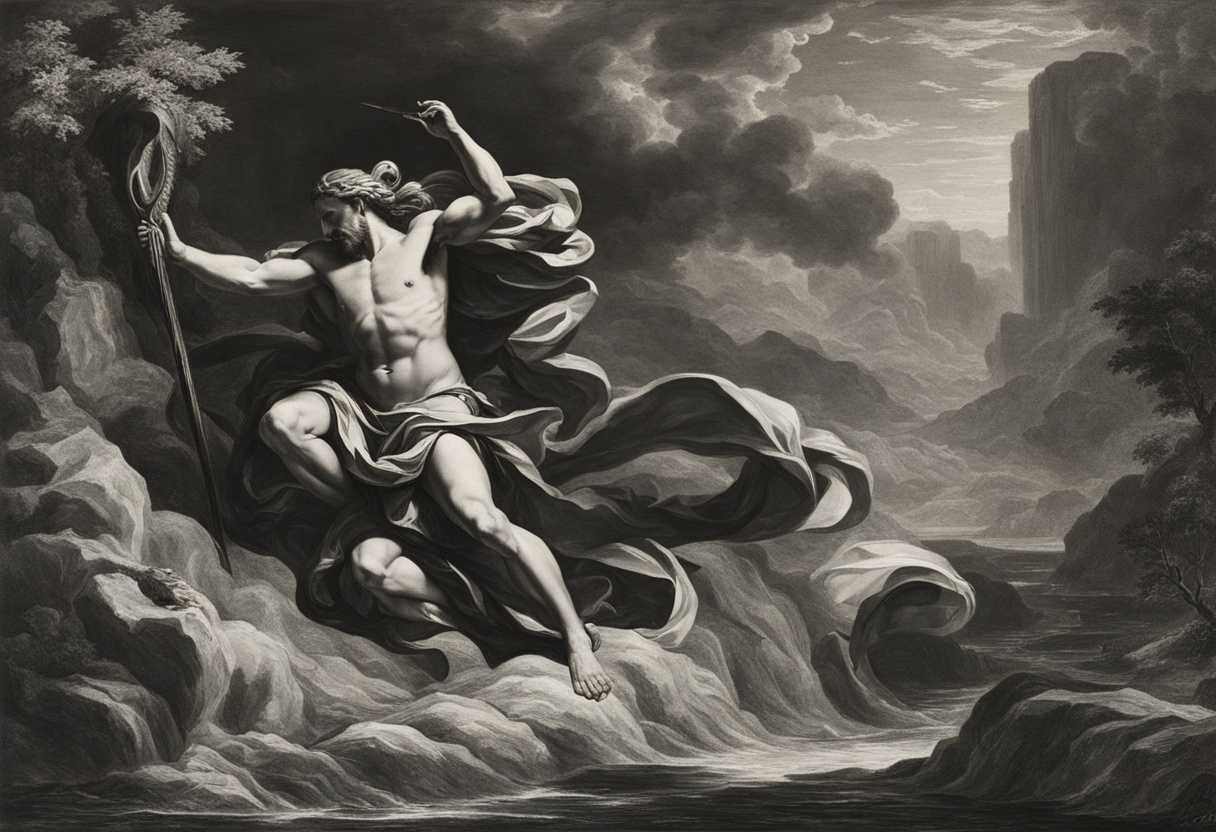
Setting the Scene for Exodus 4:3
In Exodus chapter 4, we find Moses standing before a burning bush on Mount Horeb, also known as Mount Sinai. The scene is set in the rugged and desolate wilderness, with the majestic mountain looming in the background. The bush is ablaze with fire, yet it is not consumed by the flames, a miraculous sight that catches Moses’ attention.
Moses, a former prince of Egypt turned humble shepherd, is in the midst of tending his father-in-law Jethro’s flock when he comes across this extraordinary sight. As he draws near to investigate, he hears the voice of God calling out to him from the midst of the burning bush. The encounter leaves Moses in awe and fear, as he realizes he is standing on holy ground in the presence of the Almighty.
God commissions Moses to go back to Egypt and lead the Israelites out of slavery, a daunting task that Moses initially resists. Despite his doubts and insecurities, God assures Moses of His presence and power, promising to be with him every step of the way. This pivotal moment marks the beginning of Moses’ journey as the great leader and deliverer of the Israelites, setting the stage for the epic events that will unfold in the chapters to come.
What is Exodus 4:3 about?
Let’s delve into the powerful symbolism behind this verse. When Moses’ staff transformed into a snake, it was a tangible display of God’s authority and power. Moses showcases a physical representation of the divine strength working through him in this transformation, demonstrating that God’s presence and influence overrides the natural order of things. This miraculous event serves as a demonstration of God’s ability to intervene in the world and assert His supremacy over all creation. The imagery of a humble staff being transformed into a formidable snake is considered. This transformation not only showcases the power of God but also highlights the potential for transformation and growth in our own lives. Just as the staff underwent a remarkable change, we, too, can experience profound transformations when we allow God to work through us. This verse reminds us that with faith and obedience, even the most ordinary objects or individuals can be used by God to accomplish extraordinary purposes. So, let us reflect on the story of Moses’ staff turning into a snake as a reminder of God’s omnipotence and His ability to work wonders through those who are willing to heed His call.
Understanding what Exodus 4:3 really means
Structure of Commentary:
1. Introduction to the verse and immediate context
2. Explanation of historical and cultural context
3. Analysis of key phrases and concepts
4. Connection to other Biblical passages
5. Relevance to today’s readers
6. Moses’ interaction with God in Exodus 4:3 presents a challenging and astonishing moment. This event is part of the larger narrative of God’s call to Moses to lead the Israelites out of Egyptian bondage. It’s vital to understand what this specific verse reveals about faith, divine power, and obedience.
Historical and Cultural Context:
To fully grasp the weight of this verse, one must consider the context of the ancient world. Moses, an Israelite raised in Pharaoh’s court, had fled to Midian after killing an Egyptian. God appearing in the burning bush was a direct confrontation of Moses’ past and present on a divine mission. This conversation establishes Moses’ calling and the signs God provides to affirm His power and presence.
Analysis of Key Phrases and Concepts:
One of the key phrases is when God asks Moses to cast his rod on the ground. This simple object, a shepherd’s staff, is a symbol of Moses’ identity and livelihood. When it turns into a serpent, it signifies transformation and reveals God’s ability to use ordinary elements to manifest His extraordinary power. What does this transformation signify to you? Could it be an invitation to trust in divine intervention in mundane aspects of your life?
Connection to Other Biblical Passages:
This theme of divine power seen in simple, everyday objects is echoed throughout the Bible. David’s sling and stones (1 Samuel 17:40) and Jesus’ use of loaves and fishes to feed the multitudes (Matthew 14:17-19) are considered. Each instance demonstrates God working through what appears insufficient or unremarkable to reveal His providence and might. God often uses what we have at hand to achieve His purposes, making this passage a powerful reminder for today’s readers. Many people might feel inadequate or ill-equipped for the tasks they believe God is calling them to do. However, God’s question to Moses is a poignant reminder of His sovereignty and capability to transform our ‘ordinary’ into ‘extraordinary.’ Have you considered what ‘rods’ you possess that God might be asking you to cast down in faith?
Personal Reflection and Anecdote:
I recall a time when a member of our congregation, feeling completely unequipped for ministry, started a small community outreach with limited resources. Like Moses’ staff, what she had seemed insignificant. Yet, over time, her efforts, empowered by faith and obedience, led to substantial community impact, transforming lives and revealing God’s goodness. It’s a vivid illustration of how God asks us to surrender our ‘staffs’—our skills, time, and resources—and witness His miraculous work. This verse serves as an inspiring call to action, in conclusion. We are reminded that God can transform our simple offerings into powerful demonstrations of His glory and purpose. Reflect on what God might be calling you to surrender and trust in His transformative power today.
What signs do I seek to strengthen my faith?
One sign that can strengthen your faith is the display of God’s power in a miraculous way. When you see God performing wondrous acts that defy logic or explanation, it can solidify your belief in His existence and His ability to work in your life. These signs serve as affirmations of His presence and His willingness to intervene on behalf of His people.
Another sign to seek is the confirmation of God’s promises. When you witness God fulfilling His word and bringing about what He has foretold, it can bolster your trust in His faithfulness and reliability. Seeing His faithfulness in action can give you the confidence to hold onto His promises even in the face of uncertainty or doubt.
Furthermore, seeking signs that align with God’s character can strengthen your faith. When you observe traits like love, mercy, justice, and sovereignty manifested in the events around you, it can reinforce your understanding of who God is and how He works in the world. You can deepen your relationship with Him and grow in your trust and reverence for His ways by recognizing His traits in action.
Application
Think about your daily grind at work and moments with family. Just like Moses’ staff transforming, God’s power can turn your ordinary tasks into something extraordinary. Trust that your talents and resources are enough for incredible things. Are you willing to see the miracles in your mundane and let God work wonders through you?

Reverend Michael Johnson is an experienced Church Minister with a profound expertise in spirituality and guidance. With a serene presence and a compassionate heart, he has faithfully served his congregation for over 20 years, leading them on a spiritual journey towards inner peace and enlightenment. Reverend Johnson’s extensive knowledge of religious philosophies and profound understanding of human nature have made him a trusted confidant and mentor to many, as he seamlessly weaves his profound wisdom into life teachings. Reverend Johnson’s calming demeanor and empathetic nature continue to uplift and heal souls, nurturing a sense of unity and tranquility within his community.