
Exodus 5:1-5 is about Moses and Aaron initially facing resistance from Pharaoh as they request for the Israelites to be allowed to go into the wilderness to worship God, symbolizing the struggle for freedom and obedience to God in the face of oppression and adversity.
1 Afterward Moses and Aaron went and said to Pharaoh, “Thus says the Lord, the God of Israel, ‘Let my people go, that they may hold a feast to me in the wilderness.’”
2 But Pharaoh said, “Who is the Lord, that I should obey his voice and let Israel go? I do not know the Lord, and moreover, I will not let Israel go.”
3 Then they said, “The God of the Hebrews has met with us. Please let us go a three days’ journey into the wilderness that we may sacrifice to the Lord our God, lest he fall upon us with pestilence or with the sword.”
4 But the king of Egypt said to them, “Moses and Aaron, why do you take the people away from their work? Get back to your burdens.”
5 Then Pharaoh said, “Behold, the people of the land are now many, and you make them rest from their burdens!”
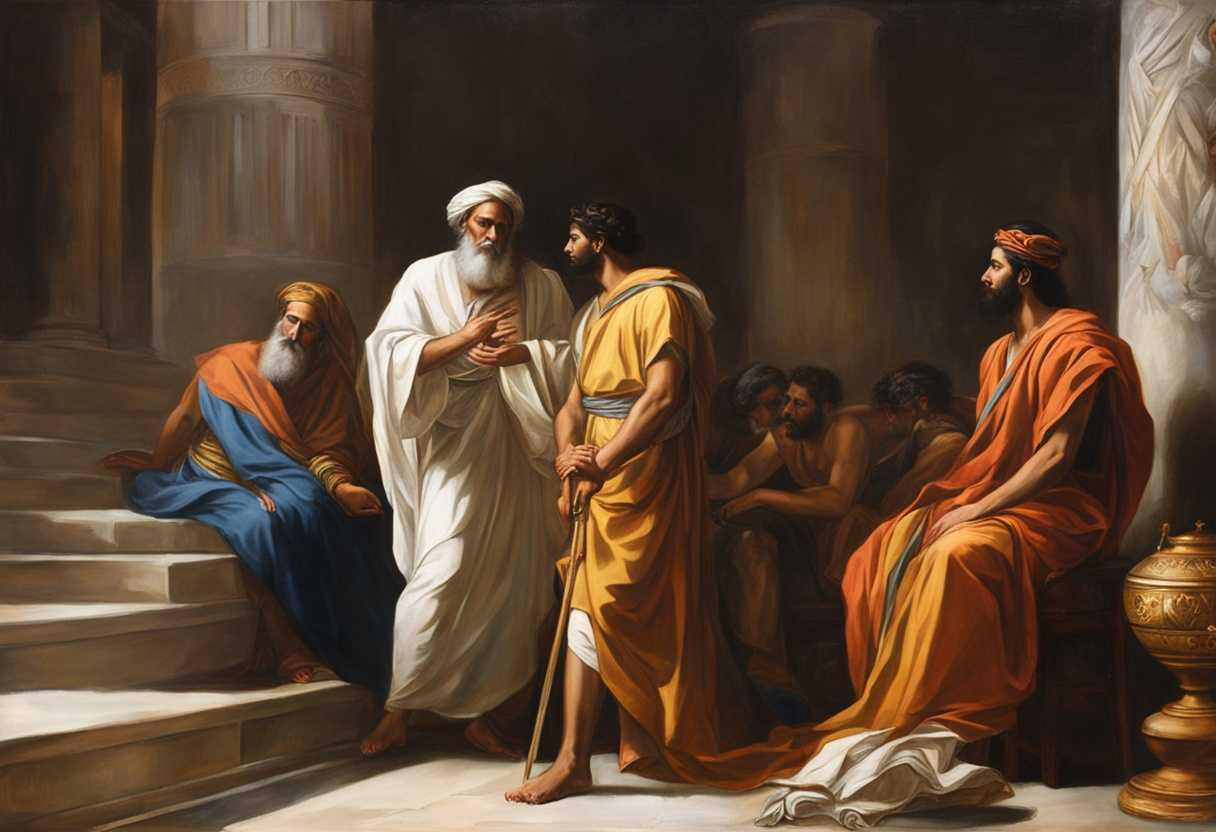
Setting the Scene for Exodus 5:1-5
In Exodus chapter 5, we find Moses and his brother Aaron standing before Pharaoh in the grand throne room of the Egyptian palace. The room is adorned with intricate hieroglyphics and golden decorations, reflecting the wealth and power of the Pharaoh. Pharaoh, seated on a majestic throne, is surrounded by his advisors and court officials, all dressed in opulent garments.
Moses and Aaron, representing the Israelites, have come to Pharaoh to deliver a message from God: “Let my people go, so that they may hold a festival to me in the wilderness.” Pharaoh, a proud and stubborn ruler, responds defiantly, refusing to release the Israelites from their bondage. The tension in the room is palpable as Moses and Aaron stand firm in their demand, knowing that they are challenging the authority of one of the most powerful men in the ancient world.
As the scene unfolds, we witness the clash of wills between Pharaoh, who sees himself as a god, and Moses, who speaks on behalf of the one true God. This encounter sets the stage for the dramatic events that will follow, leading to the eventual liberation of the Israelites from slavery in Egypt.
What is Exodus 5:1-5 about?
This verse highlights a significant clash between Pharaoh and Moses and Aaron over the Israelites’ worship practices. It reveals the core issue of religious freedom and the struggle for the Israelites to worship according to their faith. The refusal of Pharaoh to allow the Israelites to worship reflects a broader theme of oppression and control exerted by those in power. It sets the stage for the power struggle between Pharaoh’s authority and the divine mission of Moses and Aaron to lead the Israelites to freedom. We reflect on this verse, confronting questions about the limits of authority and the importance of upholding the rights of individuals to practice their faith freely. It prompts us to consider the implications of religious persecution and the courage required to stand up against injustice. The conflict between Pharaoh and Moses and Aaron serves as a powerful reminder of the enduring struggle for freedom and the enduring impact of those who resist oppression in the name of justice and righteousness.
Understanding what Exodus 5:1-5 really means
The Book of Exodus, the second book of the Bible, recounts the enslavement of the Israelites in Egypt and their eventual liberation. In Exodus 5:1-5, Moses and Aaron approach Pharaoh to demand the release of the Israelites for a festival to the Lord in the wilderness, initiating the confrontation between Moses and Pharaoh that leads to the plagues and the Exodus. The phrase “Thus says the Lord, the God of Israel” underscores the divine authority behind Moses and Aaron’s request, highlighting that it is not a mere human plea but a command from God Himself. “Let my people go” symbolizes God’s desire for His people to be free from bondage and to worship Him, emphasizing liberation and freedom.
In Exodus 3:7-10, God speaks to Moses from the burning bush, revealing His awareness of the Israelites’ suffering and His plan for their deliverance. Exodus 6:6-8 reaffirms God’s covenant with the Israelites and His promise to bring them out of Egypt. John 8:36 in the New Testament echoes the theme of liberation found in Exodus, emphasizing true freedom through the Son.
The timeless themes of freedom and the right to worship resonate with people today, who may still face various forms of bondage. This passage serves as a reminder that God is cognizant of our struggles and has a plan for our liberation, stressing the significance of worship and community in achieving true freedom through a relationship with God.
Consider a modern-day scenario where someone feels trapped in a stifling job, akin to the Israelites’ bondage in Egypt. Feeling a calling from God to pursue their passion, they take a leap of faith despite risks and uncertainties. This decision leads to a more fulfilling life where they can use their talents to serve others and honor God, mirroring the Israelites’ freedom to worship.
The narrative of Moses and Pharaoh transcends time, reminding us of God’s desire for our freedom and worship. By delving into the meanings of the phrases and the context, we can glean insights into how this passage speaks to our own struggles and triumphs. Whether facing physical, emotional, or spiritual bondage, we can find solace in God’s promise of liberation and the opportunity to lead a life that glorifies Him.
How do we respond when obedience brings suffering?
When obedience to God brings suffering, it can be a test of faith and a challenge to trust in His plan. Moses obeyed God’s command to go to Pharaoh and demand the release of the Israelites, which initially led to increased suffering for the Israelites in the story from Exodus. Pharaoh responded by making their labor harder and increasing their workload. This suffering caused doubt and frustration among the people, even towards Moses himself.
However, this suffering was a part of God’s greater plan to deliver His people from slavery in a miraculous way. It required perseverance and faith in the midst of hardship. Remembering God’s faithfulness, His promises, and the ultimate victory He has in store is important in times of suffering due to obedience. We too can trust that God will bring about good even in the midst of our trials, just as the Israelites eventually experienced deliverance from their suffering.
Application
Reflect on your journey. Have you strayed from your true calling? Let this passage be a compass, guiding you back to your purpose. Embrace the challenges as opportunities to strengthen your faith. Today, commit to walking the path laid out for you with unwavering trust. Will you rise to the challenge and align your actions with your true purpose?

Reverend Michael Johnson is an experienced Church Minister with a profound expertise in spirituality and guidance. With a serene presence and a compassionate heart, he has faithfully served his congregation for over 20 years, leading them on a spiritual journey towards inner peace and enlightenment. Reverend Johnson’s extensive knowledge of religious philosophies and profound understanding of human nature have made him a trusted confidant and mentor to many, as he seamlessly weaves his profound wisdom into life teachings. Reverend Johnson’s calming demeanor and empathetic nature continue to uplift and heal souls, nurturing a sense of unity and tranquility within his community.