
1 Afterward Moses and Aaron went and said to Pharaoh, “Thus says the Lord, the God of Israel, ‘Let my people go, that they may hold a feast to me in the wilderness.’”
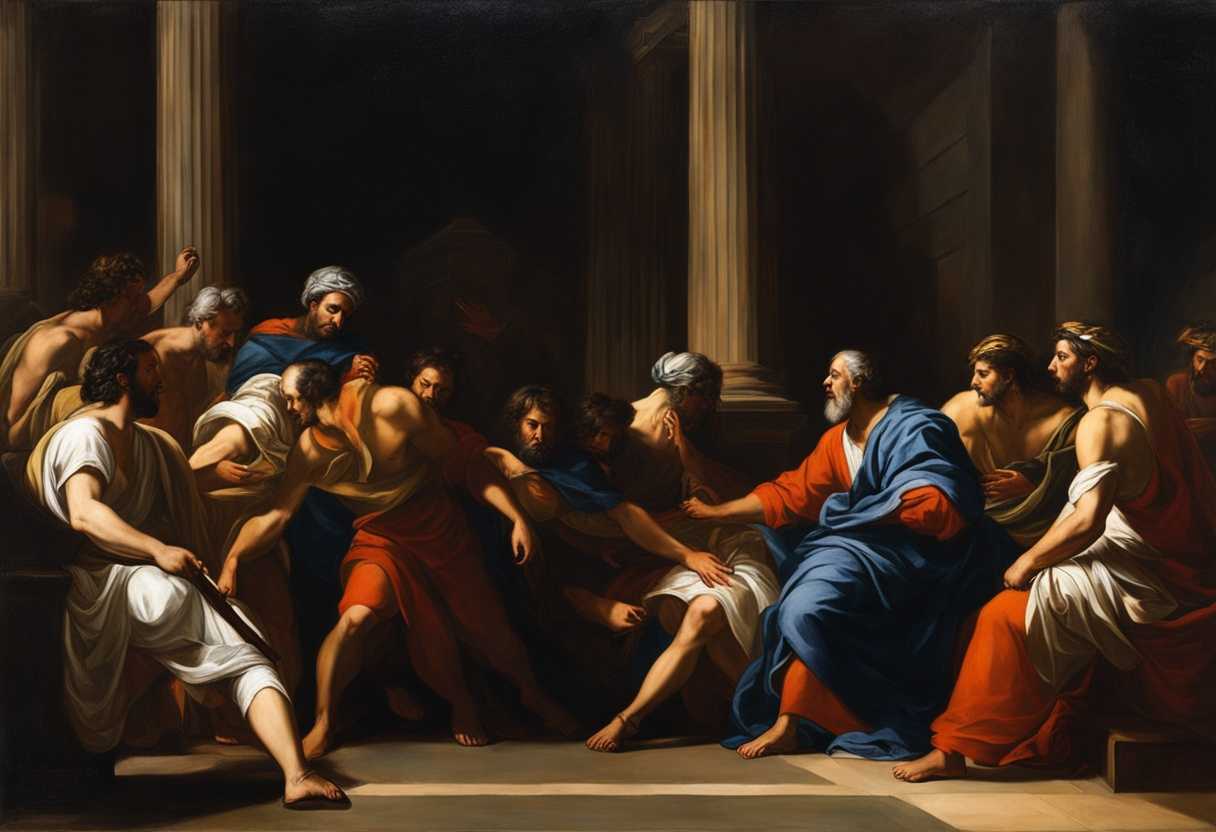
Setting the Scene for Exodus 5:1
In Exodus chapter 5, we find Moses and his brother Aaron standing before Pharaoh in the grand throne room of the Egyptian palace. The room is adorned with intricate hieroglyphics and golden decorations, reflecting the wealth and power of the Pharaoh. Pharaoh, seated on a majestic throne, is surrounded by his advisors and court officials, all dressed in opulent attire.
Moses and Aaron, representing the Israelites, have come to demand the release of their people from slavery. The tension in the room is palpable as Moses, guided by the voice of God, boldly declares, “Thus says the Lord, the God of Israel, ‘Let my people go, that they may hold a feast to me in the wilderness.’” Pharaoh, known for his stubbornness and pride, scoffs at their request, refusing to let the Israelites leave.
As the scene unfolds, we witness the clash of wills between Moses, the humble servant of God, and Pharaoh, the proud ruler of Egypt. The stage is set for a dramatic showdown of divine power and human arrogance, setting the course for the epic story of the Exodus.
What is Exodus 5:1 about?
Pharaoh, the ruler of Egypt, stubbornly refuses to release the Israelites, despite facing increasingly devastating displays of God’s power in this verse. This refusal signifies Pharaoh’s arrogance and defiance against the will of God, as well as his reluctance to relinquish control over the enslaved Israelites. The escalating confrontations between Pharaoh and God highlight the intense power struggle between human authority and divine intervention.
Have you ever encountered situations where people in power refuse to acknowledge their wrongdoings or mistreatment of others? How does Pharaoh’s actions in this verse reflect the concept of pride and obstinance in the face of overwhelming evidence or moral imperatives? Through Pharaoh’s defiance, we witness the consequences of holding onto power at the expense of justice and compassion. This verse serves as a reminder of the importance of humility, empathy, and willingness to recognize and correct our mistakes, even in the face of challenges or resistance.
Understanding what Exodus 5:1 really means
Structure for Commentary:
- Introduction to Context
- Analysis of Key Phrases
- Cross-references in Scripture
- Relevance to Modern Day Life
- Anecdotal Illustration
- Reflection and Application
- Conclusion
Commentary:
-
Introduction to Context
Let’s begin by situating this verse within its broader narrative. This verse is a critical turning point in the Book of Exodus. Moses and Aaron confront Pharaoh, delivering a message from God: “Let my people go, so that they may hold a festival to me in the wilderness.” This moment marks the beginning of the liberation of the Israelites from Egyptian bondage, a central event in their history. -
Analysis of Key Phrases
The phrase “Let my people go” is profoundly significant. It’s a divine command for freedom. This isn’t just physical liberation, but spiritual as well. God’s demand signifies His authority over earthly rulers and His deep concern for His people’s plight. “So that they may hold a festival to me” underscores the purpose of their freedom — to worship God. Their worship is not just an act of ritual, but a declaration of identity and allegiance to their Creator. -
Cross-references in Scripture
This command is echoed in passages like Leviticus 25:55, “For the Israelites belong to me as servants. They are my servants, whom I brought out of Egypt.” It highlights God’s ownership and the purpose of liberation. Similarly, in the New Testament, Jesus speaks about liberation in John 8:36, “If the Son sets you free, you will be free indeed.” Both passages underscore that true freedom is found in serving and worshiping God. -
Relevance to Modern Day Life
What does this ancient demand have to do with us today? Much like the Israelites, many people find themselves in various forms of bondage—be it emotional, spiritual, or even economic. God’s call for liberation is timeless. It’s a call to break free from whatever holds us captive and hinders us from living fully in accordance with His will. -
John, a modern-day believer who struggled with addiction, is the subject of the story. For years, he felt enslaved, unable to break free. But through faith and support from his church community, he experienced a transformation. Just as Moses and Aaron acted as mediators of God’s word, so too did John’s pastors and friends. They echoed God’s claim, “Let my people go,” over his life. Today, John is sober and leads a support group, helping others find freedom.
-
Reflection and Application
Reflect on your own life. What forms of ‘bondage’ need to be broken? Is it fear, addiction, or perhaps a toxic relationship? God’s call remains: He seeks our freedom so we can worship Him fully. This command also challenges those with influence over others. Are you, like Pharaoh, holding people back? Or are you helping them find their way to God? -
Conclusion
Exodus 5:1 is more than a historical command; it’s a divine principle that echoes through time. “Let my people go, so that they may hold a festival to me” invites us to ponder both our own freedom and the freedom of others. It calls us to a life of worship and service, free from the chains that seek to bind us. Take this message to heart and consider how you can contribute to God’s liberating work in the world today.
Are we truly relying on God’s promises?
God in the verse in question is reminding Moses of His promises and reassurances. The verse serves as a reminder to rely on God’s promises in times of doubt or uncertainty. We demonstrate our faith in God’s divine plan and timing by trusting in His word and staying obedient to His will.
Therefore, if we find ourselves questioning whether we are truly relying on God’s promises, we can reflect on this verse and be reminded of the importance of faith and obedience in our walk with God. We can strengthen our relationship with Him and find comfort in knowing that His plans for us are for our good by holding on to His promises and trusting in His faithfulness. Surrendering our fears and doubts and choosing to walk in faith and obedience to His will ultimately involves true reliance on God’s promises.
Application
Moses and Aaron faced immense challenges, and so do you in your work and family life. Reflect on their perseverance; are you ready to trust God’s plan in your struggles? Step out in faith and take action. When obstacles come, will you answer God’s call and trust Him to guide you?

Reverend Michael Johnson is an experienced Church Minister with a profound expertise in spirituality and guidance. With a serene presence and a compassionate heart, he has faithfully served his congregation for over 20 years, leading them on a spiritual journey towards inner peace and enlightenment. Reverend Johnson’s extensive knowledge of religious philosophies and profound understanding of human nature have made him a trusted confidant and mentor to many, as he seamlessly weaves his profound wisdom into life teachings. Reverend Johnson’s calming demeanor and empathetic nature continue to uplift and heal souls, nurturing a sense of unity and tranquility within his community.