
Exodus 5:10-14 is about the Israelites being overburdened by their Egyptian taskmasters, symbolizing the oppressive forces that can appear in our lives making it difficult to fulfill our purpose or follow our beliefs.
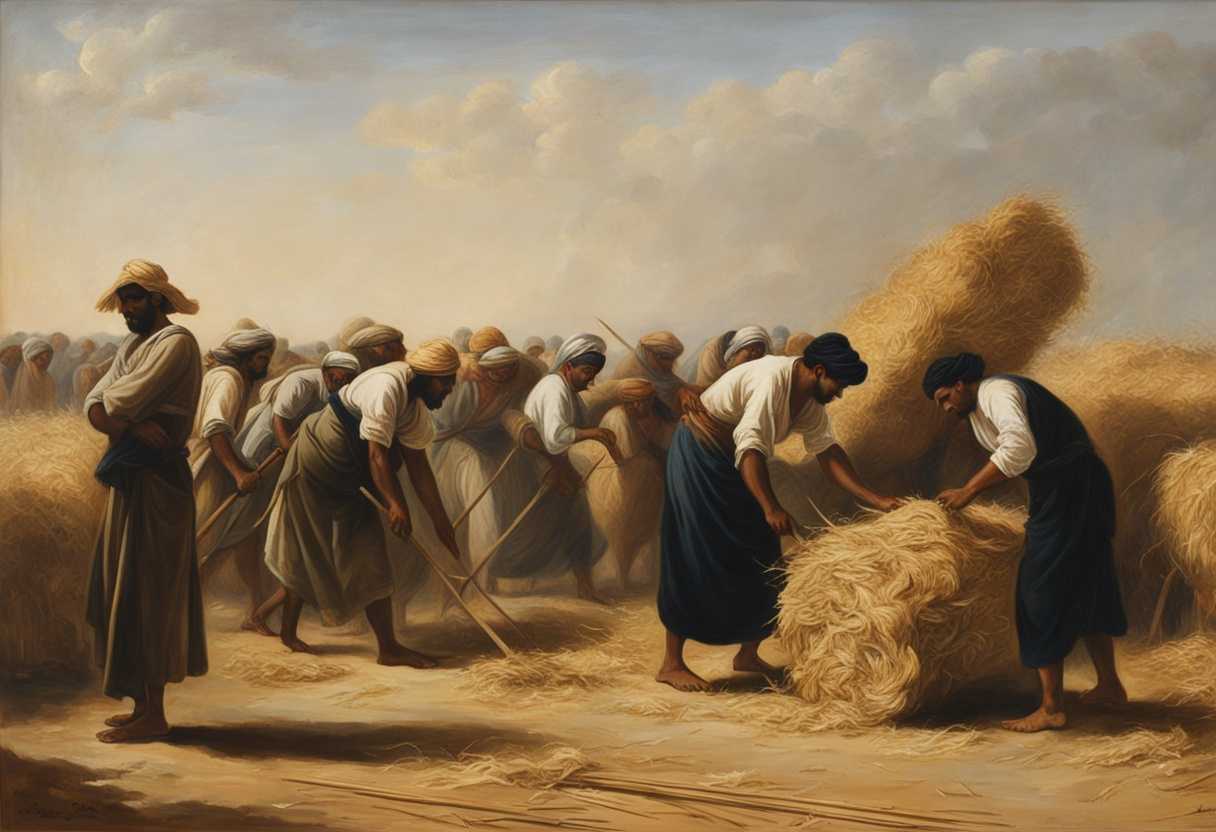
10 So the taskmasters and the foremen of the people went out and said to the people, “Thus says Pharaoh, ‘I will not give you straw.
11 Go and get your straw yourselves wherever you can find it, but your work will not be reduced in the least.
12 So the people were scattered throughout all the land of Egypt to gather stubble for straw.
13 The taskmasters were urgent, saying, “Complete your work, your daily task each day, as when there was straw.”
14 And the foremen of the people of Israel, whom Pharaoh’s taskmasters had set over them, were beaten and were asked, “Why have you not done all your task of making bricks today and yesterday, as in the past?”
Setting the Scene for Exodus 5:10-14
In Exodus chapter 5, we find Moses and Aaron standing before Pharaoh in the grand throne room of the Egyptian palace. The room is adorned with intricate hieroglyphics and golden decorations, reflecting the wealth and power of the Pharaoh. Pharaoh, seated on his ornate throne, is surrounded by his advisors and court officials, all dressed in luxurious garments.
Moses and Aaron, representing the Israelites, have come before Pharaoh to deliver a message from God: “Let my people go, so that they may hold a festival to me in the wilderness.” However, Pharaoh, proud and defiant, refuses their request and instead increases the workload of the Israelites, ordering them to gather straw for making bricks without providing any straw. The tension in the room is palpable as Moses and Aaron stand firm in their demand, while Pharaoh’s anger grows at their audacity to challenge his authority.
As the scene unfolds, we witness the power dynamics at play between the representatives of God and the earthly ruler, setting the stage for the epic struggle that will unfold in the chapters to come. The clash of wills between Pharaoh and the messengers of God foreshadows the dramatic events that will lead to the liberation of the Israelites from their bondage in Egypt.
What is Exodus 5:10-14 about?
Imagine a community that had been living peacefully and harmoniously until suddenly, their leader decides to make life harder for them. This verse captures a tale of Pharaoh, the ruler of Egypt, intensifying the workload on the Israelites, leading to immense hardship and suffering. But why would Pharaoh do such a thing? What could drive a person to deliberately cause pain and difficulty for others? Unchecked power and oppression confront us with the devastating consequences as we reflect on this verse. Pharaoh’s actions not only showcase his tyranny but also highlight the resilience and strength of the Israelite community. Their endurance in the face of adversity serves as a powerful reminder of the human spirit’s capacity to persevere in the darkest of times. This verse challenges us to consider our own roles in society and how we can work towards creating a world where no one has to suffer under the weight of cruelty and injustice.
Understanding what Exodus 5:10-14 really means
In Exodus 5:10-14, we witness a poignant portrayal of the Israelites’ plight under Egyptian enslavement. The context reveals a people oppressed and burdened, with Pharaoh callously escalating their suffering in response to Moses’ plea for liberation. The key phrases in this passage carry profound meanings, symbolizing the intensified hardship imposed on the Israelites. The denial of straw for brick-making and the command to gather their own materials exemplify the cruelty and injustice they endured. The relentless demands of the slave drivers underscore the unbearable expectations placed upon the Israelites, painting a stark picture of their anguish.
Drawing parallels to contemporary struggles, this narrative resonates with individuals facing overwhelming challenges and unreasonable pressures. The resilience and faith exhibited by the Israelites in the midst of oppression serve as a timeless example of enduring faith in the face of adversity. Just as God promised deliverance to His people in their darkest hour, there is a message of hope for those feeling burdened by life’s demands. The invitation from Jesus in Matthew 11:28-30 to find rest in Him offers a contrasting vision to the heavy yoke imposed by earthly powers, pointing to a source of true relief and solace.
The relevance of this passage extends beyond its historical context, speaking to the universal human experience of struggle and the longing for liberation. It serves as a poignant reminder of God’s faithfulness and His promise to intervene on behalf of the oppressed. The story of the Israelites’ suffering and eventual freedom stands as a testament to the enduring hope of redemption and the transformative power of God’s deliverance. In the midst of trials and tribulations, this narrative encourages individuals to hold fast to their faith, trusting in the assurance of God’s presence and His ultimate plan for restoration.
Consider the modern-day parallels of a worker overwhelmed by unreasonable demands, akin to the Israelites laboring under oppressive conditions. Like the Israelites, this individual may feel burdened by tasks that seem insurmountable. Yet, just as God heard the cries of His people in the past, there is a promise of divine intervention for those who place their trust in Him. The story of Exodus 5:10-14 serves as a beacon of hope for all who find themselves in the throes of hardship, reminding them that God sees their struggles and offers a path to liberation and renewal.
In conclusion, Exodus 5:10-14 encapsulates a narrative of suffering, resilience, and divine promise. It calls upon readers to reflect on the enduring faith of the Israelites and to draw strength from their example in times of trial. Through this passage and its related scriptures, individuals are invited to find solace in God’s unwavering commitment to His people, trusting in His provision of deliverance and rest. Just as the Israelites found redemption from bondage, there is a message of hope and restoration for all who turn to God in their moments of distress.
Why do people suffer unjustly while serving God faithfully?
People may suffer unjustly while serving God faithfully because ultimately, it is a test of their faith and perseverance. The trials and tribulations they face can serve to strengthen their reliance on God and deepen their relationship with Him. It is through enduring hardships with faith and trust that they can demonstrate their commitment to God and grow in their spiritual maturity.
Furthermore, experiencing unjust suffering while remaining faithful can also serve as a powerful witness to others. It can showcase the believer’s unwavering devotion to God, even in the face of adversity, and inspire those around them to seek a deeper understanding of faith and trust in God. Faithful servants of God can bring glory to His name and serve as a beacon of hope and strength for others who may be facing similar struggles through their suffering.
Application
Let us channel our inner Moses and stand up against injustice in our communities. The time to act is now – let’s not wait for others to make a difference. Our voices have power, and our actions can create lasting change for those who are suffering. Will you join the fight for justice and be a beacon of hope in a world that needs it more than ever?

Reverend Michael Johnson is an experienced Church Minister with a profound expertise in spirituality and guidance. With a serene presence and a compassionate heart, he has faithfully served his congregation for over 20 years, leading them on a spiritual journey towards inner peace and enlightenment. Reverend Johnson’s extensive knowledge of religious philosophies and profound understanding of human nature have made him a trusted confidant and mentor to many, as he seamlessly weaves his profound wisdom into life teachings. Reverend Johnson’s calming demeanor and empathetic nature continue to uplift and heal souls, nurturing a sense of unity and tranquility within his community.