
Exodus 5:15-19 is about the hardships faced by the Israelites under Pharaoh’s rule, highlighting their struggles in meeting the demanding quotas for brick-making and the betrayal by the Israelite taskmasters who were forced to enforce these harsh conditions upon their own people.
15 Then the foremen of the people of Israel came and cried to Pharaoh, “Why do you treat your servants like this?
16 There is no straw given to your servants, yet they say to us, ‘Make bricks!’ And behold, your servants are beaten; but the fault is in your own people.”
17 But he said, “You are idle, you are idle; that is why you say, ‘Let us go and sacrifice to the Lord.’
18 Go now and work. No straw will be given you, but you must still deliver the same number of bricks.”
19 The foremen of the people of Israel saw that they were in trouble when they said, “You shall by no means reduce your number of bricks, your daily task each day.”
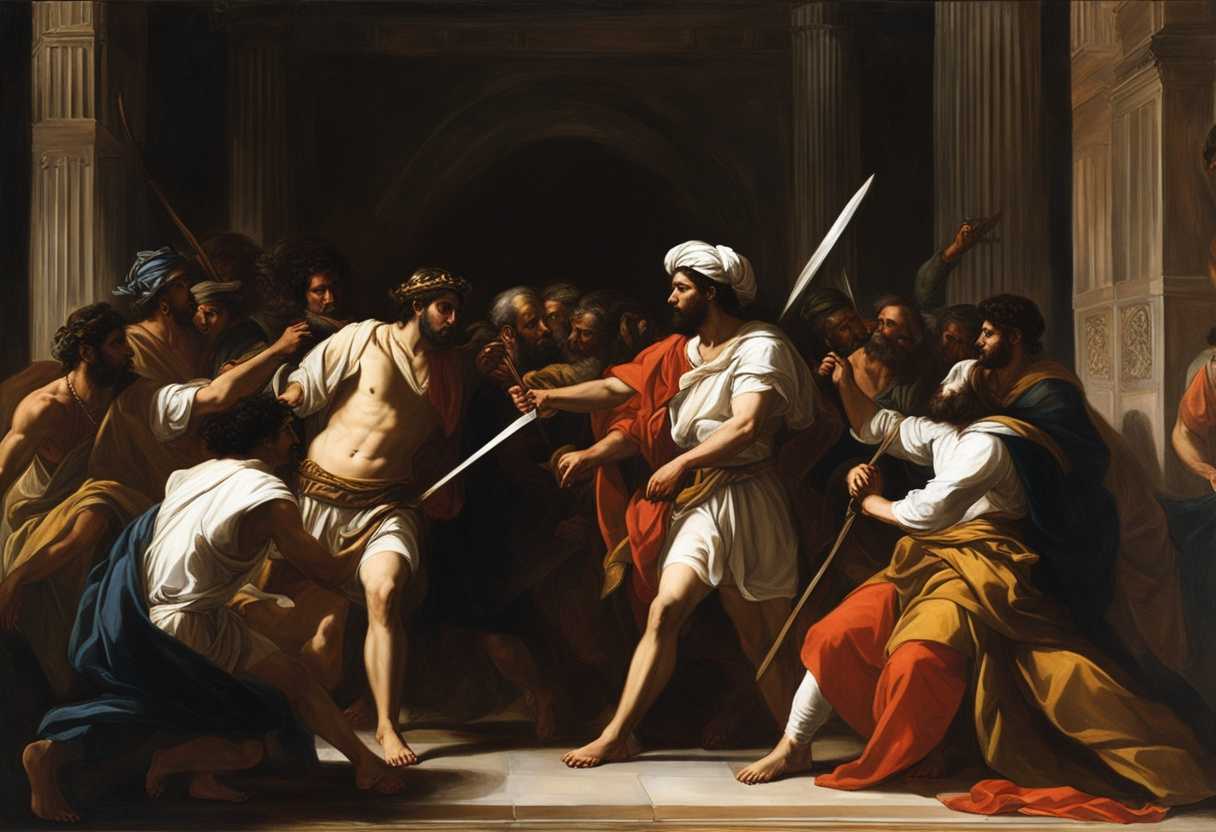
Setting the Scene for Exodus 5:15-19
In Exodus chapter 5, we find Moses and Aaron standing before Pharaoh in the grand throne room of the Egyptian palace. The room is adorned with intricate hieroglyphics and golden decorations, reflecting the wealth and power of the Pharaoh. Pharaoh, seated on his ornate throne, is surrounded by his advisors and court officials, all dressed in luxurious garments.
Moses and Aaron, representing the Israelites, have come before Pharaoh to deliver a message from God: “Let my people go.” The tension in the room is palpable as Pharaoh defiantly refuses their request, leading to a series of confrontations and plagues that will ultimately culminate in the liberation of the Israelites from slavery in Egypt. The atmosphere is charged with anticipation and conflict as the fate of an entire nation hangs in the balance.
As Moses and Aaron stand firm in their demand for freedom, Pharaoh’s heart hardens, setting the stage for a dramatic showdown between the power of God and the pride of the Egyptian ruler. The scene is set for a battle of wills and divine intervention that will shape the course of history for generations to come.
What is Exodus 5:15-19 about?
Pharaoh falsely accuses the Israelites of being lazy in this verse, demonstrating unjust treatment. This accusation leads to an increase in the workload of the Israelites, causing them distress and frustration. This situation highlights the abuse of power and the cruelty that can result from it. Pharaoh’s actions reflect a lack of empathy and a disregard for the well-being of others.
Have you ever experienced a situation where someone in power mistreated you or others unfairly? How did it make you feel? This verse reminds us of the importance of standing up against injustice and oppression, even in the face of adversity. It also serves as a reminder to treat others with kindness and compassion, regardless of our positions or differences. We can reflect on how we can use our power and influence to uplift and support others, rather than oppress and harm them.
Understanding what Exodus 5:15-19 really means
In Exodus 5:15-19, we witness a poignant exchange between the Israelite foremen and Pharaoh, encapsulating the harsh reality of oppression and injustice. The Israelites, enslaved in Egypt, are burdened with back-breaking labor, exacerbated by Pharaoh’s cruel decision to withhold straw essential for brick-making. The foremen, in a desperate plea for relief, confront Pharaoh, questioning the rationale behind their mistreatment. Their cry, “Why do you treat your servants this way?” echoes the universal longing for fairness and compassion in the face of adversity.
Pharaoh’s callous response, accusing the Israelites of laziness, exemplifies a common tactic used by oppressors throughout history – blaming the victims to justify their own oppressive actions. This manipulation tactic seeks to shift responsibility away from the powerful onto the powerless, perpetuating a cycle of exploitation and suffering. The foremen’s plight serves as a stark reminder of the insidious nature of injustice and the importance of speaking truth to power, even in the face of overwhelming odds.
Drawing parallels to contemporary issues, the narrative in Exodus resonates with the struggles of many individuals today who face exploitative working conditions, systemic injustices, and overwhelming burdens. The passage serves as a beacon of hope, reminding us that God is not indifferent to our suffering but is a God of justice and deliverance. Just as He heard the cries of the Israelites, He hears the cries of the oppressed in our world today, calling us to advocate for fairness and equity in our communities.
In Matthew 11:28-30, Jesus extends an invitation to all who are weary and burdened, offering rest and solace in contrast to the harshness of Pharaoh’s oppression. This invitation stands as a timeless promise of comfort and relief for those weighed down by life’s challenges. Similarly, James 5:4 condemns the exploitation of workers, underscoring the biblical mandate to uphold justice and dignity for all individuals, regardless of their social status.
As we reflect on the narrative of the Israelite foremen, we are compelled to consider our role in advocating for justice and compassion in our spheres of influence. Like the foremen who dared to confront Pharaoh, we are called to stand up against injustice, to amplify the voices of the marginalized, and to work towards a more equitable society. The story serves as a poignant reminder that God sees our struggles, hears our cries, and will ultimately bring about justice and liberation in His perfect timing.
How can we discern between true and false miracles?
We need to look at the source and the purpose behind the miracle in order to discern between true and false miracles. True miracles come from God and are intended to glorify Him and fulfill His will. They are consistent with God’s character and teachings as revealed in the Bible. False miracles, on the other hand, may originate from deceptive spirits or individuals seeking to mislead people and draw them away from God.
Additionally, true miracles often produce fruits of righteousness and lead people closer to God by confirming His word and demonstrating His power. False miracles, on the contrary, may serve selfish motives, bring confusion, and ultimately lead people astray from the truth. Therefore, it is important to test the spirits and compare any purported miracles with the teachings of the Bible to determine their authenticity and alignment with God’s will. Believers should rely on discernment guided by the Holy Spirit and the wisdom found in God’s Word to differentiate between true and false miracles. We can safeguard ourselves against deception and hold fast to the truth of God’s miraculous works by staying rooted in prayer, studying Scripture, and seeking the counsel of mature believers.
Application
Let’s embody the timeless wisdom and kindness found in Exodus to treat others with fairness and compassion. Let’s be the heroes of our modern world, standing up for justice and offering understanding to those in need. Let’s spread positivity and support, just as God would want us to. How will you choose to radiate love and fairness in your actions today?

Reverend Michael Johnson is an experienced Church Minister with a profound expertise in spirituality and guidance. With a serene presence and a compassionate heart, he has faithfully served his congregation for over 20 years, leading them on a spiritual journey towards inner peace and enlightenment. Reverend Johnson’s extensive knowledge of religious philosophies and profound understanding of human nature have made him a trusted confidant and mentor to many, as he seamlessly weaves his profound wisdom into life teachings. Reverend Johnson’s calming demeanor and empathetic nature continue to uplift and heal souls, nurturing a sense of unity and tranquility within his community.