
Exodus 5:6-9 is about Pharaoh’s oppressive treatment of the Israelites, symbolizing the struggle of those in power to maintain control and suppress the freedom of the oppressed.
6 The same day Pharaoh commanded the taskmasters of the people and their foremen,
7 “You shall no longer give the people straw to make bricks, as in the past; let them go and gather straw for themselves.”
8 But the number of bricks that they were making before you shall impose on them. You shall by no means reduce it, for they are idle. Therefore they cry, ‘Let us go and offer sacrifice to our God.’
9 Let heavier work be laid on the men that they may labor at it and pay no regard to lying words.”
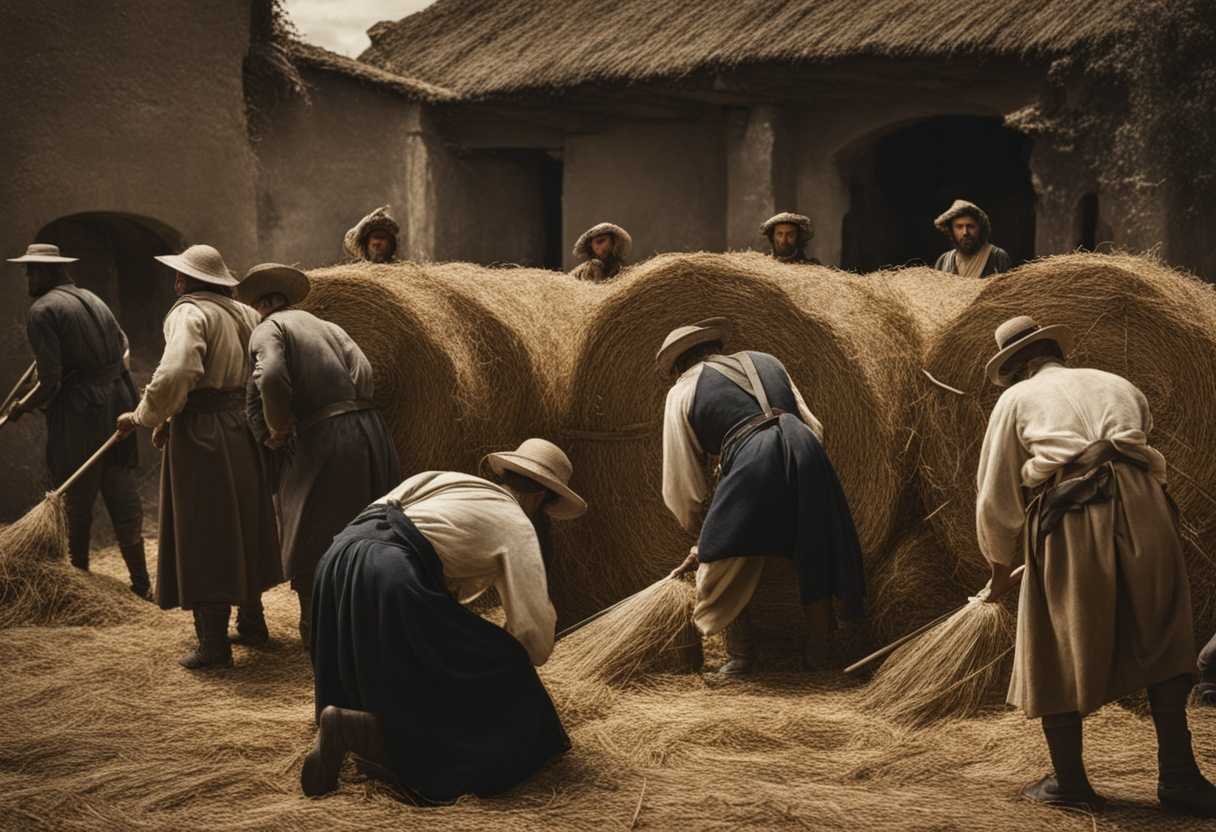
Setting the Scene for Exodus 5:6-9
In Exodus chapter 5, we find Moses and Aaron standing before Pharaoh in the grand throne room of the Egyptian palace. The room is adorned with intricate hieroglyphics and golden decorations, reflecting the wealth and power of the Pharaoh. Pharaoh, seated on his ornate throne, is surrounded by his advisors and court officials, all dressed in luxurious garments.
Moses and Aaron, representing the Israelites, have come before Pharaoh to deliver a message from God: “Let my people go, so that they may hold a festival to me in the wilderness.” However, Pharaoh, proud and defiant, refuses their request and instead increases the workload of the Israelite slaves, ordering them to gather straw for making bricks without providing any straw.
Tension fills the room as Moses and Aaron stand firm in their demand, while Pharaoh, with a hardened heart, dismisses their plea. The scene is set for a clash of wills between the powerful ruler of Egypt and the humble servants of God, setting the stage for the unfolding drama of the Exodus story.
What is Exodus 5:6-9 about?
Pharaoh, the ruler of Egypt, intensifies the labor of the Israelite slaves in this verse. Pharaoh is not only exploiting their labor by increasing their workload but also deliberately subjecting them to harsher conditions. This action reflects a clear abuse of power and a blatant disregard for the well-being of the Israelites. It shows how those in positions of authority can misuse their power to oppress and mistreat others for their own gain. Unchecked power and oppression invite us to consider the consequences as we reflect on this verse. We are prompted to question the ethics of exploiting marginalized populations for personal or political gain. How does this story resonate with issues of social justice and human rights in our world today? How can we work towards creating a more just and equitable society where all individuals are treated with dignity and respect? Let us draw inspiration from the resilience of the Israelites and strive to stand up against oppression in all its forms.
Understanding what Exodus 5:6-9 really means
In the narrative of Exodus 5:6-9, we witness a pivotal moment in the plight of the Israelites under Pharaoh’s oppressive rule. As Moses, the chosen messenger of God, approaches Pharaoh to demand the release of his people, Pharaoh’s response is not one of compliance but of further cruelty. Pharaoh’s decree to no longer supply the Israelites with straw for making bricks signifies a deliberate escalation of their suffering. By removing this essential material, Pharaoh aims to intensify the labor of the Israelites, making their already arduous task even more challenging.
The command for the Israelites to gather their own straw adds another layer of hardship to their already burdensome existence. Not only are they expected to meet their daily quotas of brick production, but now they must also source their own materials, all while under the watchful eye of taskmasters. This additional demand placed upon them serves as a stark reminder of the ruthless nature of their oppressors and the relentless pursuit of control over their lives.
Pharaoh’s insidious intent becomes clearer as he instructs for the work to be made harder for the people so that they are too preoccupied to heed any messages of liberation or hope. By increasing their workload and creating an environment of constant toil, Pharaoh seeks to drown out any whispers of freedom that may have begun to stir among the Israelites. His strategy is one of distraction and exhaustion, aiming to crush the spirits of the oppressed and quell any thoughts of rebellion.
This passage resonates with individuals today who may find themselves weighed down by the demands of life, whether from work, personal responsibilities, or societal expectations. The story of the Israelites serves as a poignant reminder of the importance of seeking liberation from oppressive circumstances and finding solace in God amidst trials. Just as the Israelites cried out for deliverance, we too can turn to God in moments of overwhelming stress and find refuge in His promises of comfort and strength.
Consider the modern-day parallels to Pharaoh’s oppressive tactics. Picture an employee already stretched thin by long hours and mounting tasks, suddenly burdened with additional responsibilities without adequate support. The sense of being overwhelmed and crushed under the weight of these new demands mirrors the plight of the Israelites under Pharaoh’s harsh rule. In these moments of feeling suffocated by life’s pressures, we can draw inspiration from the Israelites’ resilience and their eventual deliverance through God’s intervention.
As we reflect on the themes of liberation and rest in Exodus 5:6-9, let us examine our own lives for areas where we feel burdened or oppressed. In those moments of struggle, may we turn to God for strength and find solace in His promises of deliverance. Remember that God hears the cries of the oppressed and is actively working towards their freedom, even when circumstances seem to worsen before they improve. Let us also extend a hand of encouragement to those around us who are facing their own battles, sharing the hope and freedom found in Christ and reminding them that they are not alone in their struggles.
How can we endure through hardship and opposition?
We can endure through hardship and opposition by staying focused on our purpose and the bigger picture. Just like Moses faced resistance from Pharaoh when he asked for the Israelites to be released, we may encounter obstacles when we work towards a positive change or a noble cause. We must remember why we started on this path and keep our eyes on the ultimate goal in those moments.
Furthermore, leaning on our faith and trusting in a higher power can provide us with the strength and resilience needed to persevere through challenging times. We can find comfort and courage to face adversity with grace and determination by relying on our spiritual beliefs and trusting in a divine plan. Holding onto our faith in the face of opposition can give us the courage to continue moving forward, even when the path seems difficult or uncertain.
Lastly, seeking support from others who share our values and goals can help us navigate through hardship and opposition. Having a strong support system can provide us with the encouragement and guidance needed to withstand challenging circumstances, just as Moses had Aaron by his side to support and encourage him during his interactions with Pharaoh. Surrounding ourselves with like-minded individuals who can offer solidarity, advice, and empathy can help us stay motivated and resilient in the face of adversity.
Application
Embrace challenges with unwavering faith, just like facing tough times at work or supporting family through thick and thin. Trust in your beliefs and keep faith in the face of adversity, knowing that brighter days are ahead. Let’s navigate through life’s hurdles by leaning on our faith, drawing strength from our convictions and staying true to God’s plan. When trials test your faith, will you stand firm like a rock amid raging seas, or falter under the weight of doubt?

Reverend Michael Johnson is an experienced Church Minister with a profound expertise in spirituality and guidance. With a serene presence and a compassionate heart, he has faithfully served his congregation for over 20 years, leading them on a spiritual journey towards inner peace and enlightenment. Reverend Johnson’s extensive knowledge of religious philosophies and profound understanding of human nature have made him a trusted confidant and mentor to many, as he seamlessly weaves his profound wisdom into life teachings. Reverend Johnson’s calming demeanor and empathetic nature continue to uplift and heal souls, nurturing a sense of unity and tranquility within his community.