
Exodus 6:10-13 is about Moses expressing his doubt and feeling ill-equipped to lead the Israelites out of Egypt, prompting God to reassure him of His power and promise to fulfill the covenant with His people.
10 The Lord said to Moses,
11 Go in, tell Pharaoh king of Egypt to let the people of Israel go out of his land.
12 But Moses said to the Lord, “Behold, the people of Israel have not listened to me. How then shall Pharaoh listen to me, for I am of uncircumcised lips?”
13 The Lord spoke to Moses and Aaron, and gave them a charge about the people of Israel and about Pharaoh king of Egypt: to bring the people of Israel out of the land of Egypt.
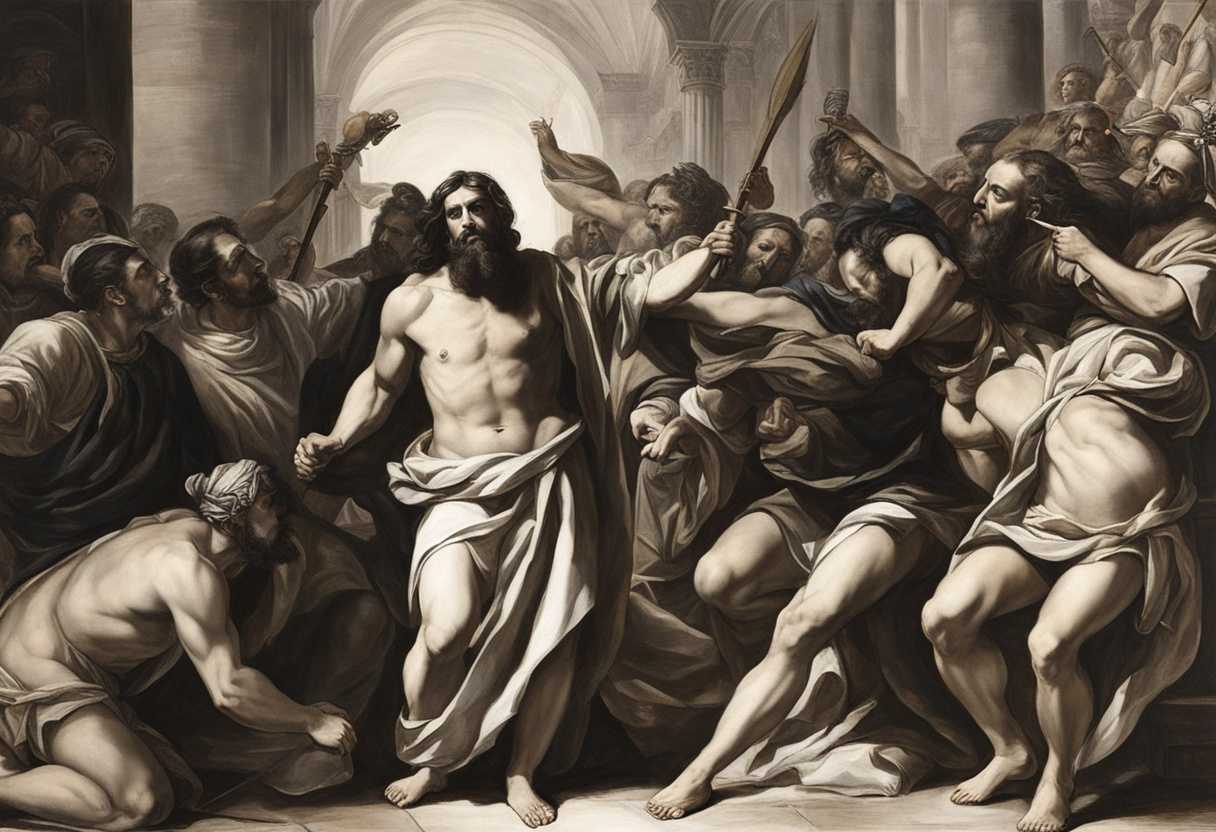
Setting the Scene for Exodus 6:10-13
In Exodus chapter 6, we find Moses and Aaron standing before the Israelites in the land of Egypt. The scene is set in a dusty, crowded courtyard where the Israelites have gathered to hear a message from their leaders. The air is thick with anticipation and uncertainty as the people await news of their impending liberation from slavery.
Moses, a humble and reluctant leader chosen by God, stands tall next to his brother Aaron, who serves as his spokesperson. The two brothers have come before the Israelites to deliver a message of hope and promise from the Lord. Despite their initial doubts and fears, Moses and Aaron have embraced their roles as instruments of God’s will, determined to lead their people out of bondage and into freedom.
Surrounded by a sea of faces reflecting a mix of weariness and hope, Moses and Aaron speak with conviction and authority, assuring the Israelites that God has heard their cries and will deliver them from oppression. The scene is charged with emotion as the Israelites listen intently, their hearts stirred by the promise of a brighter future.
What is Exodus 6:10-13 about?
This verse highlights the compassion and faithfulness of God towards His people. Despite the hardships and uncertainties they were facing in Egypt, God reassures Moses of His plan to lead the Israelites out of slavery and into freedom. This demonstrates God’s commitment to fulfilling His promises and delivering on His word, even when the situation seems bleak.
It also serves as a reminder to us that God’s plans are always for our good, even when we cannot yet see the way forward. God has a plan to liberate us from our struggles and bring us into a place of freedom and abundance, just as He had a plan to liberate the Israelites from bondage. This verse encourages us to trust in God’s timing and to have faith that He will always come through for us, just as He did for the Israelites in their time of need. Reflect on this verse and consider how you can trust in God’s plan for your life, even when circumstances seem challenging. How can you hold onto faith and hope, knowing that God is always working behind the scenes for your benefit?
Understanding what Exodus 6:10-13 really means
In the narrative of Exodus, we witness a pivotal moment where God is preparing Moses to lead the Israelites out of Egyptian bondage. The Israelites, long oppressed and crying out for deliverance, are about to embark on a journey of liberation. Moses, chosen by God for this monumental task, initially grapples with feelings of inadequacy and self-doubt. This inner struggle is a common human experience, resonating with many who have faced daunting challenges or responsibilities in their lives.
“The LORD said to Moses,” a phrase that signifies the direct communication between God and His chosen servant, underscores the divine authority guiding Moses’ mission. The command to confront Pharaoh, a powerful ruler, and demand the release of the Israelites highlights the courage and faith required of Moses. Despite his reservations, Moses expresses his concerns to God, questioning his own ability to persuade both the Israelites and Pharaoh due to his perceived shortcomings.
In this passage, we witness God not only calling Moses but also equipping him for the task ahead. The instructions given to Moses and Aaron regarding the Israelites and Pharaoh demonstrate God’s guidance and provision for His servants. This theme of divine empowerment amidst human weakness is echoed in other biblical passages, such as God’s reassurance to Jeremiah and Paul’s acknowledgment of God’s strength in weakness.
The relevance of Moses’ story extends to contemporary struggles with self-doubt and inadequacy. Many individuals today face challenges that seem insurmountable, questioning their abilities to fulfill their callings or responsibilities. However, the example of Moses reminds us that God often calls us to tasks beyond our perceived capabilities, trusting in His provision and guidance to see us through.
Consider the story of Sarah, a young woman who felt called to initiate a community outreach program despite her doubts and insecurities. Like Moses, she grappled with feelings of inadequacy but found reassurance in God’s ability to work through her weaknesses. Through faith and the support of her community, Sarah overcame her doubts and successfully launched the program, making a significant impact in her neighborhood.
In conclusion, the passage in Exodus 6:10-13 serves as a poignant reminder that God’s call often requires us to step out in faith, even when we feel ill-equipped. By trusting in God’s plan, relying on His strength, and embracing His guidance, we can transcend our self-doubt and fulfill our purpose in making a meaningful impact in the world.
How can we trust God’s promises in difficulty?
We can trust God’s promises in times of difficulty by understanding that His faithfulness extends beyond our circumstances. The passage reveals that even when facing challenges or setbacks, God remains true to His word and His plans cannot be thwarted. We can find comfort in His promises and rely on His unwavering faithfulness by keeping our focus on the character of God rather than our current struggles.
Additionally, these verses remind us that God’s promises are not dependent on our own capabilities or understanding. Despite Moses’ initial doubts and the Israelites’ disbelief, God’s promises were ultimately fulfilled. This serves as a powerful reminder that our human limitations do not hinder God’s ability to fulfill what He has spoken. We can confidently hold onto His promises even in the midst of difficulty by relinquishing control and trusting in God’s sovereignty. God ultimately fulfills His promises in His perfect timing and according to His divine will, as emphasized in the passage in Exodus. Our role is to trust in His goodness and remain steadfast in faith, even when faced with adversity. We can find peace and assurance in the midst of life’s challenges by staying rooted in the truth of God’s unwavering faithfulness and trusting in His promises.
Application
Embrace the wisdom from Exodus 6:10-13 and ponder your own journey of trust amidst life’s challenges. Like a skilled professional at work or a devoted caregiver at home, tap into your reservoir of faith to navigate through doubts and difficulties. Let us mirror Moses’ unwavering belief, stepping boldly forward in obedience, regardless of the obstacles ahead. Will you seize this moment to embrace God’s plan wholeheartedly, rising above uncertainties with courage and conviction?

Reverend Michael Johnson is an experienced Church Minister with a profound expertise in spirituality and guidance. With a serene presence and a compassionate heart, he has faithfully served his congregation for over 20 years, leading them on a spiritual journey towards inner peace and enlightenment. Reverend Johnson’s extensive knowledge of religious philosophies and profound understanding of human nature have made him a trusted confidant and mentor to many, as he seamlessly weaves his profound wisdom into life teachings. Reverend Johnson’s calming demeanor and empathetic nature continue to uplift and heal souls, nurturing a sense of unity and tranquility within his community.