
Exodus 7:1-2 is about God empowering Moses and Aaron to serve as His spokespersons and demonstrate His mighty acts before Pharaoh to set the stage for the liberation of the Israelites from Egypt.
1 And the Lord said to Moses, “See, I have made you like God to Pharaoh, and your brother Aaron shall be your prophet.
2 You shall speak all that I command you, and your brother Aaron shall tell Pharaoh to let the people of Israel go out of his land.
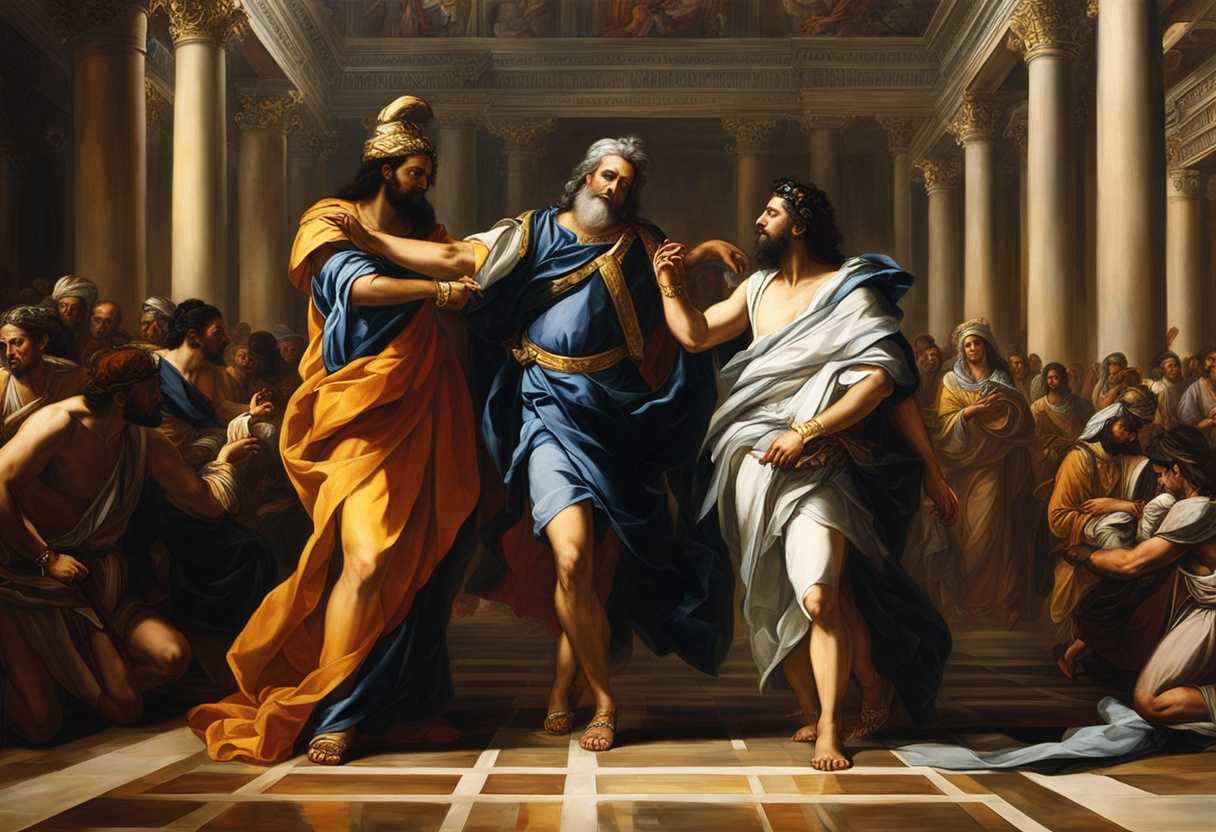
Setting the Scene for Exodus 7:1-2
The scene in Exodus 7:1-2 takes place in the royal court of Egypt, specifically in the presence of Pharaoh. Moses and Aaron are standing before Pharaoh, ready to deliver a message from God. The room is grand and opulent, adorned with intricate hieroglyphics and statues of Egyptian gods. Pharaoh, adorned in regal attire, sits on a throne, surrounded by his advisors and courtiers.
Moses and Aaron, representing the Israelites, have been summoned to the court by Pharaoh after they requested to leave Egypt to worship their God in the wilderness. As they stand before Pharaoh, Moses holds his staff, a symbol of God’s power, while Aaron prepares to speak on behalf of his brother. The tension in the room is palpable as the fate of the Israelites hangs in the balance, with Pharaoh holding the power to grant or deny their freedom.
As the conversation unfolds, Aaron begins to relay the message from God to Pharaoh, demanding the release of the Israelites. The clash of divine authority and earthly power sets the stage for the epic showdown between God and Pharaoh, leading to a series of miraculous events and the eventual liberation of the Israelites from slavery in Egypt.
What is Exodus 7:1-2 about?
Moses is appointed as a messenger of God to Pharaoh in this verse, symbolizing authority and leadership in ancient times. Through this act, God not only shows His selection of Moses for a specific task but also His overarching authority over all creation. This divine empowerment of Moses signifies the intimate relationship between God and His chosen ones, as well as the responsibility that comes with being a spokesperson for the Divine.
Have you ever felt called to a particular task or mission in your life? Just like Moses, who may have initially felt unprepared or unworthy of such a significant role, we too may encounter moments where we doubt our abilities. However, this verse serves as a reminder that when we are chosen by God, He equips us with the necessary strength, wisdom, and courage to fulfill the purpose He has set before us. Through Moses’ story, we can find inspiration and confidence in our own journeys, knowing that God’s authority and power are always present to guide and support us.
Understanding what Exodus 7:1-2 really means
In the Book of Exodus, we are immersed in the narrative of Moses, the Israelites’ enslavement in Egypt, and God’s grand design for their liberation. As we delve into Exodus 7:1-2, we encounter a pivotal moment where God imparts instructions to Moses and Aaron as they brace themselves to confront the formidable Pharaoh. The gravity of this encounter is underscored by the profound phrases uttered by God, “See, I have made you like God to Pharaoh,” signifying the divine authority bestowed upon Moses to act on God’s behalf before the Egyptian ruler. This empowerment serves as a potent reminder of God’s ability to equip and elevate individuals for His purpose.
Furthermore, the designation of Aaron as Moses’ prophet elucidates the essence of collaboration and mutual support in fulfilling God’s mission. Aaron’s role as the spokesperson, articulating God’s messages under Moses’ guidance, exemplifies the significance of teamwork in executing God’s plans. This partnership between Moses and Aaron not only showcases the beauty of shared responsibilities but also emphasizes the interconnectedness and interdependence within God’s overarching plan.
The directive for Moses to faithfully convey all that God commands him accentuates the paramount importance of obedience and integrity in delivering God’s word without distortion. This unwavering commitment to accurately communicate God’s instructions underscores the foundational principle of faithfulness in being a vessel for God’s message. The parallel passages in Exodus 4:16, Jeremiah 1:7-9, and Matthew 10:19-20 further reinforce the themes of divine commissioning, reliance on God’s guidance, and the assurance of His Spirit speaking through His chosen messengers.
The timeless relevance of these verses resonates with believers today, calling them to embody the empowerment and representation exemplified by Moses, to embrace the value of partnership and support akin to Moses and Aaron’s collaboration, and to uphold the virtues of obedience and faithfulness in conveying God’s truth. Just as Moses and Aaron were instrumental in fulfilling God’s plan, contemporary believers are urged to seek empowerment from God, lean on the support of their spiritual companions, and faithfully proclaim God’s message in a world yearning for His love and truth.
To illustrate this profound message, envision a scenario where a modern-day advocate for justice faces daunting challenges akin to Moses confronting Pharaoh. In this narrative, the advocate, much like Moses, finds solace and strength in the unwavering support of a trusted ally, akin to Aaron. Through their partnership and steadfast commitment to truth, they become catalysts for transformative change, mirroring the timeless principles of empowerment, partnership, and obedience encapsulated in Exodus 7:1-2.
As we contemplate these reflections, let us ponder our own roles as representatives of God’s will, identify our “Aarons” who bolster us in our journey, and assess our fidelity in conveying the messages entrusted to us. May we draw inspiration from Moses and Aaron’s narrative, embracing the call to be vessels of God’s love, unity, and truth in a world hungering for His redemptive grace.
How can we authentically represent God in leadership?
To authentically represent God in leadership, we can start by understanding that it is ultimately God who empowers us for leadership and gives us authority. We should recognize in our leadership roles that we are acting on behalf of God, carrying out His plans and purposes. This requires humility and a willingness to submit to God’s will above our own desires or ambitions.
Furthermore, authentic representation of God in leadership involves aligning our values and actions with God’s character. This means prioritizing justice, love, compassion, and integrity in all our decisions and interactions. We should strive to demonstrate God’s grace and mercy to those we lead, showing them the same forgiveness and understanding that God extends to us. We, as leaders seeking to authentically represent God, should constantly seek His guidance and wisdom in all that we do. This involves prayer, meditation on His Word, and a willingness to listen to the Holy Spirit’s prompting. We can lead with humility, integrity, and a genuine desire to honor Him in all our leadership endeavors by relying on God’s strength rather than our own.
Application
Embrace your purpose as Moses and Aaron did in Exodus 7:1-2. You are chosen for a specific role, just like them. Take this as a sign to step boldly into your mission, knowing God is by your side. Are you ready to answer God’s call today?

Reverend Michael Johnson is an experienced Church Minister with a profound expertise in spirituality and guidance. With a serene presence and a compassionate heart, he has faithfully served his congregation for over 20 years, leading them on a spiritual journey towards inner peace and enlightenment. Reverend Johnson’s extensive knowledge of religious philosophies and profound understanding of human nature have made him a trusted confidant and mentor to many, as he seamlessly weaves his profound wisdom into life teachings. Reverend Johnson’s calming demeanor and empathetic nature continue to uplift and heal souls, nurturing a sense of unity and tranquility within his community.