
Exodus 7:19-25 is about the power of God as demonstrated through the miracles of turning water into blood, the significance of obedience to God’s commands, and the inability of Pharaoh and his magicians to withstand the might of the Lord.
19 And the Lord said to Moses, “Say to Aaron, ‘Take your staff and stretch out your hand over the waters of Egypt, over their rivers, their canals, and their ponds, and all their pools of water, so that they may become blood, and there shall be blood throughout all the land of Egypt, even in vessels of wood and in vessels of stone.’”
20 Moses and Aaron did as the Lord commanded. In the sight of Pharaoh and in the sight of his servants, he lifted up the staff and struck the water in the Nile, and all the water in the Nile turned into blood.
21 And the fish in the Nile died, and the Nile stank, so that the Egyptians could not drink water from the Nile. There was blood throughout all the land of Egypt.
22 But the magicians of Egypt did the same by their secret arts. So Pharaoh’s heart remained hardened, and he would not listen to them, as the Lord had said.
23 But Pharaoh turned and went into his house, and he did not take even this to heart.
24 And all the Egyptians dug along the Nile for water to drink, for they could not drink the water of the Nile.
25 Seven full days passed after the Lord had struck the Nile.
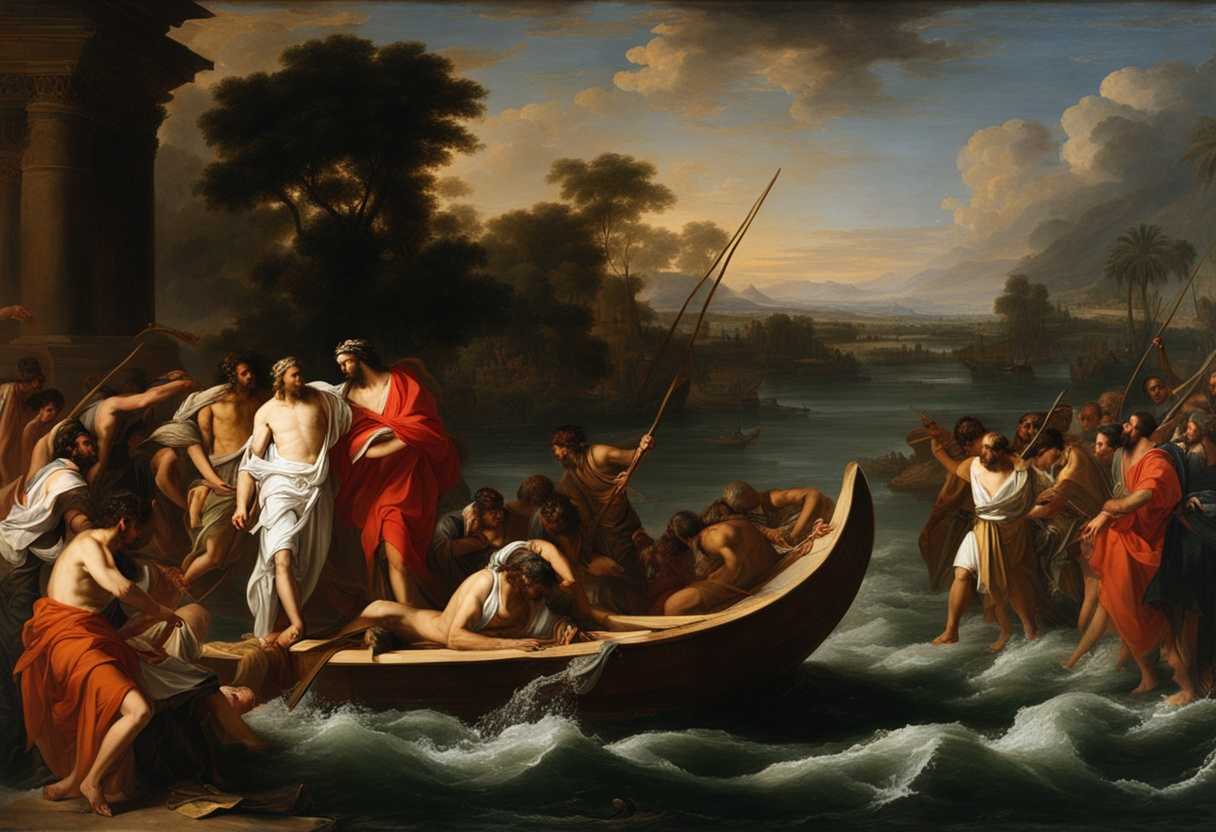
Setting the Scene for Exodus 7:19-25
In Exodus chapter 7, we find Moses and Aaron standing before Pharaoh in the grand throne room of the Egyptian palace. The room is adorned with intricate hieroglyphics and golden decorations, reflecting the wealth and power of the Pharaoh. Pharaoh, seated on his ornate throne, is surrounded by his advisors and court officials, all dressed in luxurious garments.
Moses and Aaron, representing the God of the Israelites, have come to demand the release of the Israelite slaves. As a sign of God’s power, Aaron stretches out his staff and strikes the Nile River, turning its waters into blood. The once life-giving river now flows red, emitting a foul stench throughout the palace. Pharaoh and his courtiers are horrified by this supernatural display of power, but Pharaoh’s heart remains hardened, and he refuses to let the Israelites go.
The tension in the room is palpable as Moses and Aaron stand firm in their demand, while Pharaoh and his advisors grapple with the implications of defying the God of the Israelites. The scene is charged with drama and suspense as the power struggle between God and Pharaoh unfolds, setting the stage for the series of plagues that will ultimately lead to the liberation of the Israelites from their bondage in Egypt.
What is Exodus 7:19-25 about?
God’s power and influence in the face of Pharaoh’s resistance are the focus of this verse. The act of turning the Nile River into blood is a powerful display of divine authority over natural elements, demonstrating God’s ability to inflict severe consequences in response to Pharaoh’s stubbornness. Despite witnessing such a dramatic and undeniable display of power, Pharaoh’s heart remains hardened, showcasing his refusal to acknowledge God’s authority and relent in his oppressive behavior towards the Israelites.
Have you ever encountered a situation where someone refuses to see reason despite overwhelming evidence? Just like Pharaoh in this verse, individuals may choose to cling to their pride and ego, even when faced with clear signs of truth and consequences. It serves as a reminder to remain humble and open-minded, willing to listen and change course when necessary, rather than stubbornly persisting in our own ways. This verse ultimately speaks to the importance of humility, repentance, and the consequences of holding onto arrogance in the face of divine intervention.
Understanding what Exodus 7:19-25 really means
In Exodus 7:19-25, we witness the unfolding of the first plague upon Egypt, where the Nile River is turned into blood. This catastrophic event serves as a powerful demonstration of God’s supremacy over the natural world and His ability to bring judgment upon those who resist His will. Pharaoh’s hardened heart and refusal to release the Israelites set the stage for these divine interventions, showcasing the consequences of disobedience and the unfolding of God’s plan through Moses and Aaron.
The command for Moses to stretch out his hand over the waters of Egypt symbolizes the divine authority bestowed upon him as God’s chosen instrument. This act not only initiates the plague but also underscores the pivotal role that Moses plays in executing God’s will. The transformation of the Nile into blood directly challenges the Egyptian belief in the god Hapi, who was associated with the river, highlighting the clash between the God of Israel and the false gods of Egypt.
The repercussions of the plague extend beyond mere inconvenience, as the death of fish and the foul stench of the river disrupt the daily lives and livelihoods of the Egyptians. This environmental and economic impact serves as a tangible reminder of the severity of God’s judgment and the far-reaching consequences of defying His commands. The imagery of the polluted river serves as a stark warning of the repercussions of turning away from God’s guidance and the importance of acknowledging His sovereignty over all aspects of our lives.
Drawing parallels to other biblical passages such as Psalm 78:44 and Revelation 16:4, we see a continuity in God’s judgment and His ultimate triumph over all powers. The plagues in Egypt serve as a precursor to the final judgment, emphasizing the themes of divine justice, power, and the consequences of rebellion against God. These narratives invite us to reflect on our own obedience and humility before God, recognizing His authority and sovereignty in our lives.
In applying the lessons from this passage to our contemporary context, we are prompted to examine areas in our lives where we may be resisting God’s guidance. Just as Pharaoh’s obstinacy led to dire consequences, our own defiance against God’s will can result in spiritual turmoil and upheaval. By aligning ourselves more closely with God’s purposes and responding with faith and obedience, we can avoid the pitfalls of disobedience and experience the blessings that come from walking in His ways.
Through reflection and introspection, we can discern the ways in which God is at work in our lives, demonstrating His power and presence. By cultivating a spirit of humility and submission to His will, we can navigate the challenges and trials we face with faith and trust in His providence. The story of the plagues in Egypt serves as a timeless reminder of the importance of heeding God’s voice, acknowledging His sovereignty, and aligning our lives with His divine purposes.
How can we experience God’s forgiveness and restoration?
We can experience God’s forgiveness and restoration through repentance and seeking His mercy. When we acknowledge our sins and ask for His forgiveness, God’s grace covers us and restores our relationship with Him. We open ourselves up to experiencing His unfailing love and the peace that comes with being reconciled to Him by turning away from our wrongdoing and turning back to God.
God’s forgiveness and restoration are always available to us, no matter how far we may have strayed. Through genuine remorse and a sincere desire to change, we can pave the way for God to work in our lives, cleanse us of our sins, and lead us on a path of righteousness. We can experience the transformative power of God’s forgiveness by humbly coming before Him, offering us a fresh start and a renewed sense of purpose in serving Him wholeheartedly.
Application
Just as we take charge at work and care for our families, let’s also take charge of our spiritual journey. Let’s reflect on our actions, realign our priorities, and strive to fulfill our purpose. Will you rise to the occasion and make a change today?

Reverend Michael Johnson is an experienced Church Minister with a profound expertise in spirituality and guidance. With a serene presence and a compassionate heart, he has faithfully served his congregation for over 20 years, leading them on a spiritual journey towards inner peace and enlightenment. Reverend Johnson’s extensive knowledge of religious philosophies and profound understanding of human nature have made him a trusted confidant and mentor to many, as he seamlessly weaves his profound wisdom into life teachings. Reverend Johnson’s calming demeanor and empathetic nature continue to uplift and heal souls, nurturing a sense of unity and tranquility within his community.