
Exodus 7:3-4 is about God declaring his power and sovereignty over both Pharaoh and the Israelites, showing that despite Pharaoh’s resistance, God’s will shall prevail and his people will be delivered.
3 But I will harden Pharaoh’s heart, and though I multiply my signs and wonders in the land of Egypt,
4 Pharaoh will not listen to you. Then I will lay my hand on Egypt and bring my hosts, my people the children of Israel, out of the land of Egypt by great acts of judgment.
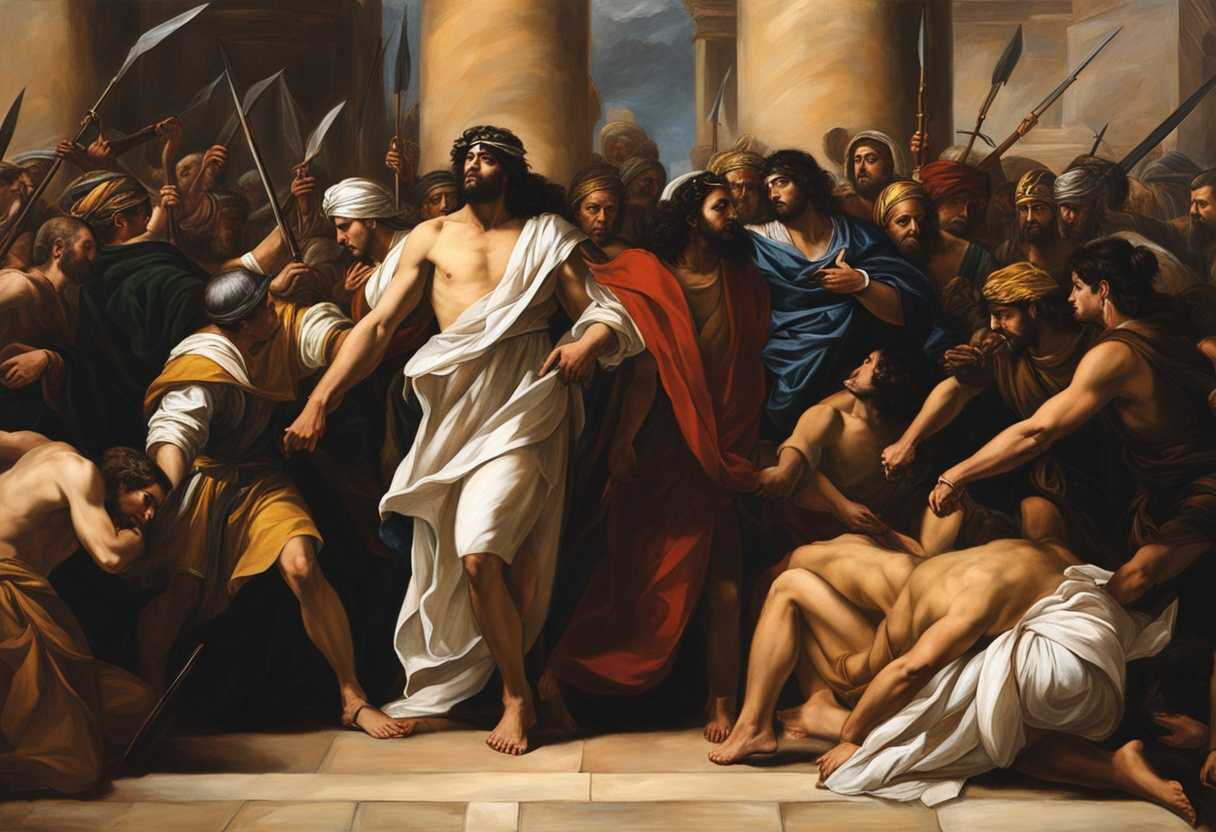
Setting the Scene for Exodus 7:3-4
The scene in Exodus 7:3-4 takes place in the royal court of Egypt, specifically in the presence of Pharaoh. Moses and Aaron, the two brothers chosen by God to lead the Israelites out of Egypt, stand before Pharaoh to deliver a message from the Lord. The room is grand and opulent, adorned with intricate hieroglyphics and golden decorations, befitting the ruler of Egypt.
Pharaoh, a proud and powerful leader, sits on his throne, surrounded by his advisors and court officials. Moses and Aaron, representing the oppressed Israelites, stand confidently before Pharaoh, their faces resolute and determined. The tension in the room is palpable as the clash between the divine authority of God and the earthly power of Pharaoh is about to unfold.
As Moses and Aaron speak, their words carry the weight of God’s commandments and warnings of impending plagues if Pharaoh refuses to let the Israelites go. The air is thick with anticipation as the fate of an entire nation hangs in the balance, with Pharaoh’s response holding the key to their freedom. The stage is set for a dramatic showdown between the forces of good and evil, righteousness and oppression, as the struggle for liberation begins in the heart of Egypt.
What is Exodus 7:3-4 about?
This verse presents a deep and intriguing theological concept that can spark some questions and reflections. Why would God harden Pharaoh’s heart? What does this tell us about the sovereignty and power of God? God was showcasing His control over all things, including the hearts of even the most powerful rulers, by hardening Pharaoh’s heart. This act served a dual purpose: to display God’s unmatched power and to bring judgment upon Egypt for their oppression of the Israelites. We are reminded of the complexities of divine intervention and human agency as we ponder this verse. It challenges us to grapple with the idea that God’s ways are higher than our ways, and His ultimate plan may not always align with our human understanding. This verse prompts us to reflect on the depth of God’s justice and mercy, even in the midst of seemingly harsh actions. It ultimately calls us to trust in God’s wisdom and sovereignty, knowing that He works all things together for the good of those who love Him.
Understanding what Exodus 7:3-4 really means
In the narrative of Exodus, we find a crucial moment where God is communicating His plan to Moses regarding the events that will unfold in Egypt. These verses reveal God’s intention to harden Pharaoh’s heart, setting the stage for the manifestation of His signs and wonders. It is a pivotal point in the story of the Israelites’ liberation from slavery, showcasing God’s sovereignty and His purposeful orchestration of events.
The phrase “I will harden Pharaoh’s heart” signifies God’s ultimate control over the situation. It highlights His authority to direct even the hardening of hearts towards a specific end. This declaration underscores the divine plan unfolding, where God’s power will be displayed through miraculous signs and wonders in Egypt. Despite Pharaoh’s resistance, God’s purpose will prevail, demonstrating His supremacy over earthly rulers.
As we delve into the meaning behind “Pharaoh will not listen to you,” we are reminded of the challenges Moses will face in convincing Pharaoh to release the Israelites. This resistance emphasizes the importance of perseverance and unwavering faith in the face of adversity. God’s promise to “lay my hand on Egypt” symbolizes His direct intervention and judgment, showcasing His justice and authority over nations.
The call to “bring out my hosts, my people the children of Israel” underscores God’s commitment to His covenant people. It signifies His unwavering dedication to deliver them from bondage and fulfill His promises. These verses not only recount historical events but also serve as a testament to God’s faithfulness and His redemptive plan for His people.
In our contemporary context, these verses remind us of God’s overarching control in our lives. They encourage us to trust in His plan and timing, even when faced with seemingly insurmountable challenges. Just as God used the hardening of Pharaoh’s heart for His divine purposes, He can work through our difficulties to bring about His ultimate good.
Consider a personal anecdote where someone faced a daunting obstacle, akin to Pharaoh’s hardened heart. Despite the odds, their unwavering faith and trust in God’s timing led to a remarkable breakthrough. This narrative mirrors the timeless truth that God’s signs and wonders are still active today, guiding us through our trials towards a brighter tomorrow.
In conclusion, the verses from Exodus 7:3-4 serve as a poignant reminder of God’s power, faithfulness, and sovereignty. They urge us to remain steadfast in faith, knowing that God is always at work for our deliverance and ultimate good. Just as He orchestrated the deliverance of the Israelites from Egypt, He continues to lead us from bondage to freedom, demonstrating His enduring love and providence.
How can we trust God’s sovereignty over Pharaoh’s heart?
We can trust in God’s sovereignty over Pharaoh’s heart because in these verses, God clearly states that He will harden Pharaoh’s heart. This demonstrates that God has ultimate control and authority over Pharaoh’s actions and decisions. God asserts His power to bring about His purposes and fulfill His will by declaring His plan to harden Pharaoh’s heart, even in the heart of a powerful ruler like Pharaoh.
This verse also reveals God’s purpose in hardening Pharaoh’s heart – to demonstrate His signs and wonders in the land of Egypt. God’s plan goes beyond just influencing one person’s heart; it encompasses a larger context of showcasing His power and glory through the miraculous events that will unfold in Egypt. This further emphasizes God’s sovereign authority and His ability to use even the resistance of a human heart to bring about His divine purposes. Trusting in God’s sovereignty over Pharaoh’s heart means relying on His wisdom and power to fulfill His plans in His perfect timing and ways.
Application
Embrace the power and sovereignty of God in your life, just as a captain guides a ship through rough seas. Trust in His ability to bring miracles and fulfill promises, like a CEO setting goals for a successful business. Approach each day with unwavering faith and obedience, for God is orchestrating good things for you behind the scenes. Will you heed the call to embrace God’s power and sovereignty in your life, navigating your path with steadfast trust?

Reverend Michael Johnson is an experienced Church Minister with a profound expertise in spirituality and guidance. With a serene presence and a compassionate heart, he has faithfully served his congregation for over 20 years, leading them on a spiritual journey towards inner peace and enlightenment. Reverend Johnson’s extensive knowledge of religious philosophies and profound understanding of human nature have made him a trusted confidant and mentor to many, as he seamlessly weaves his profound wisdom into life teachings. Reverend Johnson’s calming demeanor and empathetic nature continue to uplift and heal souls, nurturing a sense of unity and tranquility within his community.