
1 Then the Lord said to Moses, “Go in to Pharaoh and say to him, ‘Thus says the Lord, “Let my people go, that they may serve me.
2 But if you refuse to let them go, behold, I will plague all your country with frogs.
3 The Nile shall swarm with frogs that shall come up into your house and into your bedroom and on your bed and into the houses of your servants and your people, and into your ovens and your kneading bowls.
4 And the frogs shall go away from you and your houses and your servants and your people. They shall be left only in the Nile.”
5 Then the Lord said to Moses, “Say to Aaron, ‘Stretch out your hand with your staff over the rivers, over the canals and over the pools, and make frogs come up on the land of Egypt!’”
6 So Aaron stretched out his hand over the waters of Egypt, and the frogs came up and covered the land of Egypt.
7 But the magicians did the same by their secret arts and made frogs come up on the land of Egypt.
8 Then Pharaoh called Moses and Aaron and said, “Plead with the Lord to take away the frogs from me and from my people, and I will let the people go to sacrifice to the Lord.”
9 Then Moses said to Pharaoh, “Be pleased to command me when I am to plead for you and for your servants and for your people, that the frogs be cut off from you and your houses and be left only in the Nile.”
10 So he said, “Tomorrow.” Then he said, “Be it as you say, so that you may know that there is no one like the Lord our God.
11 Then the frogs shall go away from you and your houses and your servants and your people. They shall be left only in the Nile.”
12 Then Moses and Aaron went out from Pharaoh, and Moses cried to the Lord about the frogs, as he had agreed with Pharaoh.
13 And the Lord did according to the word of Moses. The frogs died out in the houses, the courtyards, and the fields.
14 And they gathered them together in heaps, and the land stank.
15 But when Pharaoh saw that there was a respite, he hardened his heart and would not listen to them, as the Lord had said.
16 Then the Lord said to Moses, “Say to Aaron, ‘Stretch out your staff and strike the dust of the earth, so that it may become gnats in all the land of Egypt.’”
17 They did so. Aaron stretched out his hand with his staff and struck the dust of the earth, and there were gnats on man and beast. All the dust of the earth became gnats in all the land of Egypt.
18 The magicians tried by their secret arts to produce gnats, but they could not. So there were gnats on man and beast.
19 Then the magicians said to Pharaoh, “This is the finger of God.” But Pharaoh’s heart was hardened, and he would not listen to them, as the Lord had said.
20 Then the Lord said to Moses, “Rise up early in the morning and present yourself to Pharaoh, as he goes out to the water, and say to him, ‘Thus says the Lord, “Let my people go, that they may serve me.
21 Or else, if you will not let my people go, behold, I will send swarms of flies on you and your servants and your people, and into your houses. And the houses of the Egyptians shall be filled with swarms of flies, and also the ground on which they stand.
22 But on that day I will set apart the land of Goshen, where my people dwell, so that no swarms of flies shall be there, that you may know that I am the Lord in the midst of the earth.
23 But I will put a division between my people and your people. Tomorrow this sign shall happen.”
24 And the Lord did so. There came great swarms of flies into the house of Pharaoh and into his servants’ houses. Throughout all the land of Egypt the land was ruined by the swarms of flies.
25 Then Pharaoh called Moses and Aaron and said, “Go, sacrifice to your God within the land.”
26 But Moses said, “It would not be right to do so, for the offerings we shall sacrifice to the Lord our God are an abomination to the Egyptians. If we sacrifice offerings abominable to the Egyptians before their eyes, will they not stone us?
27 We must go three days’ journey into the wilderness and sacrifice to the Lord our God as he tells us.”
28 So Pharaoh said, “I will let you go to sacrifice to the Lord your God in the wilderness; only you must not go very far away. Plead for me.”
29 Then Moses said, “Behold, I am going out from you and I will plead with the Lord that the swarms of flies may depart from Pharaoh, from his servants, and from his people, tomorrow. Only let not Pharaoh cheat again by not letting the people go to sacrifice to the Lord.”
30 But Pharaoh hardened his heart this time also, and did not let the people go.
31 And the Lord did as Moses asked, and removed the swarms of flies from Pharaoh, from his servants, and from his people; not one remained.
32 But Pharaoh hardened his heart this time also, and did not let the people go.
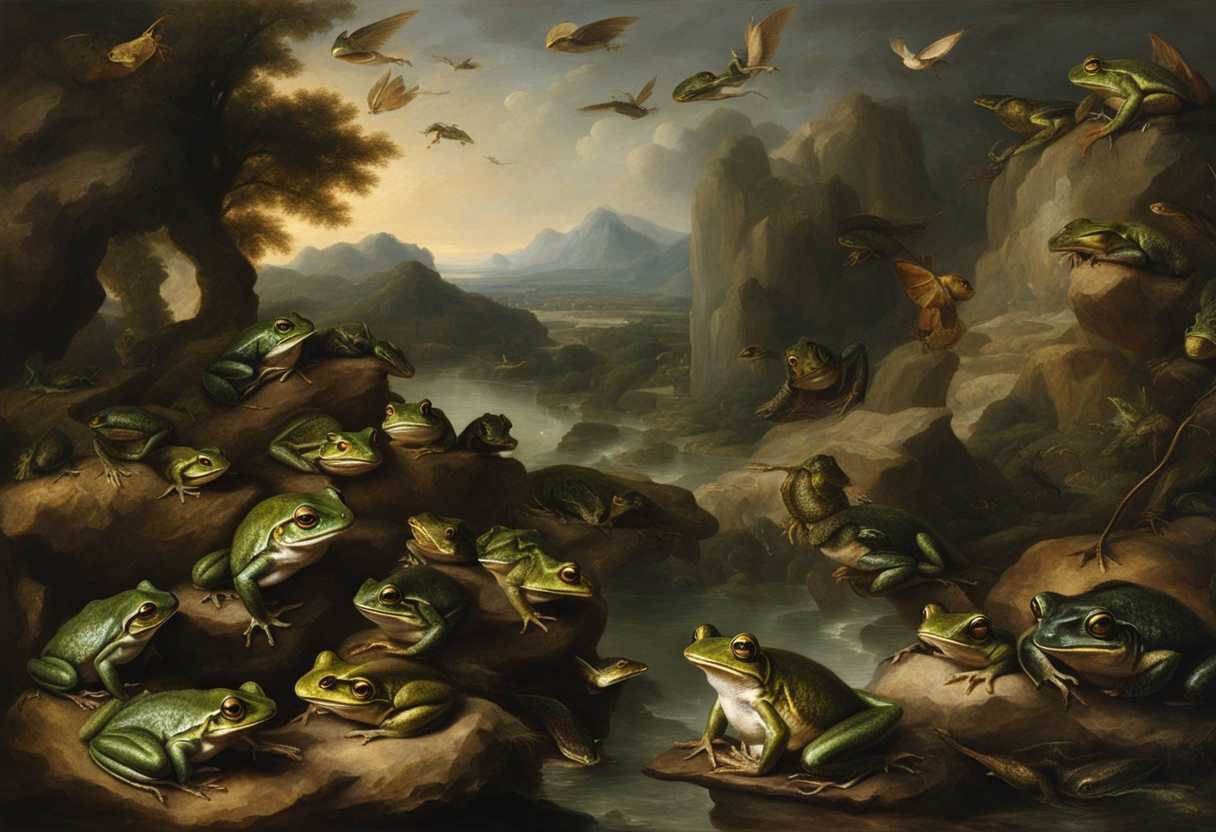
The True Meaning of Exodus 8
The Book of Exodus was written by Moses, the great prophet and leader of the Israelites. He had a unique perspective, having been raised in the Egyptian royal household before fleeing and encountering God at the burning bush. The Lord sends plagues upon Egypt to compel Pharaoh to let the Israelites go in this chapter, showing the continued confrontation between Moses and Pharaoh.
The chapter opens with the second plague, the infestation of frogs. This plague serves to demonstrate the powerlessness of the Egyptian gods, as the frogs overrun the land, even invading the royal palace. Pharaoh’s magicians are able to replicate the plague, but they cannot remove it. Pharaoh ultimately relents and promises to let the Israelites go, but as we’ve seen before, he hardens his heart and reneges on his word.
The chapter then describes the third plague, the infestation of gnats, which the magicians are unable to replicate. This further undermines the authority of the Egyptian deities and sets the stage for the even more severe plagues to come. Throughout this narrative, we see the Lord’s power on full display, as He systematically dismantles the false gods of Egypt and prepares the way for the Israelites’ eventual exodus.
Exodus 8:1-7
The dramatic account of the plague of frogs inflicted upon Egypt is described in Exodus 8:1-7. Let’s break down the key parts of this passage to glean deeper insights into its significance.
Verse 1 begins with God instructing Moses to tell Aaron to stretch out his hand with his staff over the rivers, canals, and pools, thus bringing the plague of frogs upon Egypt. This demonstrates the power and authority God has given to Moses and Aaron to carry out His will. It underscores the interplay between divine command and human agency in fulfilling God’s purposes.
Moving on to verse 2, we see that the river was swarmed with frogs, which then spread throughout Egypt. Frogs were seen as symbols of fertility and were even worshipped by the Egyptians as sacred creatures. God brought this plague to demonstrate His superiority over the deities of Egypt and to show His control over all creation, including creatures revered by the Egyptians.
Verse 3 illustrates the overwhelming magnitude of the plague as frogs invade the Egyptians’ homes, bedrooms, ovens, and kneading bowls. This invasion disrupted every aspect of daily life, making it impossible for the Egyptians to escape the consequences of their disobedience to God. This highlights the far-reaching consequences of sin and the necessity of repentance. Pharaoh’s response to the plague is witnessed in verse 4. Despite the distress caused by the frogs, Pharaoh calls upon Moses and Aaron to plead with God to remove the frogs from Egypt. This serves as a reminder that in times of trouble, even the most hardened hearts may turn to God for help. However, Pharaoh’s actions are driven by convenience rather than genuine repentance, as we will see in the subsequent verses.
Verses 5-7 depict Moses giving Pharaoh the power to choose when God should remove the frogs, allowing Pharaoh to acknowledge God’s authority over the situation. This act of giving Pharaoh a choice highlights God’s mercy and patience, even towards a defiant ruler like Pharaoh. It also emphasizes the importance of free will in responding to God’s summons for repentance. This passage from Exodus 8 serves as a powerful illustration of God’s sovereignty, justice, and mercy. It reveals His power over creation, His willingness to confront and overcome the false gods of the Egyptians, and His desire for humanity to recognize His lordship and turn back to Him. The narrative of the plague of frogs is a poignant reminder of the consequences of disobedience, the opportunity for repentance, and the patience of God in extending His offer of redemption. It sets the stage for the unfolding drama of the Exodus story, showcasing the faithfulness of God amidst human rebellion.
Exodus 8:8-15
The text describes the interaction between Moses and Pharaoh regarding the plague of frogs in Exodus 8:8-15. The key sections include Pharaoh’s request for the frogs to be removed, Moses giving him the option to decide when the frogs should be removed, and the outcome of Pharaoh’s decision.
The repercussions of the second plague, which flooded Egypt with frogs, were immense. Frogs were considered sacred in ancient Egyptian society, and their sudden invasion was not only a nuisance but would also be seen as a sign of divine displeasure. This plague was a direct challenge to the Egyptian gods, particularly Heket, the goddess of fertility and water, often depicted with the head of a frog. The people of Egypt were seeing a tangible demonstration of the power and authority of the God of Israel over their own gods by covering them in frogs.
When Pharaoh asks Moses to intercede with God to remove the frogs from Egypt, he acknowledges Moses’ connection to a higher power. At this point, Pharaoh is desperate for relief from the plague that had overwhelmed his land. However, Moses gives Pharaoh the agency to choose the timing for the frogs to be removed, displaying both God’s power and allowing Pharaoh to experience the consequences of his decisions.
Pharaoh’s attempt to manipulate the situation by requesting the frogs to be removed the next day reveals his lack of sincerity and his desire to maintain control. This decision shows his lack of repentance and his reluctance to fully submit to the authority of God. Pharaoh still does not fully grasp the extent of God’s power and sovereignty because he asks for a specific time for the frogs to be removed.
This passage underscores the theme of God’s patience and mercy in giving Pharaoh multiple chances to repent and acknowledge His authority. It also highlights the concept of free will and the consequences of our choices. Pharaoh’s stubbornness and refusal to acknowledge God’s supremacy lead to further suffering for the Egyptian people. This narrative serves as a cautionary tale about the dangers of pride, arrogance, and resistance to divine authority.
The events in Exodus 8:8-15 set the stage for the subsequent plagues that would descend upon Egypt as a result of Pharaoh’s hardened heart. The narrative of the plagues serves as a powerful demonstration of God’s faithfulness to His promises, His ability to bring about justice, and His sovereignty over all creation. The story of the plagues also anticipates the ultimate deliverance of the Israelites from bondage in Egypt, pointing forward to the greater redemption and salvation that would be fulfilled in Christ.
Exodus 8:16-19
God sent the plague of gnats upon Egypt in response to Pharaoh’s refusal to let the Israelites go, as seen in Exodus 8:16-19. Identify the subject: “Let’s”
Rewritten sentence: Let’s break down this verse into key sections and delve into their meanings.
The passage begins with Moses being instructed by God to stretch out his staff and strike the dust of the earth, which results in gnats swarming throughout Egypt. The sudden appearance of these tiny, pesky creatures would have caused great discomfort and annoyance to the people and animals of Egypt. This plague, unlike the previous ones, seems to have directly targeted the Egyptians themselves, affecting their daily lives in a more personal and pervasive way.
The magicians of Egypt, who had attempted to replicate some of the earlier plagues through their magic arts, acknowledge the divine origin of this plague by declaring, “This is the finger of God.” This admission signifies a shift in their understanding of the scope of power that Moses and Aaron wielded; they now recognize that this plague goes beyond mere human or natural causes and is a demonstration of the power of the one true God.
Pharaoh’s heart, however, remained hardened, and he continued to refuse to let the Israelites leave. This recurring theme of Pharaoh’s stubbornness and resistance to God’s will highlights the destructive nature of pride and disobedience. Despite witnessing the escalating intensity of the plagues and the acknowledgment of the magicians that these events are signs of God’s power, Pharaoh clings to his pride and authority, leading to further suffering for his people and himself. We see the plagues in Exodus as not just random displays of power, but as part of a larger narrative of God’s deliverance of His people. Each plague serves as a judgment against the false gods of Egypt, demonstrating the superiority of the God of Israel. The persistence of Pharaoh in the face of these signs sets the stage for the eventual culmination of the plagues in the final and most devastating plague – the death of the firstborn.
This passage also serves as a reminder of the consequences of resisting God’s will and hardening one’s heart. Throughout the Bible, we see numerous examples of individuals and nations facing the repercussions of their pride and disobedience. Pharaoh’s story serves as a cautionary tale, urging us to heed God’s warnings and turn towards obedience and humility. Exodus 8:16-19 conveys profound truths about the power of God, the consequences of pride and disobedience, and the importance of acknowledging and submitting to His authority. It prompts us to reflect on our own responses to God’s call and warnings, urging us to cultivate hearts that are receptive to His will and open to His guidance.
Exodus 8:20-24
Moses and Aaron once again confront Pharaoh in Exodus 8:20-24, demanding the release of the Israelites from slavery in Egypt. Each of these sections has its own significance, adding layers to the overarching story. God instructs Moses to rise early in the morning and confront Pharaoh as he is going out to the water in verse 20. This divine timing is deliberate, showing God’s control over all aspects of creation, even the Pharaoh’s movements. Moses places Pharaoh in a vulnerable position by meeting him at the water, away from the protection and grandeur of the palace, revealing God’s power as superior to that of the Egyptian deities associated with the Nile. Moses warns Pharaoh of the impending plague of swarms of flies and gives him the choice to let the Israelites go and worship their God. This act of forewarning and offering a chance at repentance portrays the mercy and longsuffering nature of God. Despite Pharaoh’s repeated hardness of heart, God continues to extend opportunities for him to change his ways.
The mention of the swarms of flies as a plague is significant in the context of Egyptian beliefs. The Egyptians worshipped various deities associated with nature, including Khepri, the god of creation and rebirth, often depicted as a scarab beetle. God displays His power over creation and reveals the futility of relying on false gods by sending swarms of flies, a direct attack on the insect population on which the Egyptian deities were sometimes symbolically linked.
The impact of this event on the timeless message of the Bible lies in the demonstration of God’s sovereignty over all things, including the forces of nature and the rulers of the earth. It showcases God’s justice, patience, and power, as well as His desire for repentance and obedience from His people. It also serves as a reminder that, despite our stubbornness and sinfulness, God continues to pursue us, offering us chances for redemption and salvation.
Throughout the Bible, we see a pattern of God’s interactions with humanity, where He demonstrates His power through signs and wonders to draw people closer to Him. This interaction with Pharaoh in Exodus mirrors God’s dealings with His people throughout history, showing that He is a God who desires relationship and obedience rather than mere adherence to rituals or empty worship. Exodus 8:20-24 not only tells the story of the plague of flies in Egypt but also conveys profound truths about God’s character, His dealings with humanity, and His desire for repentance and obedience from His creation. It serves as a powerful reminder of God’s sovereignty, mercy, and justice, encouraging us to seek His will and follow Him wholeheartedly.
Exodus 8:25-32
Pharaoh and Moses engage in a dialogue in Exodus 8:25-32 while Egypt suffers from swarms of flies due to Pharaoh’s refusal to release the Israelites. This section can be broken down as follows:
-
“Then Pharaoh summoned Moses and Aaron and said, ‘Go, sacrifice to your God here in the land.’ But Moses said, ‘That would not be right. The sacrifices we offer the Lord our God would be detestable to the Egyptians. And if we offer sacrifices that are detestable in their eyes, will they not stone us? Pharaoh attempts to compromise with Moses by allowing them to worship their God within the land of Egypt. However, Moses refuses this offer, emphasizing the importance of not only offering sacrifices to God but also doing so in a manner that is acceptable and honorable. This interaction highlights the principle of not compromising one’s faith or convictions for the sake of convenience or appeasing others. This episode shows the steadfastness of Moses in standing firm in his faith and not succumbing to pressure, setting a powerful example for believers to prioritize their spiritual integrity above all else.
-
“We will go three days’ journey into the wilderness and sacrifice to the Lord our God, as he commands us.’ Pharaoh said, ‘I will let you go to offer sacrifices to the Lord your God in the wilderness, but you must not go very far. Now pray for me.’”
Here, Pharaoh appears to be bargaining with Moses, offering to allow them to go and worship their God in the wilderness but instructing them not to go too far. Despite Pharaoh’s apparent willingness to negotiate, he still imposes limitations on the Israelites’ worship. This situation reflects the recurring theme in the Bible of the struggle between the world’s demands and God’s commands. The Israelites’ journey into the wilderness signifies not only a physical separation from Egypt but also a spiritual journey towards true worship and freedom in obedience to God’s instructions.
-
Moses answered, “I will pray to the Lord as soon as I leave you, and tomorrow the swarms of flies will leave Pharaoh and his officials and his people.” Only let Pharaoh be sure that he does not act deceitfully again by not letting the people go to offer sacrifices to the Lord. Moses’s response demonstrates the power of prayer and God’s intervention in response to faithful obedience. Despite Pharaoh’s previous refusals and hardened heart, Moses assures him that the swarms of flies will depart the following day through God’s miraculous intervention. Additionally, Moses issues a warning to Pharaoh against deceitfully withholding the people from worshipping the Lord. This situation serves as a reminder of the consequences of defying God’s will and the importance of genuine repentance and obedience in avoiding further calamity.
-
“Then Moses left Pharaoh and prayed to the Lord, and the Lord did what Moses asked. The flies left Pharaoh and his officials and his people; not a fly remained.”
This final verse in the passage showcases the immediate fulfillment of Moses’s prayer as the swarms of flies disappear entirely from Egypt. It exemplifies the direct link between faithful prayer and God’s response, underscoring the significance of seeking divine intervention through prayer in times of need. The swarms of flies vanishing serve as a tangible manifestation of God’s power and authority over creation, reinforcing the overarching theme of God’s sovereignty and control over all circumstances. Exodus 8:25-32 not only chronicles the interactions between Moses and Pharaoh but also conveys profound lessons on faithfulness, obedience, prayer, and the consequences of defying God’s will. Through the narrative of the plagues and Pharaoh’s resistance, the story illustrates God’s unwavering faithfulness to His people, the importance of standing firm in one’s faith, and the necessity of humility and repentance in approaching God. This passage resonates throughout the Bible as a testament to the transformative power of trusting in God’s promises and faithfully following His commands despite the challenges and opposition faced.
After Exodus 8
The plague of frogs had been a harrowing experience for the Egyptians. Pharaoh’s heart remained hardened, and he refused to let the Israelites go. A new challenge loomed on the horizon as the people struggled to cope with the infestation. The reverend paused, his gaze fixed on the congregation. “And the Lord said unto Moses, ‘Rise up early in the morning, and stand before Pharaoh; lo, he cometh forth to the water; and say unto him, Thus saith the Lord, Let my people go, that they may serve me.’” The reverend’s voice carried a sense of urgency, for the next plague would test the very limits of Pharaoh’s resolve.

Reverend Michael Johnson is an experienced Church Minister with a profound expertise in spirituality and guidance. With a serene presence and a compassionate heart, he has faithfully served his congregation for over 20 years, leading them on a spiritual journey towards inner peace and enlightenment. Reverend Johnson’s extensive knowledge of religious philosophies and profound understanding of human nature have made him a trusted confidant and mentor to many, as he seamlessly weaves his profound wisdom into life teachings. Reverend Johnson’s calming demeanor and empathetic nature continue to uplift and heal souls, nurturing a sense of unity and tranquility within his community.