
Ezekiel 14:21-23 is about God’s decision to judge individuals and nations who have turned away from Him, demonstrating His righteous and just nature in dealing with sin and disobedience.
21 “For thus says the Lord God: How much more when I send upon Jerusalem my four disastrous acts of judgment, sword, famine, wild beasts, and pestilence, to cut off from it man and beast!”
22 But behold, some survivors will be left in it, sons and daughters who will be brought out; behold, when they come out to you, and you see their ways and their deeds, you will be consoled for the disaster that I have brought upon Jerusalem, for all that I have brought upon it.
23 And they shall console you, when you see their ways and their deeds, and you shall know that I have not done without cause all that I have done in it, declares the Lord God.”
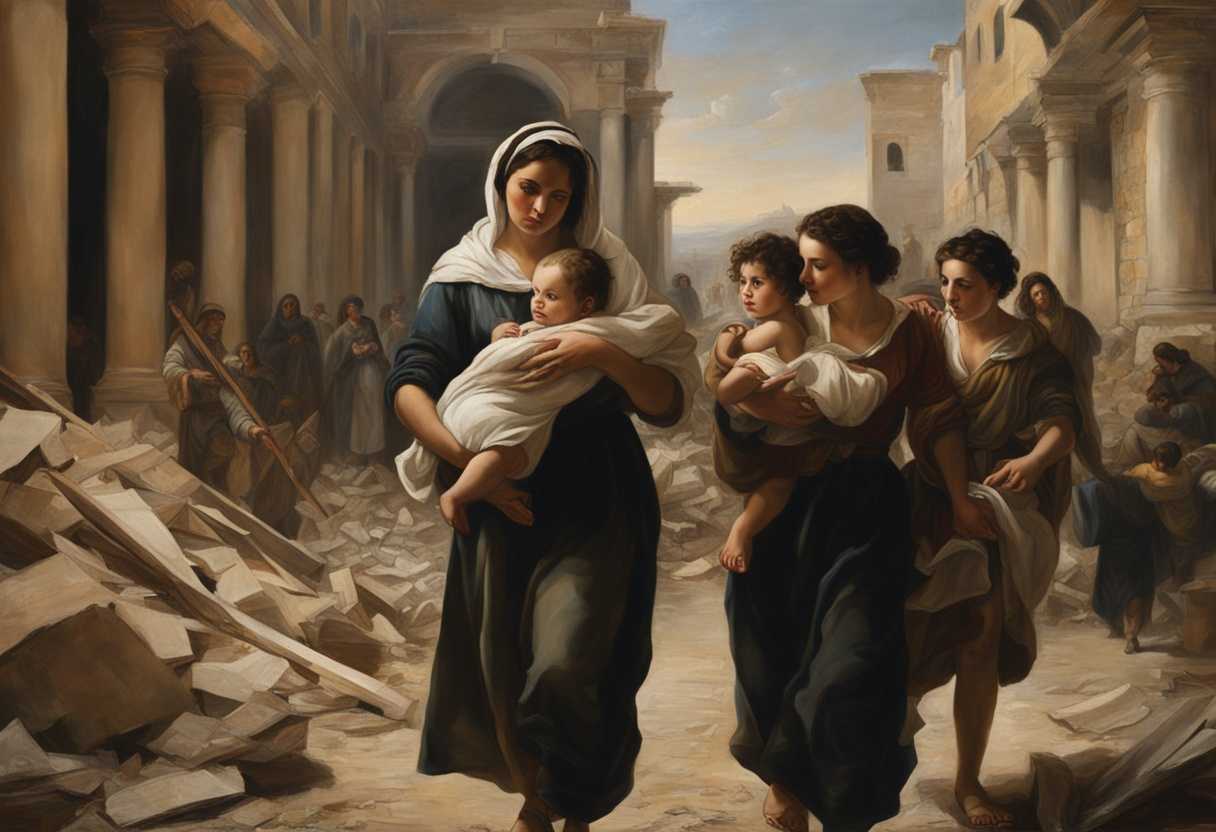
Setting the Scene for Ezekiel 14:21-23
In Ezekiel chapter 14, we find the prophet Ezekiel in the midst of a vision from the Lord. The scene is set in a large gathering of the elders of Israel who have come to inquire of the Lord through Ezekiel. The elders, including prominent figures in the community, have gathered in a solemn assembly seeking guidance and wisdom from the prophet regarding the state of the nation and their future.
The setting is a spacious courtyard outside the temple, with the elders seated in a semi-circle around Ezekiel as he stands before them. The atmosphere is tense as Ezekiel delivers a message from the Lord, warning the elders of the impending judgment that will come upon the land due to their idolatry and disobedience. The elders listen intently, some with expressions of concern and others with faces hardened in disbelief.
As Ezekiel speaks, the sun begins to set, casting a golden hue over the courtyard and creating long shadows that stretch across the ground. The sound of the evening breeze rustling through the trees adds to the solemnity of the moment, as Ezekiel’s words hang heavy in the air. The elders are faced with a choice – to heed the prophet’s warning and turn back to the Lord, or to continue down the path of destruction.
What is Ezekiel 14:21-23 about?
This verse conveys the idea that God’s judgment and mercy are intricately linked. It suggests that those who acknowledge their wrongdoings and actively seek to change their ways are the ones who receive mercy from God. This mercy is represented through the concept of sparing a remnant, a small group of people who are saved from the full extent of God’s judgment.
Imagine a scenario where a person realizes their mistakes and takes action to repent and change their ways. God’s mercy shines through in this context by offering forgiveness and protection to those who demonstrate genuine remorse and a commitment to righteousness. The verse underscores the importance of personal responsibility and accountability in receiving God’s grace, emphasizing the transformative power of turning away from sin.
Reflect on how this verse challenges us to self-reflect and consider our actions. How can we align our behaviors with righteousness to receive God’s mercy? The profound message of hope and redemption embedded in the idea is that even amidst judgment, there is always an opportunity for salvation for those who sincerely seek it.
Understanding what Ezekiel 14:21-23 really means
Ezekiel 14:21-23 is a poignant passage within the larger context of God’s message to Ezekiel regarding the impending judgment upon Jerusalem. The phrase “four dreadful judgments” encapsulates the severity of the impending consequences – the sword, famine, wild beasts, and plague – all serving as instruments of divine correction and purification. Despite the impending doom, the assurance of “some survivors” underscores God’s mercy and the preservation of a remnant, showcasing His compassion amidst judgment.
Drawing parallels with other biblical passages such as Jeremiah 24:5-7, Isaiah 1:9, and Romans 11:5, we see a consistent theme of a righteous remnant chosen by God’s grace. These passages emphasize the continuity of God’s mercy and the preservation of a faithful few even in the midst of widespread judgment. The concept of a remnant serves as a testament to God’s enduring faithfulness and His commitment to preserving those who remain steadfast in righteousness.
In our contemporary context, Ezekiel’s prophecy challenges us to grapple with the complexities of divine justice and mercy. It prompts us to reflect on how God’s actions, though sometimes harsh, are ultimately rooted in His love and desire for the purification and restoration of His people. This passage offers solace and hope, especially in times of personal or communal adversity, reminding us to trust in God’s sovereign plan and to find comfort in the promise of eventual restoration and righteousness.
To illustrate this point, consider a community devastated by a natural disaster. In the midst of the chaos, a few families emerge as survivors, resilient and unwavering in their faith. Their perseverance and determination to rebuild serve as a beacon of hope and inspiration to others, much like the remnant in Ezekiel’s prophecy. Their story echoes the message of God’s enduring mercy and the promise of renewal amidst destruction.
In conclusion, Ezekiel 14:21-23 encapsulates the delicate balance between God’s justice and mercy. It urges us to place our trust in God’s unfailing goodness, even when faced with adversity, and to find hope in the assurance of eventual restoration and righteousness. This passage serves as a timeless reminder of God’s faithfulness to His people and His unwavering commitment to preserving a remnant who remain steadfast in their devotion.
How can we ensure our hearts are devoted to God?
To ensure our hearts are devoted to God, we must have a sincere desire to follow His commandments and seek His will above all else. This involves actively choosing to align our thoughts, actions, and desires with His teachings and principles. We demonstrate our commitment and dedication to God by prioritizing our relationship with Him.
Additionally, cultivating a deep faith and trust in God is essential. When we wholeheartedly believe in His power, sovereignty, and goodness, we are more likely to rely on Him in all aspects of our lives. Through prayer, meditation on His Word, and seeking His guidance, we invite Him to work in our hearts and shape us into the image of His Son. Living a life of devotion to God ultimately requires humility, obedience, and a willingness to surrender our own will to His. We open our hearts to His transformative work and allow Him to reign supremely in our lives by acknowledging our need for Him and submitting to His authority. This ongoing process of seeking Him, trusting Him, and obeying Him leads to a heart that is steadfastly devoted to God.
Application
Are you ready to break free from the chains of rebellion and walk in the light of God’s grace? Let’s acknowledge our mistakes and seek forgiveness, paving the path for a brighter future. It’s time to reset our moral compass and realign our lives with the values of love and righteousness. Will you join me in this journey towards spiritual renewal and eternal grace?

Reverend Michael Johnson is an experienced Church Minister with a profound expertise in spirituality and guidance. With a serene presence and a compassionate heart, he has faithfully served his congregation for over 20 years, leading them on a spiritual journey towards inner peace and enlightenment. Reverend Johnson’s extensive knowledge of religious philosophies and profound understanding of human nature have made him a trusted confidant and mentor to many, as he seamlessly weaves his profound wisdom into life teachings. Reverend Johnson’s calming demeanor and empathetic nature continue to uplift and heal souls, nurturing a sense of unity and tranquility within his community.