
Ezekiel 18:19-20 is about emphasizing personal accountability for one’s own actions and the concept of individual responsibility for sin, rather than being punished for the sins of one’s ancestors.
19 “Yet you say, ‘Why should not the son suffer for the iniquity of the father?’ When the son has done what is just and right, and has been careful to observe all my statutes, he shall surely live.
20 The soul who sins shall die. The son shall not suffer for the iniquity of the father, nor the father suffer for the iniquity of the son. The righteousness of the righteous shall be upon himself, and the wickedness of the wicked shall be upon himself.
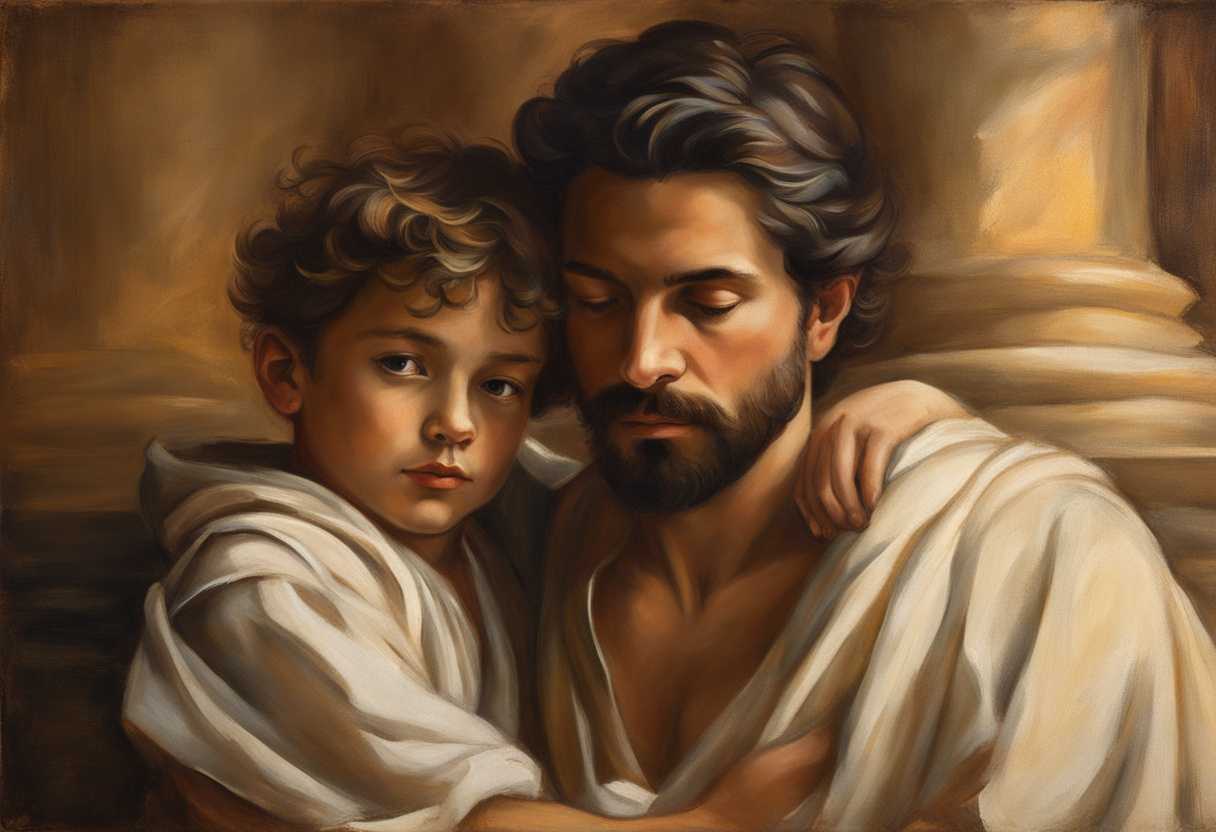
Setting the Scene for Ezekiel 18:19-20
In Ezekiel chapter 18, we find ourselves in the midst of a gathering at the temple in Jerusalem. The scene is set with a diverse group of individuals present, including priests, elders, and common people who have come to seek guidance and wisdom from the prophet Ezekiel. The atmosphere is tense as Ezekiel addresses the crowd, his voice echoing through the grand halls of the temple.
The people have gathered to hear Ezekiel speak about personal responsibility and accountability before God. Ezekiel, known for his powerful and uncompromising messages, stands tall and resolute, his eyes filled with a fiery determination as he delivers his sermon. The crowd listens intently, some nodding in agreement while others shift uncomfortably in their seats, feeling the weight of Ezekiel’s words.
Surrounded by the ornate decorations and sacred symbols of the temple, Ezekiel’s message cuts through the air like a sharp sword, challenging the people to examine their own actions and take ownership of their choices. As the sun sets outside, casting a warm glow through the temple windows, Ezekiel’s words linger in the hearts of those present, stirring a sense of conviction and reflection among the listeners.
What is Ezekiel 18:19-20 about?
This verse is a powerful reminder of individual responsibility and accountability in the eyes of God. It emphasizes the idea that each person is responsible for their own actions and sins. Our choices and behavior ultimately determine our own fate and consequences. This verse contrasts the idea of collective punishment, stating that a person should not be held accountable for the sins of their family members or ancestors. It promotes the concept of justice and fairness, urging each person to take ownership of their actions and face the consequences, whether they be positive or negative.
Have you ever pondered the weight of your choices and the impact they have on your own spiritual journey? This verse challenges us to reflect on the importance of personal accountability and the reality that we cannot rely on the righteousness or sins of others to determine our own spiritual destiny. It prompts us to consider the significance of our actions, and how they shape our own relationship with God. We have the opportunity to seek forgiveness and redemption by acknowledging and taking responsibility for our sins, ultimately leading to spiritual growth and maturity.
Understanding what Ezekiel 18:19-20 really means
In the Book of Ezekiel, specifically in Ezekiel 18:19-20, we encounter a profound message about individual responsibility and divine justice. Ezekiel, a prophet during the Babylonian exile, spoke to the Israelites at a time of great turmoil and spiritual confusion. The themes of personal accountability and the consequences of one’s actions resonate throughout his writings, challenging the prevailing belief in collective punishment that was common among the Israelites.
During Ezekiel’s time, the Israelites faced the consequences of their ancestors’ sins, leading to a sense of hopelessness and fatalism. However, Ezekiel’s message brought a radical shift in perspective, emphasizing that each individual is accountable for their own choices and will bear the consequences of their actions. This shift from collective guilt to personal responsibility was a revolutionary concept that challenged the cultural norms of the time.
In Ezekiel 18:19-20, the phrases “The son shall not bear the iniquity of the father” and “The righteousness of the righteous shall be upon him” underscore the importance of individual moral agency. These words highlight the principle that each person is responsible for their own conduct and will be judged accordingly. This idea is echoed in other biblical passages such as Deuteronomy 24:16, Galatians 6:5, and Romans 2:6, emphasizing the consistency of this message throughout Scripture.
The relevance of Ezekiel’s message on individual responsibility extends to contemporary society, where the concept of personal accountability is crucial for ethical living. Understanding and applying the principle of bearing the consequences of one’s actions can guide individuals in making moral choices in various aspects of life, including family relationships, work ethics, and community engagement.
Consider a story of someone who embraced personal responsibility and experienced positive transformation as a result. This anecdote can illustrate how taking ownership of one’s actions leads to growth and contributes to the betterment of society. By reflecting on such narratives, we are reminded of the power of individual accountability in shaping our character and influencing our communities.
In conclusion, Ezekiel 18:19-20 serves as a timeless reminder of the importance of personal integrity and ethical behavior. As we ponder on these verses, let us examine our own lives and strive to uphold the values of responsibility and righteousness in all that we do. May we be inspired to live with integrity, knowing that our choices have consequences and that true growth comes from taking ownership of our actions. Let us pray for the strength to walk in the path of righteousness and to be agents of positive change in the world around us.
How can one’s actions affect their spiritual destiny?
One’s actions play a significant role in determining their spiritual destiny according to Ezekiel 18:19-20. This verse highlights the principle of individual responsibility before God. The choices an individual makes and the way they conduct themselves will directly impact their spiritual standing. If someone chooses to live righteously, seeking to follow God’s commands and walk in His ways, they will be regarded favorably by Him.
Conversely, if a person chooses to engage in sinful behavior and ignore God’s instructions, they will face consequences for their actions. It is important to understand that each person is accountable for their own decisions and behavior. Individuals can secure a positive spiritual destiny by aligning their actions with God’s will and living according to His commandments. On the other hand, persisting in sinful behavior can lead to negative spiritual consequences and separation from God. Our actions ultimately have a direct impact on our spiritual destiny, shaping our relationship with God and determining our eternal destination.
Application
Imagine your life as a project at work—successful outcomes depend on your dedication and effort. Just like you can’t hold a teammate accountable for your tasks, you’re responsible for your own actions before God. Make the choice to live uprightly, turning away from harmful paths. Will you commit today to living a life that honors God, aware that each decision shapes your future?

Reverend Michael Johnson is an experienced Church Minister with a profound expertise in spirituality and guidance. With a serene presence and a compassionate heart, he has faithfully served his congregation for over 20 years, leading them on a spiritual journey towards inner peace and enlightenment. Reverend Johnson’s extensive knowledge of religious philosophies and profound understanding of human nature have made him a trusted confidant and mentor to many, as he seamlessly weaves his profound wisdom into life teachings. Reverend Johnson’s calming demeanor and empathetic nature continue to uplift and heal souls, nurturing a sense of unity and tranquility within his community.