
Ezekiel 1:5-10 is about the awe-inspiring and majestic appearance of divine creatures known as cherubim, symbolizing the powerful presence and authority of God.
5 And from the midst of it came the likeness of four living creatures. And this was their appearance: they had a human likeness.
6 but each had four faces, and each of them had four wings.
7 Their legs were straight, and the soles of their feet were like the sole of a calf’s foot. And they sparkled like burnished bronze.
8 Under their wings on their four sides they had human hands.
9 their wings touched one another. Each one of them went straight forward, without turning as they went.
10 As for the likeness of their faces, each had a human face. The four had the face of a lion on the right side, the four had the face of an ox on the left side, and the four had the face of an eagle.
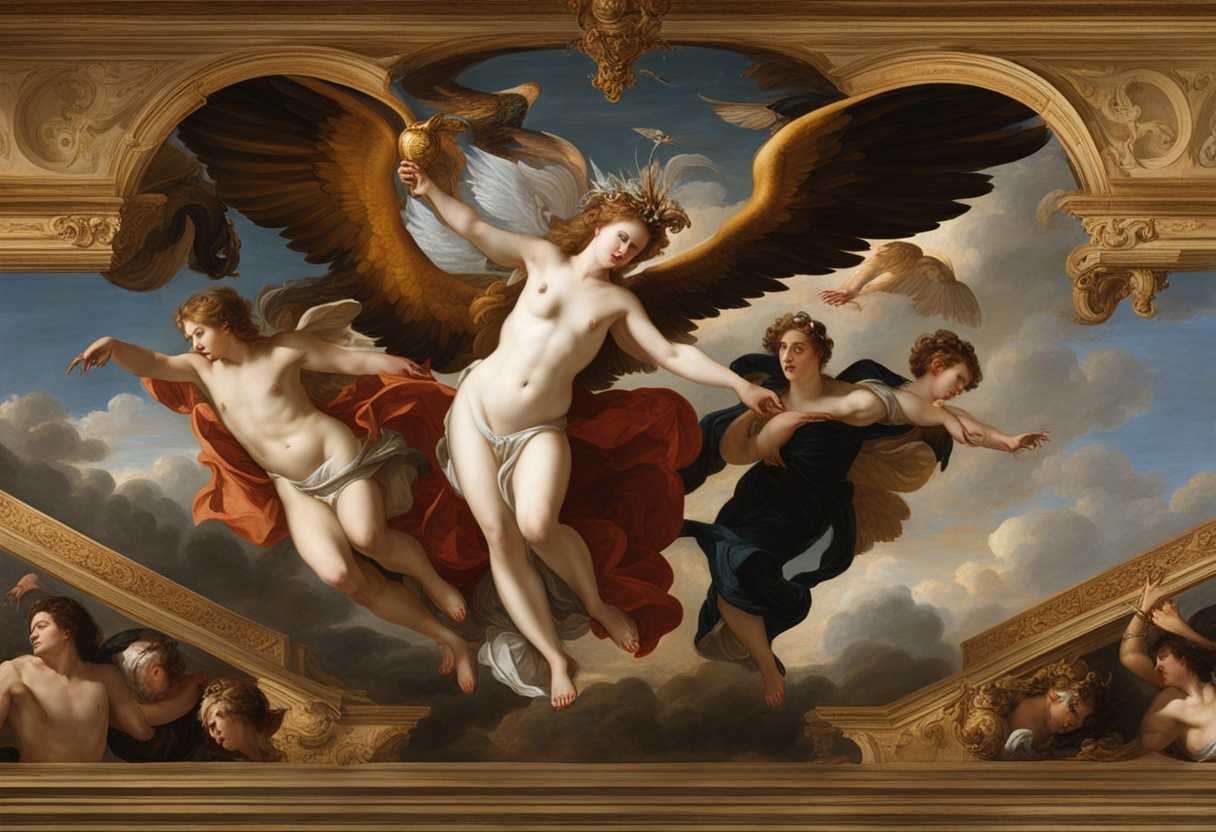
Setting the Scene for Ezekiel 1:5-10
In Ezekiel chapter 1, we find the prophet Ezekiel by the Kebar River in Babylon. It is a warm day, and the sun is shining brightly in the cloudless sky. As Ezekiel sits by the river, he is deep in thought, pondering the recent events that have led him to this place. He was among the exiles taken from Jerusalem to Babylon by King Nebuchadnezzar, and now he finds himself in a foreign land far from his home.
Suddenly, as Ezekiel looks up, he sees a whirlwind coming from the north. In the midst of the whirlwind are four living creatures, each with four faces and four wings. These creatures are accompanied by wheels within wheels, all covered in eyes. The sight is both awe-inspiring and terrifying, and Ezekiel falls to the ground in reverence before this divine manifestation. The scene is surreal, with the sound of the creatures’ wings filling the air and the wheels moving in perfect harmony. It is in this moment that Ezekiel realizes he is in the presence of the glory of the Lord.
What is Ezekiel 1:5-10 about?
Ezekiel describes a vision of four living creatures that have multiple faces, wings, and wheels in this verse. This powerful imagery is meant to convey the grandeur and mystery of God’s divine presence. The four faces of the living creatures symbolize different aspects of creation and the divine nature, highlighting the complexity and multifaceted nature of God. The wings suggest swiftness and freedom, while the wheels symbolize divine movement and control over all creation.
Can you imagine the awe and wonder Ezekiel must have felt when he saw this vision? The vivid descriptions paint a picture of a supernatural and transcendent reality that goes beyond human understanding. This verse challenges us to contemplate the vastness and complexity of God’s existence and power. It encourages us to reflect on the mysterious ways in which God works in our lives and in the world around us.
Understanding what Ezekiel 1:5-10 really means
In Ezekiel 1:5-10, we delve into a profound vision experienced by the prophet Ezekiel during a tumultuous period in Israel’s history—the Babylonian exile. This passage is part of Ezekiel’s vision of the four living creatures, a symbolic and significant vision in the Old Testament that offers insights into God’s creation and divine attributes. Visions hold a special place in the prophetic tradition, serving as a means through which God communicates with His chosen messengers, offering guidance, warnings, and revelations.
Ezekiel, living in exile, was granted a vision that transcended the physical realm, revealing to him four living creatures that embodied the essence of God’s creation. These beings, with their four faces and wings, symbolize different aspects of creation and divine attributes, showcasing the complexity and diversity of God’s handiwork. The imagery of their straight legs and calf’s feet soles conveys stability and readiness to move in any direction, reflecting God’s omnipotence and omnipresence in guiding His creation.
The description of the living creatures sparkling like burnished bronze evokes images of purity, strength, and divine glory, emphasizing the awe-inspiring nature of God’s presence. This imagery is not unique to Ezekiel’s vision; it finds resonance in other biblical passages like Revelation 4:6-8 and Isaiah 6:1-3, where similar heavenly beings are depicted, highlighting the continuity of symbolic representations across different prophetic visions. Even in Genesis 3:24, with the cherubim guarding the Garden of Eden, we see a recurring theme of divine guardianship and presence.
For us today, Ezekiel’s vision serves as a reminder of God’s omnipresence and omnipotence in our lives, especially in times of chaos and uncertainty. Just as the Israelites found solace in recognizing God’s presence during exile, we can draw strength from knowing that God is with us in every circumstance. Stories abound of individuals finding comfort and resilience through their faith in challenging times, mirroring the Israelites’ experience and underscoring the enduring relevance of Ezekiel’s vision in our lives.
As we reflect on the symbolism in Ezekiel’s vision, may we be encouraged to seek God’s presence and power in our daily lives, trusting in His guidance and strength. Let us offer a prayer or meditation, acknowledging God’s sovereignty and grace, and may we find peace in knowing that He is with us always, guiding us through life’s uncertainties with unwavering love and protection.
What does the presence of wheels within wheels symbolize?
The presence of wheels within wheels in Ezekiel 1:5-10 symbolizes the intricate and complex nature of God’s divine plan and purpose. The wheels moving in unison and with great speed signify the sovereignty and control that God has over all creation. The wheels within wheels also represent the various dimensions of God’s work in the world, showing how different aspects of His plan are interconnected and work together harmoniously.
Furthermore, the wheels within wheels could symbolize the intricate ways in which God works in the lives of individuals and nations. It illustrates the omnipresence and omniscience of God as the wheels moved in any direction without turning. The presence of the wheels within wheels could also serve as a reminder of the mysterious and transcendent nature of God, who operates beyond human comprehension and understanding. It underscores the idea that God’s ways are far above our ways, and His thoughts are higher than our thoughts.
Application
Delve into Ezekiel 1:5-10 and envision God’s grandeur as revealed to Ezekiel. How can you mirror Ezekiel’s quest for a profound connection with God in your own journey? Open wide the doors of your soul to invite God in fresh, transformative ways. Will you bravely stride towards a deeper bond with the divine, drawing strength and wisdom for your modern battles at work and nurturing your family? What strides will you take to seek God’s presence fervently today?

Reverend Michael Johnson is an experienced Church Minister with a profound expertise in spirituality and guidance. With a serene presence and a compassionate heart, he has faithfully served his congregation for over 20 years, leading them on a spiritual journey towards inner peace and enlightenment. Reverend Johnson’s extensive knowledge of religious philosophies and profound understanding of human nature have made him a trusted confidant and mentor to many, as he seamlessly weaves his profound wisdom into life teachings. Reverend Johnson’s calming demeanor and empathetic nature continue to uplift and heal souls, nurturing a sense of unity and tranquility within his community.