
Ezekiel 21:18-23 is about God’s impending judgment and the divine reasoning behind the destruction that will be unleashed upon the land, highlighting His sovereignty and role as the ultimate arbiter of justice.
18 The word of the Lord came to me:
19 “And you, son of man, mark two ways for the sword of the king of Babylon to come. Both of them shall come from the same land. And make a signpost; make it at the head of the way to a city.
20 Mark a way for the sword to come to Rabbah of the Ammonites and to Judah, into Jerusalem the fortified.
21 For the king of Babylon stands at the parting of the way, at the head of the two ways, to use divination. He shakes the arrows; he consults the teraphim; he looks at the liver.
22 Into his right hand comes the portent for Jerusalem— to set battering rams, to open the mouth with murder, to lift up the voice with shouting, to set battering rams against the gates, to cast up mounds, to build siege towers.
23 And it shall be to them like a false divination in their eyes. They have sworn solemn oaths, but he brings their guilt to remembrance, that they may be taken.
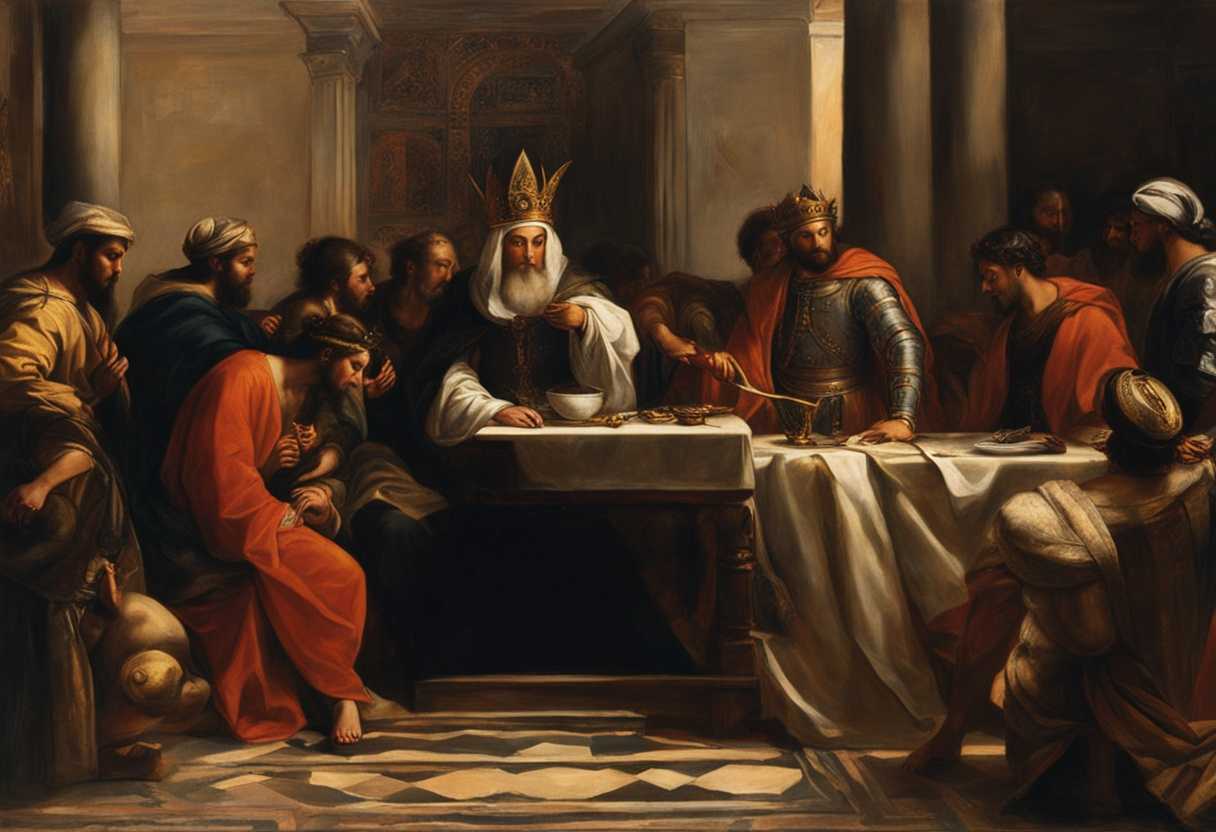
Setting the Scene for Ezekiel 21:18-23
In Ezekiel chapter 21, we find ourselves in a solemn and tense scene within the court of King Zedekiah of Judah. The king is seated on his throne, surrounded by his advisors and officials, as well as the prophet Ezekiel. The atmosphere is heavy with anticipation and fear as news of the impending invasion by the Babylonian army spreads throughout the palace.
Ezekiel, a faithful servant of God, has been summoned to deliver a message from the Lord to the king and his court. The prophet stands before the assembly, his eyes filled with a mixture of sorrow and determination, as he proclaims the judgment that is about to befall the kingdom of Judah. The king and his advisors listen intently, their faces reflecting a mix of disbelief and dread at the dire predictions being uttered by the prophet.
Outside the palace walls, the sounds of war drums and marching soldiers can be heard in the distance, a grim reminder of the impending doom that is about to be unleashed upon the land. The air is thick with tension as the king and his court grapple with the harsh reality of their situation, knowing that they are powerless to avert the calamity that has been foretold by the prophet Ezekiel.
What is Ezekiel 21:18-23 about?
Ezekiel is using the image of a sword to represent the judgment that God is bringing upon Judah in this verse. The sword is a powerful and deadly weapon, symbolizing the severity and finality of God’s judgment. Just like a sword cuts through flesh and bone, God’s judgment will cut through the sinful and rebellious ways of the people of Judah, bringing about destruction and devastation.
Imagine the fear and trembling that would have gripped the people of Judah upon hearing Ezekiel’s prophecy. The use of the sword as a symbol would have struck a deep chord within them, communicating the seriousness of their situation and the imminent consequences of their disobedience. It serves as a stark warning of the consequences of turning away from God and living in rebellion against His ways. We reflect on this verse, reminding us of the importance of staying faithful to God and following His commandments. It prompts us to examine our own lives and consider whether there are areas where we have strayed from God’s path. We too must take heed and ensure that we are living in alignment with God’s will, lest we face His judgment, just as Judah faced the consequences of their actions.
Understanding what Ezekiel 21:18-23 really means
Ezekiel, a prophet during the Babylonian exile, often conveyed God’s messages through vivid imagery and symbolic actions. This passage is part of a larger prophecy concerning the judgment on Jerusalem and the surrounding nations. The specific verses describe a moment of decision-making, where the king of Babylon uses divination to choose his path of conquest. “The word of the Lord came to me” emphasizes that the message is divinely inspired, not merely the prophet’s own thoughts. “Mark out two roads for the sword of the king of Babylon to take” symbolizes the impending judgment and the choices that lead to different outcomes.
“For the king of Babylon will stop at the fork in the road” represents a moment of decision, highlighting the uncertainty and the reliance on divination rather than God. “He will cast lots with arrows, he will consult his idols, he will examine the liver” – these ancient practices of divination underscore the futility of seeking guidance from sources other than God. Proverbs 16:33 reinforces the idea that, despite human attempts at divination, God ultimately controls the outcome. Isaiah 47:12-13 critiques the reliance on sorcery and astrology, similar to the king of Babylon’s practices, and emphasizes the superiority of God’s wisdom.
Jeremiah 10:2 warns against following the ways of the nations, including their divination practices, and encourages trust in God alone. In a world full of choices and uncertainties, people often seek guidance from various sources. This passage reminds us to seek God’s wisdom rather than relying on superstitions or secular methods. It encourages believers to trust in God’s sovereignty and His plans, even when the path ahead seems unclear. Imagine a young professional at a career crossroads, unsure whether to take a job offer in a new city or stay in their current position. They might be tempted to rely on horoscopes, fortune cookies, or even random chance to make their decision.
However, this passage encourages them to seek God’s guidance through prayer, scripture, and wise counsel, trusting that God will direct their steps. This passage from Ezekiel serves as a powerful reminder of the importance of seeking God’s guidance in our decisions. It challenges us to trust in His sovereignty and wisdom, rather than relying on unreliable sources. By turning to God, we can find peace and direction, knowing that He holds our future in His hands.
What obstacles in life are blocking true repentance?
The obstacles in life that are blocking true repentance are portrayed as metaphorical mountains and walls that hinder us from turning back to God with sincere hearts. These obstacles represent the difficulties, pride, and distractions that prevent us from seeking forgiveness and reconciliation with God. The mountains symbolize the challenges and uncertainties that loom before us, making us feel overwhelmed and incapable of making amends. The walls signify the barriers and hardness of heart that we put up, preventing us from humbling ourselves and admitting our wrongdoings.
These obstacles can keep us trapped in a cycle of sin and separation from God, unable to experience the freedom and renewal that true repentance brings. It is essential to recognize and overcome these barriers in order to fully repent and seek forgiveness from God. We can find the strength and courage to turn away from our sins and return to God wholeheartedly by acknowledging our limitations, breaking down the walls of pride, and trusting in God’s grace and mercy.
Application
Embrace the divine message in Ezekiel 21:18-23, let it ignite the fire within you to live righteously and leave sin behind. Answer the call to repentance and commit to following God’s teachings wholeheartedly. Will you seize this moment to align your actions with your beliefs and walk the path of righteousness with determination and courage?

Reverend Michael Johnson is an experienced Church Minister with a profound expertise in spirituality and guidance. With a serene presence and a compassionate heart, he has faithfully served his congregation for over 20 years, leading them on a spiritual journey towards inner peace and enlightenment. Reverend Johnson’s extensive knowledge of religious philosophies and profound understanding of human nature have made him a trusted confidant and mentor to many, as he seamlessly weaves his profound wisdom into life teachings. Reverend Johnson’s calming demeanor and empathetic nature continue to uplift and heal souls, nurturing a sense of unity and tranquility within his community.