
20 and lusted after her paramours there, whose members were like those of donkeys, and whose issue was like that of horses.
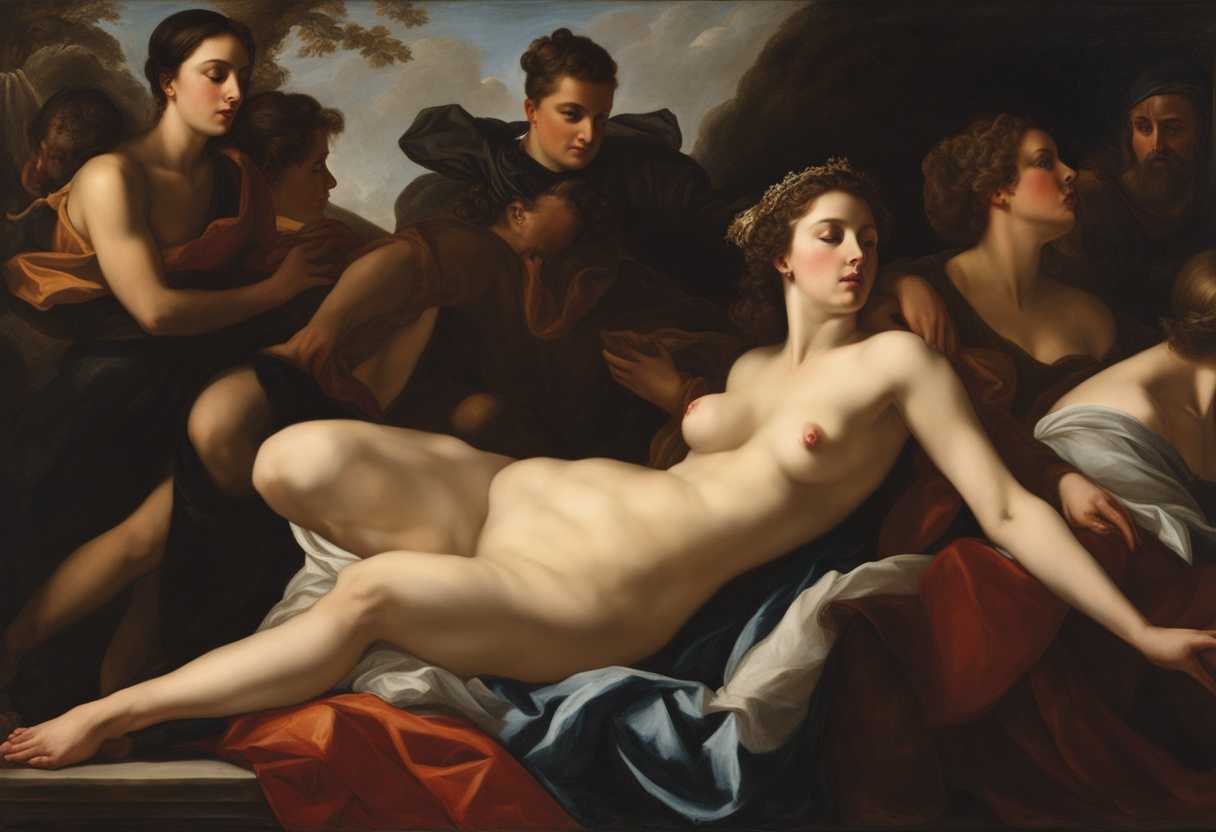
Setting the Scene for Ezekiel 23:20
In Ezekiel chapter 23, the prophet Ezekiel uses a vivid and provocative allegory to describe the unfaithfulness of the Israelites to God. The chapter tells the story of two sisters, Oholah and Oholibah, who represent Samaria and Jerusalem, respectively. These sisters were once married to God but turned to idolatry and immorality, symbolized by their alliances with Assyria and Babylon.
In this particular scene from Ezekiel 23:20, the prophet Ezekiel is standing in the midst of a bustling marketplace in Jerusalem. The air is filled with the sounds of merchants haggling, animals braying, and people going about their daily business. Oholibah, representing Jerusalem, is depicted as a promiscuous woman who lusts after the Assyrians and Babylonians, symbolizing the Israelites’ unfaithfulness to God by seeking alliances with foreign powers instead of relying on Him.
As Ezekiel delivers his message from God, the people passing by stop to listen, some in shock and others in disbelief. The scene is set against the backdrop of the city walls, with the Temple looming in the distance as a stark reminder of the covenant between God and His people. Ezekiel’s words serve as a powerful warning of the consequences of turning away from God and seeking fulfillment in worldly pleasures.
What is Ezekiel 23:20 about?
Ezekiel 23:20 confronts us with a vivid depiction of the unfaithfulness of Israel and Judah to God. The metaphor of their actions as that of a prostitute who lusted after lovers with genitals as large as donkeys and emissions like that of horses shocks us with its brazenness. It is a powerful image meant to convey the depths of their betrayal and the graphic nature of their idolatry. Through this imagery, we are compelled to see the severity of their sins and the extent to which they have turned away from God. The passage forces us to confront the uncomfortable truth about our own disobedience and unfaithfulness to God by using such provocative language. It challenges us to examine our hearts and our actions to see if we are also guilty of prioritizing worldly pleasures and desires over our relationship with God. This verse serves as a wake-up call, urging us to reflect on our own spiritual condition and make necessary changes to realign ourselves with God’s will. It is a stark reminder that our actions can have consequences and that true repentance and faithfulness are essential in our walk with God.
Understanding what Ezekiel 23:20 really means
Structure for Commentary:
- Introduction
- Contextual Background
- Detailed Analysis of Key Phrases
- Related Passages and Their Significance
- Relevance to Modern Life
- Anecdotal Illustration
- Let’s delve into a rather graphic and intense verse from Ezekiel 23:20. This verse is part of a larger allegory depicting the infidelity and idolatry of Jerusalem and Samaria. While the imagery used is stark and may be uncomfortable to read, it holds deep spiritual lessons that are relevant even today.
Contextual Background:
Ezekiel, a prophet during the Babylonian exile, often used vivid and symbolic language to convey God’s messages to the people of Israel. Oholah and Oholibah, the two sisters in Ezekiel 23, represent Samaria and Jerusalem, respectively. Their actions symbolize the spiritual unfaithfulness and idolatry of the people. This chapter is a call to repentance and a warning of the consequences of turning away from God.
Detailed Analysis of Key Phrases:
The verse in question uses stark and vivid imagery to describe the lustful actions of Oholibah (Jerusalem). The explicit nature of the language is meant to shock and awaken the Israelites to the severity of their spiritual adultery. Phrases like “longing after” and the references to physical attributes are metaphorical, indicating an intense and misplaced desire for alliances and idol worship instead of devotion to God.
Related Passages and Their Significance:
To better understand this passage, we can look at similar warnings in Hosea 1:2 where Israel’s unfaithfulness is compared to adultery. Also, Jeremiah 3:6-10 speaks of Israel and Judah’s infidelity. These passages collectively underline the gravity of spiritual unfaithfulness and the importance of returning to a covenant relationship with God.
Relevance to Modern Life:
Today, the idols might not be golden calves or foreign alliances, but they could be wealth, power, or even personal ambition. The essence of the message remains the same: misplaced desires lead us away from God. The stark imagery serves as a reminder to examine our own lives for anything that might be replacing God in our hearts. A young professional becomes so consumed with career success that they begin to neglect their spiritual life and relationships. Initially, the pursuit seems harmless, even necessary. But over time, this single-minded focus becomes an idol, replacing the time and devotion owed to God and family. Eventually, this leads to a feeling of emptiness, despite the outward success. This is akin to the spiritual adultery Ezekiel describes – a warning that our deepest longings should be directed towards God, who fulfills our true needs.
Conclusion:
Ezekiel 23:20, while graphic, serves a critical purpose in illustrating the consequences of spiritual unfaithfulness. It calls us to introspect and recognize any idols in our lives. We can redirect our desires towards God, ensuring our hearts remain steadfast in our covenant relationship with Him. This ancient message continues to resonate, urging us to remain faithful amidst the myriad distractions of modern life.
How can we resist worldly temptations and live virtuously?
To resist worldly temptations and live virtuously, we should focus on building our spiritual strength and cultivating inner discipline. We can find the strength and guidance to overcome worldly temptations by prioritizing our connection with God or our higher power. This may involve regular prayer, meditation, studying scripture, or seeking guidance from spiritual mentors.
Living virtuously also requires self-awareness and self-discipline. We can cultivate virtues like self-control, humility, gratitude, and compassion to navigate the challenges of the world. Setting boundaries, avoiding situations that may lead to temptation, and surrounding ourselves with positive influences can also help us stay on the path of virtuous living. We can resist worldly temptations and lead a life of integrity and righteousness by aligning our actions with our values and beliefs.
Application
Life’s temptations can pull you away like a bad work meeting. Keep your focus on faithfulness to God. It’s time to clean our mental and spiritual desks, seeking grace and forgiveness. Are you ready to commit to living with integrity for Him every day?

Reverend Michael Johnson is an experienced Church Minister with a profound expertise in spirituality and guidance. With a serene presence and a compassionate heart, he has faithfully served his congregation for over 20 years, leading them on a spiritual journey towards inner peace and enlightenment. Reverend Johnson’s extensive knowledge of religious philosophies and profound understanding of human nature have made him a trusted confidant and mentor to many, as he seamlessly weaves his profound wisdom into life teachings. Reverend Johnson’s calming demeanor and empathetic nature continue to uplift and heal souls, nurturing a sense of unity and tranquility within his community.