
Ezekiel 23:25 is about how God will bring shame and punishment upon those who have strayed away from His teachings and indulged in sinful behaviors, exposing their guilt and bringing consequences for their actions.
25 And I will direct my jealousy against you, that they may deal with you in fury. They shall cut off your nose and your ears, and your survivors shall fall by the sword. They shall seize your sons and your daughters, and your survivors shall be devoured by fire.
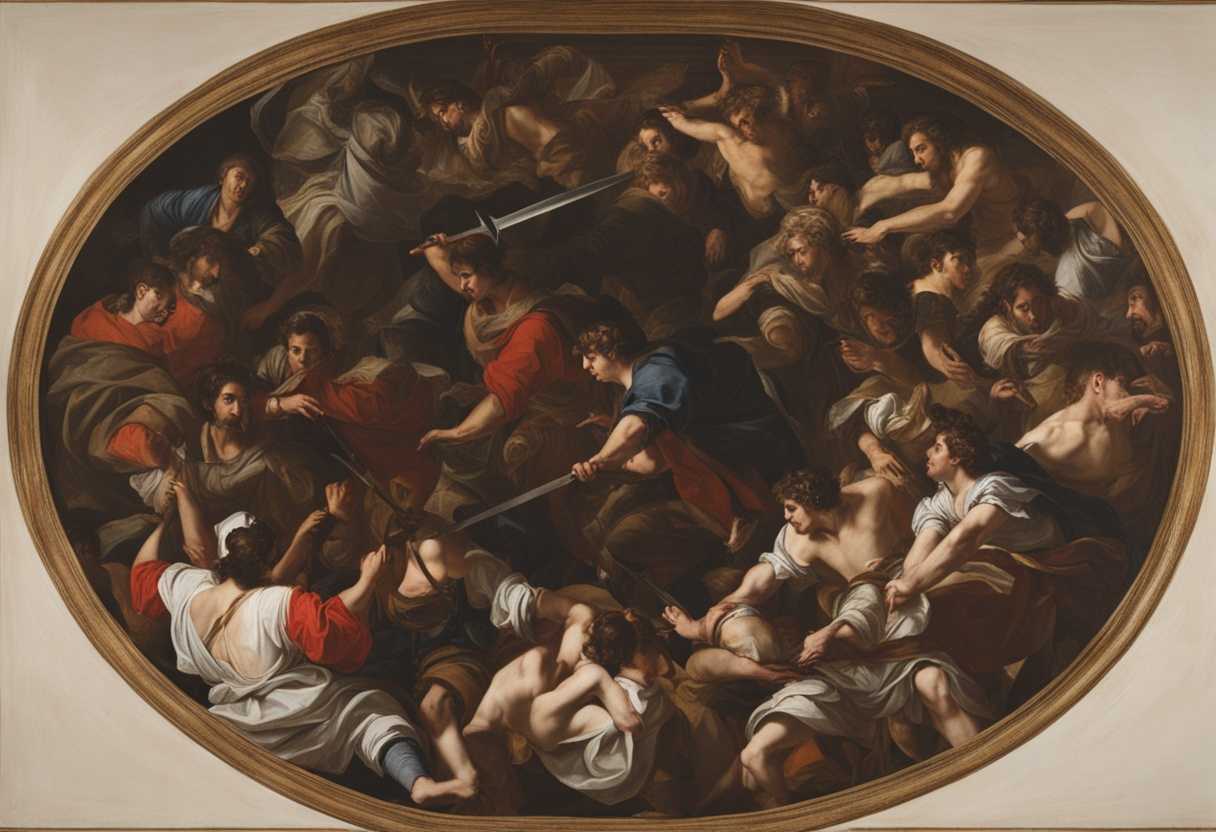
Setting the Scene for Ezekiel 23:25
In Ezekiel chapter 23, the prophet Ezekiel is delivering a powerful message from God to the people of Israel. The scene is set in a bustling marketplace in the city of Jerusalem. The air is filled with the sounds of merchants haggling, animals braying, and people going about their daily business. The sun beats down on the dusty streets, casting long shadows as the day progresses.
Ezekiel stands in the midst of the marketplace, his voice ringing out as he proclaims the word of the Lord. The people of Israel, including priests, merchants, and common folk, have gathered around to listen to the prophet’s words. Some are curious, others skeptical, but all are drawn in by Ezekiel’s powerful presence and the urgency of his message.
As Ezekiel speaks, he uses vivid and sometimes shocking imagery to convey God’s displeasure with the people’s idolatry and unfaithfulness. The scene is tense as Ezekiel confronts the people with their sins and calls them to repentance. The marketplace, usually a place of commerce and socializing, becomes a place of reckoning as Ezekiel delivers his prophetic warning with unwavering conviction.
What is Ezekiel 23:25 about?
The verse in Ezekiel 23:25 illustrates God’s response to Israel’s idolatry and unfaithfulness through vivid imagery. The Lord declares that He will unleash His wrath and judgment upon the people for betraying their covenant with Him. The verse serves as a stark warning against straying from God’s path and indulging in sinful behaviors by symbolizing their punishment as a violent and degrading act. Teachers must reflect on the consequences of their actions and the importance of staying true to their beliefs and values. This verse serves as a powerful reminder of the repercussions of turning away from God and placing our faith in false idols. We can see the severity of the punishment awaiting those who forsake their spiritual commitments by unpacking the metaphorical language used in this verse. Consider how loyalty and devotion are significant in your own life. How can you ensure that you remain steadfast in your faith and resist the temptations that may lead you astray? Let us heed the warnings in this verse and strive to cultivate a deep and unwavering connection with the divine as we navigate our spiritual journeys.
Understanding what Ezekiel 23:25 really means
In Ezekiel 23:25, we delve into a profound allegory where the prophet Ezekiel vividly portrays the unfaithfulness of Jerusalem and Samaria through the metaphor of two sisters, Oholah and Oholibah. This chapter serves as a stark reminder of the consequences of spiritual adultery and idolatry, showcasing the severity and inevitability of divine retribution upon these cities for their sins. The imagery used by Ezekiel paints a vivid picture of the repercussions of turning away from God and engaging in behaviors contrary to His will, emphasizing the gravity of straying from the path of righteousness.
Drawing parallels with related passages such as Jeremiah 3:6-10, Hosea 2:2-13, and Revelation 17:1-6, we see a consistent theme of unfaithfulness and idolatry throughout the Bible. These passages reinforce the idea of spiritual adultery and the emotional and relational aspects of betrayal towards God. The continuity of this metaphor across different books of the Bible underscores the timeless relevance of the message conveyed in Ezekiel 23:25, urging us to reflect on our own lives and evaluate areas where we may be unfaithful to God in today’s context.
Consider a scenario where one becomes so engrossed in worldly pursuits like career advancement and material success that they neglect their spiritual well-being and relationships. This gradual drift away from God leads to a sense of emptiness and disconnection, mirroring the spiritual adultery described in Ezekiel. It serves as a poignant reminder of how prioritizing worldly desires over our relationship with God can ultimately result in personal and relational breakdowns, echoing the consequences depicted in the verse.
Key phrases like “I will direct my jealous anger against you,” “They will deal with you in fury,” and “You will be left stark naked” underscore God’s passionate response to unfaithfulness, the severity of divine judgment, and the vulnerability of being exposed before Him. These phrases serve as powerful warnings of the consequences of sin and the stripping away of false securities, prompting us to reflect on our own lives and realign our priorities with God’s will.
As we contemplate the application of Ezekiel 23:25 in our lives, let us introspect on areas where we may be prioritizing worldly pursuits over our relationship with God. In a modern society that often leads us into forms of idolatry through the pursuit of wealth, status, or pleasure, this verse serves as a poignant reminder to seek repentance and realignment with God’s will. Let us heed the call to turn away from spiritual adultery and embrace a faithful and loving relationship with our Creator, recognizing His desire for our hearts to be fully devoted to Him.
How can we discern true from false prophets?
True prophets can be recognized by their adherence to and promotion of God’s word and commandments. They will consistently call people back to God, encourage repentance, teach the truth, and lead others in righteousness. False prophets, on the other hand, will lead people astray with lies, false teachings, and deceptive practices that do not align with God’s word. They may seek personal gain or promote their own agendas rather than serving God faithfully. Examine the fruits or outcomes of prophets’ words and actions to evaluate them. True prophets will exhibit the fruits of the Spirit, such as love, joy, peace, patience, kindness, goodness, faithfulness, gentleness, and self-control. They will also bear good fruit in their ministry, leading others closer to God and fostering spiritual growth. False prophets, in contrast, will produce harmful results, causing confusion, division, and spiritual harm to those who follow them. Wisdom, prayer, and a deep understanding of God’s word are required to ultimately discern true from false prophets. Followers can test the spirits and distinguish between those who speak the truth from those who spread falsehoods by studying Scripture and seeking God’s guidance.
Application
Think about how you treat people in your everyday life – at work, at home, with friends. Are you letting kindness and compassion shine through your actions? Just as a healthy team needs cooperation and a loving family needs care, your relationships thrive on grace and forgiveness. Will you step up and let God’s love be the light in every interaction you have?

Reverend Michael Johnson is an experienced Church Minister with a profound expertise in spirituality and guidance. With a serene presence and a compassionate heart, he has faithfully served his congregation for over 20 years, leading them on a spiritual journey towards inner peace and enlightenment. Reverend Johnson’s extensive knowledge of religious philosophies and profound understanding of human nature have made him a trusted confidant and mentor to many, as he seamlessly weaves his profound wisdom into life teachings. Reverend Johnson’s calming demeanor and empathetic nature continue to uplift and heal souls, nurturing a sense of unity and tranquility within his community.