
Ezekiel 26:20 is about the ultimate downfall and humbling of proud nations and individuals by the hand of God, revealing His power and sovereignty over all.
20 then I will make you go down with those who go down to the pit, to the people of old, and I will make you to dwell in the world below, among ruins from of old, with those who go down to the pit, so that you will not be inhabited; but I will set beauty in the land of the living.
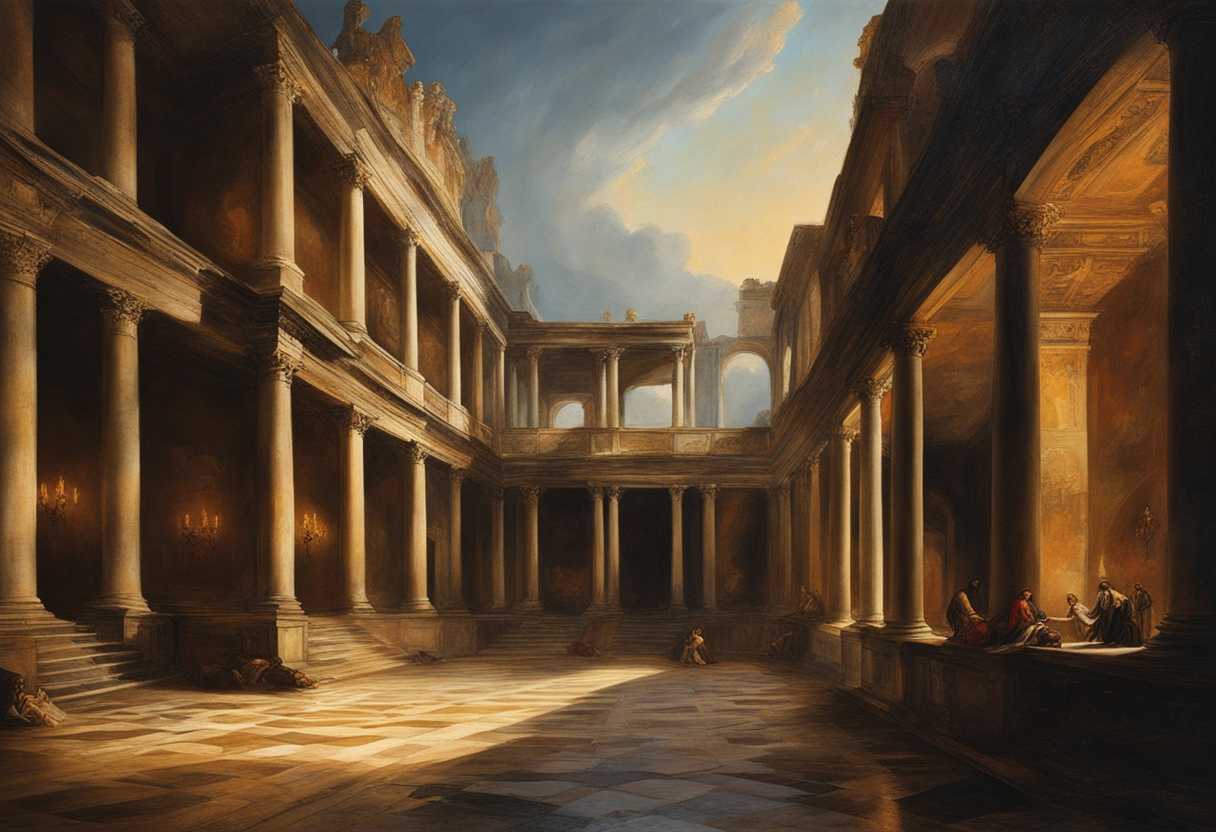
Setting the Scene for Ezekiel 26:20
In Ezekiel chapter 26, we find the prophet Ezekiel standing on the shores of the sea, overlooking the majestic city of Tyre. The city is known for its wealth, commerce, and strategic location on the Mediterranean coast. Ezekiel has been called by God to prophesy against Tyre for its pride, arrogance, and mistreatment of others.
Surrounding Ezekiel are a group of his followers, who have gathered to hear his words and witness the unfolding of God’s judgment upon Tyre. Among them are faithful believers who have come to support Ezekiel in his mission, as well as skeptics and onlookers curious about the prophet’s message.
As Ezekiel speaks, the waves crash against the rocky shore, a powerful reminder of the strength and sovereignty of God. The sun sets in the distance, casting a golden glow over the city of Tyre, a stark contrast to the impending destruction that Ezekiel foretells. The scene is tense yet awe-inspiring, as Ezekiel delivers his message with conviction and authority, knowing that he is merely a vessel for the divine will.
What is Ezekiel 26:20 about?
This verse signifies a dark and ominous prediction of the downfall of Tyre, a powerful and prosperous city in ancient times. It foretells its destruction and descent into the pit of the dead, symbolizing a severe and irreversible fate awaiting the once glorious city. The prophecy suggests a drastic and inevitable decline of a once thriving and influential civilization, emphasizing the consequences of arrogance, sin, and moral decay.
Have you ever imagined the consequences of a society straying from righteousness and succumbing to greed and corruption? This prophecy serves as a sobering reminder of the transient nature of power and wealth, urging us to reflect on the importance of moral values and ethical conduct in sustaining a thriving community. It prompts us to consider the fragility of human accomplishments and the significance of remaining humble and just in the face of success and prosperity. As we ponder on this prophecy, let us contemplate the lessons we can draw from Tyre’s tragic fate. How can we strive to build a society that values integrity, compassion, and righteousness, steering clear of the pitfalls that led to Tyre’s downfall? Through introspection and learning from history, we can aspire to create a legacy of resilience, virtue, and unity that stands the test of time.
Understanding what Ezekiel 26:20 really means
In Ezekiel 26:20, we delve into a prophecy against the city of Tyre, a once prosperous and fortified city known for its commerce and strength. The prophet Ezekiel, serving as a vessel for God’s judgment, foretells the downfall and desolation of Tyre due to its pride and sins. The verse paints a vivid picture of destruction and humiliation, using phrases like “I will bring you down with those who go down to the pit,” symbolizing a descent into Sheol, the realm of the dead, indicating complete annihilation and shame. By referencing “To the people of long ago,” the verse emphasizes the finality and irreversibility of Tyre’s fate, joining the ranks of the ancient dead.
“I will make you dwell in the earth below, as in ancient ruins,” portrays Tyre as a forgotten city, buried and devoid of its former glory, akin to ancient ruins that have lost their splendor. The imagery of being “with those who go down to the pit, so that you will not be inhabited” underscores the utter desolation and abandonment that Tyre will face, never to be rebuilt or inhabited again. This prophecy echoes similar themes found in other biblical passages like Isaiah 14:15, which speaks of the downfall of the proud and powerful, and Revelation 18:21, depicting the finality of destruction for those who oppose God.
The relevance of Ezekiel 26:20 extends to contemporary society, serving as a cautionary tale against the dangers of pride and sin. In a world where material wealth and human achievements are often idolized, this verse reminds us of the importance of humility and reliance on God rather than on our own strength. Consider a modern-day parallel of a successful businessman whose arrogance and unethical practices led to the collapse of his empire. This anecdote mirrors the fate of Tyre, illustrating how pride and moral compromise can pave the way to ruin and downfall.
In conclusion, Ezekiel 26:20 stands as a poignant reminder of the fleeting nature of human accomplishments and the significance of humility and righteousness. It prompts introspection among readers, urging them to prioritize humility and integrity while entrusting their lives to God rather than to transient worldly success. Let this verse serve as a beacon guiding us towards a path of humility, righteousness, and unwavering faith in the face of life’s trials and temptations.
How can we remain humble amidst our achievements?
To remain humble amidst our achievements, we can focus on acknowledging that our success and accomplishments are ultimately gifts from God. Understanding that it is He who enables us to achieve our goals can help us stay grounded and grateful. We can maintain a sense of humility and avoid becoming prideful by attributing our achievements to His grace and guidance.
Additionally, it is important to remember that success is often a collective effort, involving the support and contributions of others. Recognizing the role of others in our achievements can help us cultivate a spirit of gratitude and humility. We can remain humble and appreciative of the interconnectedness of our accomplishments by valuing the assistance and encouragement we receive from others.
Furthermore, practicing humility involves acknowledging our limitations and understanding that we are not infallible. Reflecting on our weaknesses and vulnerabilities can help us stay humble in the face of success, reminding us that we are all constantly learning and growing. Embracing a mindset of continual growth and development can help us stay humble amidst our achievements.
Application
Imagine your life as a balancing act between your job and your family. Just like in the office, where ignoring responsibilities leads to chaos, turning a blind eye to God’s guidance invites turmoil. Reflect on Ezekiel 26:20 and ask yourself: are you meeting your spiritual deadlines or missing the mark? Align your thoughts and actions with God’s will, just as you would your work tasks or family duties. How will you answer this crucial call for spiritual realignment?

Reverend Michael Johnson is an experienced Church Minister with a profound expertise in spirituality and guidance. With a serene presence and a compassionate heart, he has faithfully served his congregation for over 20 years, leading them on a spiritual journey towards inner peace and enlightenment. Reverend Johnson’s extensive knowledge of religious philosophies and profound understanding of human nature have made him a trusted confidant and mentor to many, as he seamlessly weaves his profound wisdom into life teachings. Reverend Johnson’s calming demeanor and empathetic nature continue to uplift and heal souls, nurturing a sense of unity and tranquility within his community.