
Ezekiel 27:1-36 is about the downfall of the great city of Tyre due to its pride, material wealth, and economic exploitation, serving as a warning against the dangers of arrogance and the fleeting nature of worldly possessions.
27 The word of the Lord came to me:
2 “Now you, son of man, raise a lamentation over Tyre,”
3 and say to Tyre, who dwells at the entrances to the sea, merchant of the peoples to many coastlands, thus says the Lord God: “O Tyre, you have said, ‘I am perfect in beauty.’
4 Your borders are in the heart of the seas; your builders have perfected your beauty.
5 They made all your planks of fir trees from Senir; they took a cedar from Lebanon to make a mast for you.
6 Of oaks of Bashan
they made your oars;
they made your deck of pines
from the coasts of Cyprus,
inlaid with ivory.
7 Your sail was of fine embroidered linen from Egypt so that it became your own sail.
8 The inhabitants of Sidon and Arvad were your rowers; your skilled men, O Tyre, were in you; they were your pilots.
9 The elders of Gebal and its skilled men were in you, caulking your seams; all the ships of the sea with their mariners were in you to barter for your wares.
10 “Persia and Lud and Put were in your army as your men of war. They hung the shield and helmet in you; they gave you splendor.”
11 The men of Arvad and Helech were on your walls all around, and men of Gamad were in your towers. They hung their shields on your walls all around; they have made perfect your beauty.
12 “Tarshish did business with you because of your great wealth of every kind; silver, iron, tin, and lead they exchanged for your wares.
13 Javan, Tubal, and Meshech traded with you. They exchanged human beings and vessels of bronze for your merchandise.
14 “Beth-togarmah exchanged for your wares horses, war horses, and mules.
15 The men of Dedan traded with you. Many coastlands were your own special markets; they brought you in payment ivory tusks and ebony.
16 Syria did business with you because of the abundance of your goods; they exchanged for your wares emeralds, purple, embroidered work, fine linen, coral, and ruby.
17 Judah and the land of Israel traded with you; they exchanged for your merchandise wheat, olives, honey, and oil.
18 Damascus was your merchant in the multitude of the goods of your making, for the abundance of all wealth, in wine of Helbon and wool of Sahar.
19 Vedan and Javan traded with yarn for your wares; wrought iron, cassia, and calamus were bartered for your merchandise.
20 Dedan traded with you in saddlecloths for riding.
21 Arabia and all the princes of Kedar were your favored dealers in lambs, rams, and goats; in these they did business with you.
22 The traders of Sheba and Raamah traded with you; they exchanged for your wares the best of all kinds of spices and all precious stones and gold.
23 Haran, Canneh, Eden, traders of Sheba, Asshur, and Chilmad traded with you.
24 “In your marketplace they traded with you beautiful garments, blue fabric, embroidered work, and fine carpets of colored material, bound with cords and made secure.
25 The ships of Tarshish traveled for you with your merchandise. So you were filled and heavily laden in the heart of the seas.
26 “Your rowers have brought you out into the high seas. The east wind has wrecked you in the heart of the seas.”
27 Your riches, your wares, your merchandise, your mariners and your pilots, your caulkers, your dealers in merchandise, and all your men of war who are in you, with all your crew that is in your midst, sink into the heart of the seas on the day of your fall.
28 At the sound of the cry of your pilots the countryside shakes,
29 and down from their ships come all who handle the oar. The sailors and all the pilots of the sea stand on the land
30 and shout aloud over you and cry out bitterly. They cast dust on their heads and wallow in ashes;
31 they make themselves bald for you
and put sackcloth on their waist,
and they weep over you in bitterness of soul,
with bitter mourning.
32 And in their wailing they raise a lamentation for you
and lament over you:
‘Who is like Tyre,
like one destroyed in the midst of the sea?
33 When your wares went out on the seas, you satisfied many peoples; with your abundant wealth and merchandise you enriched the kings of the earth.
34 Now you are wrecked by the seas, in the depths of the waters; your merchandise and all your crew in your midst have sunk with you.
35 All the inhabitants of the coastlands
are appalled at you,
and the hair of their kings bristles with horror;
their faces are convulsed.
36 The merchants among the peoples hiss at you; you have come to a dreadful end and shall be no more forever.
Setting the Scene for Ezekiel 27:1-36
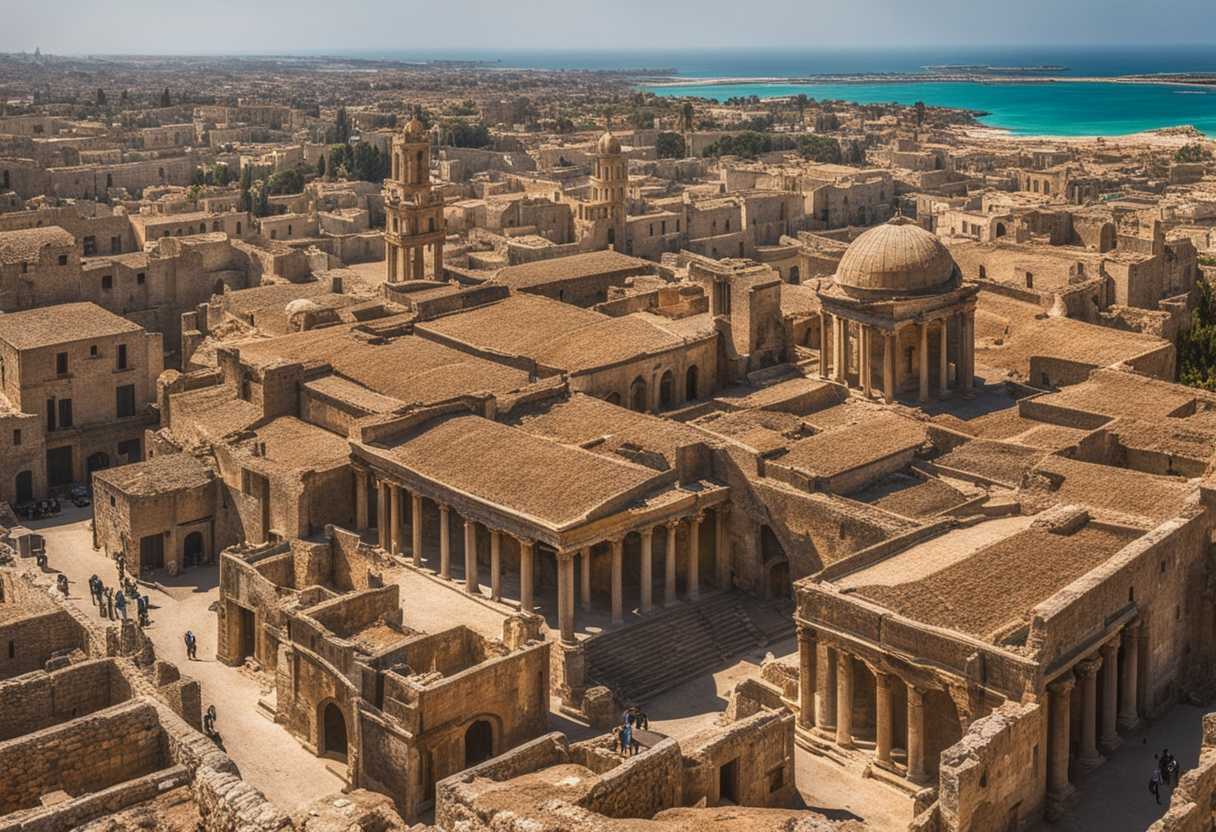
The scene in Ezekiel 27:1-36 takes place in the ancient city of Tyre, a bustling port city known for its wealth and trade. The prophet Ezekiel is delivering a message from God, warning the people of Tyre of their impending destruction due to their pride, arrogance, and sinful ways. The city is depicted as a magnificent ship, adorned with precious materials and goods from various lands, symbolizing its prosperity and influence in the region.
In this scene, Ezekiel is surrounded by the leaders and inhabitants of Tyre, who have gathered to hear his message. The city’s merchants, sailors, and craftsmen are also present, representing the diverse population that contributed to Tyre’s economic success. The atmosphere is tense as Ezekiel delivers his prophecy of doom, describing how Tyre will be brought to ruin and its riches plundered by foreign invaders as a punishment for their wickedness.
The setting is vividly described, with the sounds of the sea and the sights of the bustling harbor adding to the dramatic backdrop of Ezekiel’s warning. The scene captures the hubris and downfall of a once-great city, serving as a cautionary tale of the consequences of turning away from God and embracing worldly wealth and power.
What is Ezekiel 27:1-36 about?
The prophet in Ezekiel 27 paints a vivid picture of Tyre’s glory and subsequent downfall. Through poetic language and detailed descriptions, Ezekiel conveys the riches, influence, and pride of the city of Tyre. The chapter talks about the city’s wealth derived from trade, its skilled craftsmen, its ships sailing the seas, and its vast array of resources. However, amidst all the splendor, Tyre became overly proud and sinful, leading to its downfall and destruction.
This chapter serves as a powerful reminder of the consequences of pride and sin. It illustrates how even the most prosperous and powerful cities or individuals can fall due to arrogance and disobedience to God. Through Ezekiel’s words, we are urged to reflect on our own actions and attitudes, to ensure that we remain humble, grateful, and faithful in all circumstances. The story of Tyre serves as a cautionary tale, highlighting the importance of staying grounded in our beliefs and values, instead of being consumed by material wealth and ego.
Understanding what Ezekiel 27:1-36 really means
Ezekiel 27 is a poignant lamentation for the once-mighty city of Tyre, renowned for its wealth and maritime prowess. The chapter vividly portrays Tyre’s grandeur, its bustling trade networks, and ultimately, its tragic downfall. It serves as a stark reminder of the fleeting nature of earthly riches and power, urging readers to contemplate the transience of material success.
In the historical context, Tyre stood as a prominent Phoenician city celebrated for its commerce and skilled seafarers. Through Ezekiel, God delivers a prophetic message condemning Tyre’s arrogance and foretelling its impending judgment. The city’s pride and self-sufficiency are highlighted, emphasizing the consequences of hubris and misplaced confidence in one’s own strength.
Key phrases in the passage, such as “I am perfect in beauty,” underscore Tyre’s vanity and belief in its invincibility. The imagery of Tyre’s strategic location in the seas and the craftsmanship that adorned it with beauty symbolize the city’s prosperity and allure. However, the mention of the east wind wrecking Tyre at sea signifies its eventual downfall, a poignant reminder of the vulnerability inherent in worldly success.
Drawing parallels with other biblical passages like Proverbs 16:18 and Matthew 6:19-21, Ezekiel 27 reinforces timeless truths about the perils of pride and the transient nature of material wealth. These verses caution against storing up treasures on earth, where they are subject to decay and loss, and instead advocate for investing in spiritual riches that endure beyond earthly realms.
The narrative of Tyre resonates with contemporary audiences, prompting reflection on the pitfalls of arrogance and the importance of humility in the face of success. In a world where achievements are often equated with material prosperity, Ezekiel’s lamentation serves as a poignant reminder to remain grounded in faith and to prioritize spiritual wealth over fleeting riches.
Consider the story of a successful entrepreneur who, despite amassing wealth and influence, remained humble and devoted to serving others. His unwavering faith and generosity not only sustained him through challenges but also left a lasting impact on his community. Unlike Tyre, his legacy was built on spiritual investments and acts of kindness, showcasing the enduring value of humility and compassion in the face of adversity.
In conclusion, Ezekiel 27:1-36 urges readers to ponder the lessons of Tyre’s downfall, emphasizing the importance of humility and spiritual wealth in a world obsessed with material success. By heeding these insights, we can strive to build a legacy grounded in faith and service, ensuring that our true treasures lie in eternal virtues rather than fleeting riches.
How can material possessions impact our spiritual lives?
Material possessions can impact our spiritual lives by becoming a distraction or a source of pride. When we accumulate wealth and material goods, we may start to rely on them for security and happiness, rather than on our faith in God. This can lead to a sense of self-sufficiency and a neglect of our spiritual needs. The description of Tyre’s wealth and abundance in the verse serves as a warning about the dangers of focusing too much on material possessions, which can ultimately lead us away from our spiritual path.
Additionally, material possessions can also be a barrier to our spiritual growth if we become attached to them. The verse highlights how Tyre’s wealth and trade brought them arrogance and a sense of superiority, leading them to distance themselves from God. When we place too much importance on material possessions, we may lose sight of what truly matters in our spiritual journey and become consumed by greed and selfish desires. Therefore, it is important to cultivate a detachment from material wealth and instead focus on nurturing our relationship with God and living a life of spiritual fulfillment.
Application
In a bustling digital age, where success is measured by numbers and notifications, let us not lose sight of the true wealth that lies in our spiritual journey. Just as a devoted employee prioritizes their tasks at work, let us prioritize our relationship with God, our eternal CEO. Take a moment to review your spiritual portfolio and invest in the everlasting treasures promised by our Creator. Are you ready to shift your focus from fleeting riches to eternal rewards in the eyes of the divine?

Reverend Michael Johnson is an experienced Church Minister with a profound expertise in spirituality and guidance. With a serene presence and a compassionate heart, he has faithfully served his congregation for over 20 years, leading them on a spiritual journey towards inner peace and enlightenment. Reverend Johnson’s extensive knowledge of religious philosophies and profound understanding of human nature have made him a trusted confidant and mentor to many, as he seamlessly weaves his profound wisdom into life teachings. Reverend Johnson’s calming demeanor and empathetic nature continue to uplift and heal souls, nurturing a sense of unity and tranquility within his community.