
Ezekiel 28:12-13 is about the description of the King of Tyre, using symbolic language to highlight the splendor and potential downfall of earthly rulers who become prideful and stray from God’s ways.
12 “Son of man, raise a lamentation over the king of Tyre, and say to him, Thus says the Lord God: “You were the signet of perfection, full of wisdom and perfect in beauty.
13 You were in Eden, the garden of God; every precious stone was your covering, sardius, topaz, and diamond, beryl, onyx, and jasper, sapphire, emerald, and carbuncle; and crafted in gold were your settings and your engravings. On the day that you were created they were prepared.
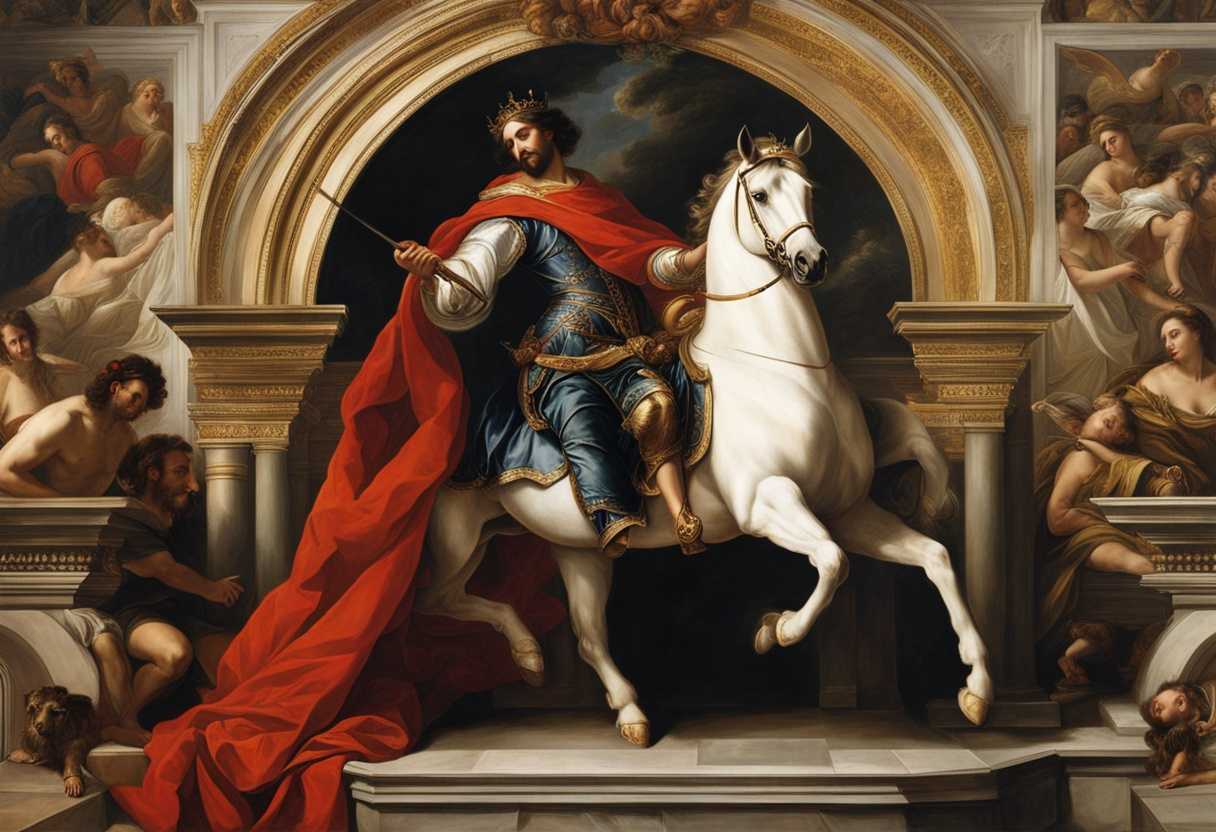
Setting the Scene for Ezekiel 28:12-13
In Ezekiel chapter 28, the prophet Ezekiel is called upon by God to deliver a message to the king of Tyre. The scene is set in the grand palace of the king, a lavish and opulent setting befitting a ruler of a prosperous city-state. The king of Tyre, known for his wealth and arrogance, is surrounded by his courtiers and advisors, all dressed in fine garments and adorned with jewels.
As Ezekiel stands before the king, he begins to prophesy against him, speaking on behalf of God. The prophet describes the king as once being in the garden of Eden, adorned with precious stones and covered in gold. However, the king’s pride and wickedness have led to his downfall, and he will soon face the consequences of his actions.
The atmosphere in the palace is tense as Ezekiel’s words cut through the arrogance of the king and his court. The king’s advisors shift uncomfortably, realizing the gravity of the message being delivered. The scene is a powerful reminder of the consequences of pride and the importance of humility before God.
What is Ezekiel 28:12-13 about?
The prophet in these verses from the book of Ezekiel is condemning the King of Tyre for his excessive pride and arrogance. The imagery used to describe the King of Tyre as a majestic and adorned creature, such as a guardian cherub, emphasizes the height from which he has fallen due to his pride. The comparison to the Garden of Eden further emphasizes the extent of his downfall, suggesting that he has lost his innocence and purity.
Reflect on how dangerous pride can be. How it can blind us to our faults and lead us down a path of destruction. Have you ever experienced a moment when pride has clouded your judgment or caused harm to yourself or others? How can we guard against falling into the trap of excessive pride and instead cultivate humility and self-awareness in our lives? Let this passage serve as a reminder to stay humble and grounded in our actions and interactions with others.
Understanding what Ezekiel 28:12-13 really means
Ezekiel 28:12-13 presents a poignant depiction of the King of Tyre, portraying him as the epitome of perfection, wisdom, and beauty. This imagery not only reflects the earthly king’s grandeur but also symbolically alludes to the fall of Lucifer from grace. The verses evoke a sense of completeness and divine favor that was marred by pride and corruption, serving as a cautionary tale for all who read them. The reference to Eden, the garden of God, further emphasizes the King of Tyre’s exalted status and close relationship with the divine, underscoring the magnitude of his fall from grace.
The vivid imagery of precious stones adorning the King of Tyre signifies not only his outward splendor but also the blessings and gifts bestowed upon him by God. This imagery serves as a stark contrast to the eventual squandering of these divine favors due to arrogance and sin. The parallels drawn between Ezekiel 28:12-13 and other biblical passages, such as Isaiah 14:12-15 and Genesis 3:1-24, deepen our understanding of the consequences of pride and disobedience in the face of divine grace.
In a contemporary context, Ezekiel’s lamentation for the King of Tyre resonates as a timeless warning against the pitfalls of hubris and the importance of humility before God. The passage challenges us to reflect on our own lives and actions, reminding us that no matter our successes or blessings, we are all susceptible to the allure of pride and corruption. In a world that often glorifies material wealth and external beauty, Ezekiel’s words urge us to prioritize spiritual integrity and a humble acknowledgment of our dependence on God.
Consider a modern-day parable of a successful individual whose initial humility and generosity gave way to pride and ethical compromises, leading to their downfall. This narrative mirrors the timeless message of Ezekiel 28:12-13, illustrating how unchecked pride can unravel even the most prosperous of lives. Ultimately, Ezekiel’s lament serves as a poignant reminder of the enduring relevance of humility, integrity, and faith in navigating life’s challenges and temptations.
In conclusion, Ezekiel 28:12-13 stands as a powerful testament to the dangers of pride and the necessity of maintaining a humble and faithful posture before God. It prompts us to examine our own hearts and actions, ensuring that we remain grounded in our values and reliant on the grace of the divine. May this passage inspire us to cultivate a spirit of humility and gratitude, recognizing that all we have is ultimately a gift from God.
What does God value in a leader’s heart?
God values a leader who is wise, perfect in beauty, and established in Eden, the garden of God. This leader is described as having been an anointed cherub who covers, which reflects qualities of protection, authority, and honor. This passage suggests that God values a leader who is not only visually attractive but also possesses wisdom and authority through divine appointment.
Furthermore, God values a leader whose heart is not proud because of their beauty or position, but rather remains humble and focused on fulfilling their responsibilities in a just and righteous manner. This indicates that the internal qualities of a leader, such as humility and integrity, are important to God. Thus, a leader’s heart attitude and motives are significant to God, showcasing the importance of character and integrity in leadership.
Application
In the verses of Ezekiel, we witness God’s creation of boundless beauty in the cherub, a striking symbol of purity and grace. Let us emulate this divine beauty in our lives, radiating God’s glory through our every interaction. As we channel the virtues of the Divine, let our actions speak volumes of His love and compassion. Are you prepared to embrace the beauty and holiness that beckons you to illuminate the world with grace and light?

Reverend Michael Johnson is an experienced Church Minister with a profound expertise in spirituality and guidance. With a serene presence and a compassionate heart, he has faithfully served his congregation for over 20 years, leading them on a spiritual journey towards inner peace and enlightenment. Reverend Johnson’s extensive knowledge of religious philosophies and profound understanding of human nature have made him a trusted confidant and mentor to many, as he seamlessly weaves his profound wisdom into life teachings. Reverend Johnson’s calming demeanor and empathetic nature continue to uplift and heal souls, nurturing a sense of unity and tranquility within his community.