
Ezekiel 29:13-16 is about God’s judgment against Pharaoh and Egypt for their pride and arrogance, revealing that even the most powerful rulers are subject to the sovereignty and justice of God.
13 Yet thus says the Lord God: At the end of forty years I will gather the Egyptians from the peoples among whom they were scattered,
14 And I will restore the fortunes of Egypt and bring them back to the land of Pathros, the land of their origin, and there they shall be a lowly kingdom.
15 It shall be the most lowly of the kingdoms, and never again exalt itself above the nations. And I will make them so small that they will never again rule over the nations.
16 And it shall be the most lowly of the kingdoms, and never again exalt itself above the nations. And I will make them so small that they will never again rule over the nations.
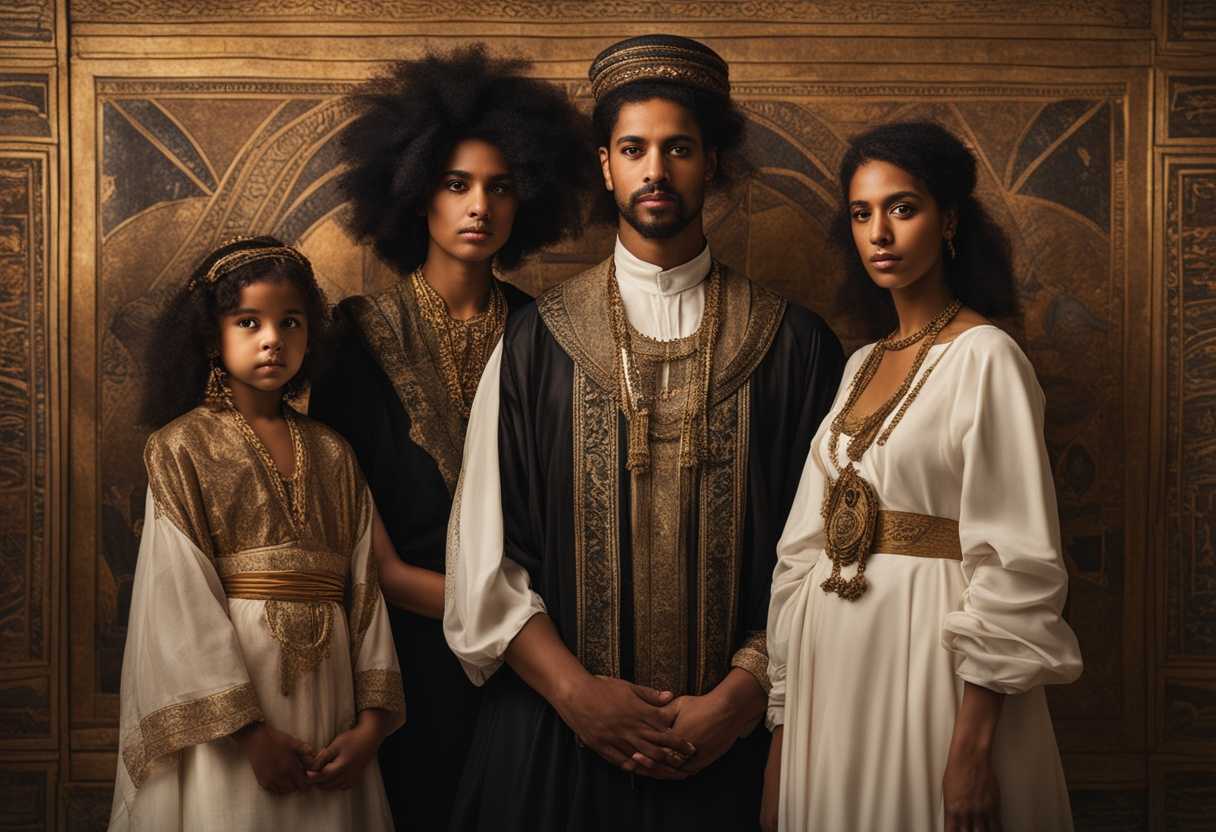
Setting the Scene for Ezekiel 29:13-16
In Ezekiel chapter 29, the prophet Ezekiel delivers a message from the Lord concerning the downfall of Egypt. The scene is set in a grand hall within the royal palace of Pharaoh in the city of Thebes. Present in the scene are Pharaoh Hophra, his courtiers, and Ezekiel, who has been brought before the Pharaoh to deliver a prophecy of judgment.
The room is adorned with intricate hieroglyphics and golden statues of Egyptian gods, reflecting the wealth and power of the Pharaoh. As Ezekiel stands before Pharaoh, he speaks with authority and conviction, warning of the impending destruction that will come upon Egypt due to its pride and idolatry. The courtiers shift uncomfortably in their seats, knowing that Ezekiel’s words carry weight and truth.
Outside the palace, the bustling city of Thebes carries on with its daily activities, unaware of the divine message being delivered within the royal chambers. The sun beats down on the desert landscape, casting a harsh light on the scene unfolding inside the palace. As Ezekiel concludes his prophecy, the atmosphere in the room is tense, with Pharaoh and his courtiers left to ponder the consequences of their actions.
What is Ezekiel 29:13-16 about?
A powerful message of hope and redemption is seen in this verse. It serves as a reminder that even in the midst of judgment and trials, there is always the possibility for restoration and renewal. The idea of Egypt being restored and becoming a humble nation showcases God’s ability to transform even the most prideful and stubborn of nations. This verse highlights God’s mercy and grace, demonstrating His willingness to forgive and bring about positive change, no matter how dire the situation may seem. We can ponder on the broader implications this verse holds as we reflect on it. It prompts us to consider our own lives and the areas where we may need restoration and humility. Are there aspects of our lives that need God’s healing touch? Are there areas where we need to let go of pride and embrace humility? God promises to restore us and make us new, just as He promises to restore Egypt. God’s love and mercy are always available to bring us back to Him, no matter how far we may have strayed.
Understanding what Ezekiel 29:13-16 really means
Ezekiel 29:13-16 is a significant part of the prophecy against Egypt, delivered by the prophet Ezekiel, highlighting the future restoration of Egypt after a period of desolation. This passage is deeply rooted in the historical context of Egypt’s powerful status and its interactions with Israel, showcasing God’s judgment as a testament to His sovereignty over all nations.
The phrase “At the end of forty years” symbolizes a specific period of judgment and desolation, akin to the Israelites’ 40 years in the wilderness, signifying a time of testing. “I will gather the Egyptians from the nations where they were scattered” reveals God’s intention for restoration, emphasizing His mercy and the possibility of redemption even after facing His judgment. Egypt’s restoration as “a lowly kingdom” signifies a humbling experience, teaching a lesson in humility and the repercussions of pride. The declaration that Egypt will be “the lowliest of kingdoms” and never exalt itself above others underscores a permanent change in status, cautioning against arrogance and self-exaltation.
Related biblical passages like Isaiah 19:22 and Jeremiah 46:26 further emphasize the themes of judgment and restoration for Egypt, portraying a cycle of temporary downfall followed by eventual healing and renewal. This narrative holds relevance for people today, serving as a poignant lesson on the consequences of pride and the significance of humility in the face of God’s judgment and mercy. It reminds individuals and nations alike that restoration and redemption are attainable through God’s grace, regardless of past transgressions.
An anecdote can vividly illustrate the message of Ezekiel 29:13-16, depicting a person who experiences a downfall due to arrogance but eventually finds restoration through humility and reflection. This journey mirrors Egypt’s path from pride to desolation to a modest yet grounded restoration, showcasing the transformative power of humility and redemption. For instance, a fallen business leader rebuilding their life in a more ethical and modest manner after facing the consequences of unethical practices exemplifies the essence of humble restoration and growth.
In conclusion, Ezekiel 29:13-16 stands as a poignant reminder of God’s sovereignty, the repercussions of pride, and the promise of restoration. It urges individuals to embrace humility, acknowledging that ultimate success and status lie in God’s hands, offering hope for renewal and redemption through His grace.
How can we trust in God’s promises fully?
We can trust in God’s promises fully by understanding that His word is true and His plans will come to pass. Through Ezekiel’s prophecy, we are reminded that God’s promises are rooted in His faithfulness and His sovereignty over all things. We can have confidence that God’s promises for us today will be fulfilled in His perfect timing, just as the prophecies in Ezekiel were sure. We see evidence of His trustworthiness by reflecting on the context of Ezekiel’s prophecy and the historical events that unfolded according to God’s word. Knowing that God’s promises are not dependent on human actions or circumstances, but on His power and faithfulness, can help us trust in His promises fully. Recognizing His authority, wisdom, and love ultimately strengthen our faith in God’s promises, which are constant and unchanging amidst a changing world.
Application
Reflecting on Ezekiel 29:13-16 shows us that God is faithful in restoring and blessing us through tough times. We are called to trust in His promises and seek His guidance in all we do. Let’s actively pursue His presence, follow His teachings, and stand strong in our faith. Will you join in trusting God’s faithfulness and living in obedience today?

Reverend Michael Johnson is an experienced Church Minister with a profound expertise in spirituality and guidance. With a serene presence and a compassionate heart, he has faithfully served his congregation for over 20 years, leading them on a spiritual journey towards inner peace and enlightenment. Reverend Johnson’s extensive knowledge of religious philosophies and profound understanding of human nature have made him a trusted confidant and mentor to many, as he seamlessly weaves his profound wisdom into life teachings. Reverend Johnson’s calming demeanor and empathetic nature continue to uplift and heal souls, nurturing a sense of unity and tranquility within his community.