
Ezekiel 30:1-19 is about a prophecy foretelling the downfall of Egypt as a judgment from God for their sins and for oppressing other nations, emphasizing the consequences of disobedience and the sovereignty of God over all nations.
1 The word of the Lord came to me:
2 “Son of man, prophesy, and say, Thus says the Lord God: “Wail, ‘Alas for the day!’”
3 For the day is near, the day of the Lord is near; it will be a day of clouds, a time of doom for the nations.
4 A sword shall come upon Egypt,
and anguish shall be in Cush,
when the slain fall in Egypt,
and her wealth is carried away,
and her foundations are torn down.
5 Cush, and Put, and Lud, and all Arabia, and Libya, and the people of the land that is in league, shall fall with them by the sword.
6 “Thus says the Lord:
Those who support Egypt shall fall,
and her proud might shall come down;
from Migdol to Syene
they shall fall within her by the sword,
declares the Lord God.
7 And they shall be desolated in the midst of desolated countries, and their cities shall be in the midst of cities that are laid waste.
8 And they will know that I am the Lord, when I have set fire to Egypt, and all her helpers are broken.
9 “On that day messengers shall go out from me in ships to terrify the unsuspecting people of Cush, and anguish shall come upon them on the day of Egypt’s doom; for, behold, it comes!”
10 “Thus says the Lord God: “I will put an end to the wealth of Egypt, by the hand of Nebuchadnezzar king of Babylon.”
11 He and his people with him, the most ruthless of nations, shall be brought in to destroy the land, and they shall draw their swords against Egypt and fill the land with the slain.
12 And I will dry up the Nile and will sell the land into the hand of evildoers; I will bring desolation upon the land and everything in it, by the hand of foreigners; I am the Lord; I have spoken.
13 “Thus says the Lord God: “I will destroy the idols and put an end to the images in Memphis; there shall no longer be a prince from the land of Egypt; so I will put fear in the land of Egypt.”
14 And I will make Pathros a desolation and will set fire to Zoan and will execute judgments on Thebes.
15 Thus says the Lord God: “I will make the wealth of Egypt cease by the hand of Nebuchadnezzar king of Babylon.
16 And I will set fire to Egypt;
Pelusium shall be in great agony;
Thebes shall be breached,
and Memphis shall face enemies by day.
17 The young men of On and of Pi-beseth shall fall by the sword, and the women shall go into captivity.
18 “At Tehaphnehes the day shall be dark,
when I break there the yoke bars of Egypt,
and her proud might shall come to an end in her;
she shall be covered by a cloud,
and her daughters shall go into captivity.
19 Thus I will execute judgments on Egypt. Then they will know that I am the Lord.”
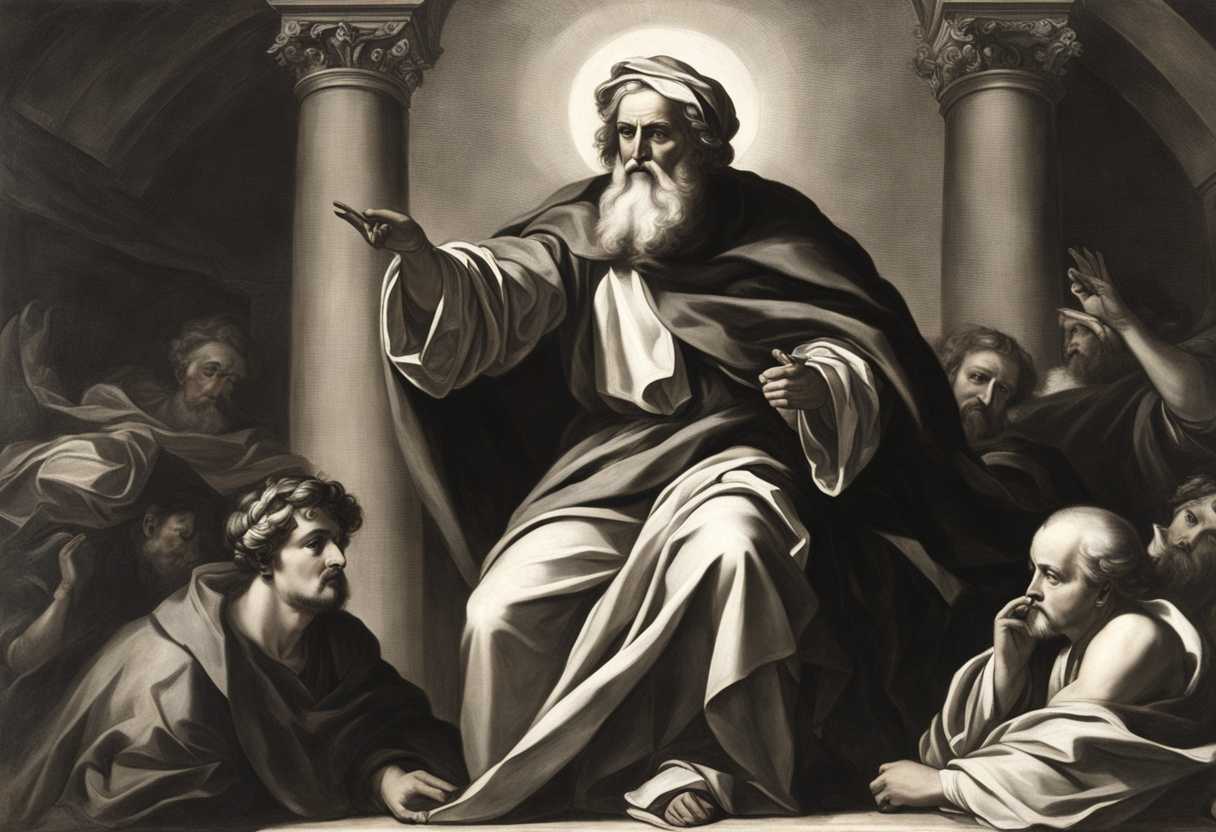
Setting the Scene for Ezekiel 30:1-19
The scene in Ezekiel 30:1-19 takes place in the ancient city of Thebes, also known as No-Amon, which was the capital of Egypt at the time. The prophet Ezekiel is delivering a message from the Lord concerning the impending judgment that will come upon Egypt and its allies. The setting is a bustling city filled with people going about their daily lives, unaware of the impending doom that Ezekiel is warning them about.
In the scene, Ezekiel is joined by a group of elders and leaders from the city who have gathered to hear his message. These individuals are likely influential figures in the community who hold positions of power and authority. They have come together in response to Ezekiel’s proclamation, perhaps out of curiosity or a sense of duty to hear what the prophet has to say.
Surrounding them are the grand structures and temples of Thebes, symbols of Egypt’s wealth and power. The atmosphere is tense as Ezekiel delivers his message of judgment, warning the people of the consequences of their sins and calling them to repentance. The scene is filled with a sense of foreboding as the prophet paints a vivid picture of the destruction that will come upon the city and its inhabitants if they do not turn back to the Lord.
What is Ezekiel 30:1-19 about?
Ezekiel’s prophecy against Egypt in this verse reveals the consequences of their pride and idolatry. The text highlights how Egypt’s rulers and people have exalted themselves to a point where they believe they are like gods. The true God will bring judgment upon them for engaging in idol worship and elevating themselves above others. This prophecy serves as a cautionary tale about the perils of arrogance and turning away from the one true God. We reflect on this verse, prompting us to consider our own attitudes and actions. Are there areas in our lives where we have let pride or false idols take precedence? How can we ensure that we remain humble and focused on worshipping the true God? Ezekiel’s words remind us of the importance of staying faithful and obedient to God, lest we too face the consequences of our actions. Let us take this message to heart and strive to live in a way that honors and glorifies God in all that we do.
Understanding what Ezekiel 30:1-19 really means
Ezekiel 30:1-19 delivers a prophecy against Egypt, a nation known for its power and idolatry. The impending judgment and downfall of Egypt are foretold by the prophet Ezekiel in this passage, which is part of a larger section where he prophesies against various nations. The context sets the stage for divine intervention and the humbling of a proud nation that had often oppressed others and relied on its own strength.
Key phrases in this passage carry significant meanings. “The day of the Lord is near” signals a time of divine judgment drawing closer, a common theme in prophetic literature indicating God’s imminent intervention in human affairs. “A sword will come against Egypt” symbolizes the destructive force through which God’s judgment will be executed, highlighting the severity of the impending consequences. “The pride of her power will come down” emphasizes the downfall of Egypt’s arrogance and self-reliance, underscoring the theme of divine sovereignty over human pride.
Related biblical passages such as Isaiah 19:1-4 and Jeremiah 46:13-26 reinforce the message of Egypt’s impending defeat and the futility of relying on false gods and military might. Even Revelation 18:2-3, though speaking of Babylon, echoes the themes of judgment against proud and idolatrous nations, drawing parallels to Egypt’s fate. These passages collectively emphasize the timeless themes of pride, human reliance, and divine judgment, relevant to individuals and nations today.
Consider a successful businessperson who, like Egypt, built an empire on hard work but neglected their spiritual life, becoming prideful. When faced with adversity, their empire crumbled, revealing the consequences of misplaced trust in material success. This anecdote mirrors Egypt’s fate, reminding us that true security and success stem from acknowledging and submitting to God’s sovereignty. Ezekiel 30:1-19 thus serves as a poignant reminder of the perils of pride and idolatry, urging us to reevaluate where we place our trust and recognize God’s ultimate authority.
In conclusion, this passage prompts reflection on the consequences of pride and idolatry, urging us to acknowledge God’s sovereignty as the source of true power and security. By delving into Ezekiel’s prophecy and related scriptures, we deepen our understanding of God’s justice and mercy, finding encouragement to live humbly and faithfully in a world that often exalts power and pride. Let us heed the lessons of Ezekiel 30:1-19, embracing humility and trust in God’s sovereignty amidst the tumult of human strength and arrogance.
How can we find true spiritual abundance in our lives?
True spiritual abundance can be found in our lives by seeking a deep and profound connection with our spiritual beliefs and practices. This involves cultivating a personal relationship with our higher power, whether it be through prayer, meditation, or service to others. We can experience a sense of inner peace and fulfillment that goes beyond material wealth and possessions by aligning our actions and intentions with our spiritual values.
Additionally, true spiritual abundance can be obtained by practicing gratitude and contentment in our daily lives. We can cultivate a mindset of abundance and attract more positive energy and opportunities by focusing on the blessings and abundance already present in our lives. Embracing a spirit of generosity and giving also allows us to experience the joy that comes from sharing our blessings with others, further enriching our spiritual lives and deepening our sense of fulfillment. Our connection to a higher power and our ability to cultivate gratitude, generosity, and contentment in all aspects of our lives ultimately transcend material possessions and external circumstances, defining true spiritual abundance.
Application
In life, we all navigate through different paths, facing challenges that test our strength and beliefs. Just like at work or with family, we need a guiding light to steer us in the right direction. Let Ezekiel’s words serve as a compass, guiding you towards a deeper connection with the divine. Will you take this chance to fortify your faith and walk in alignment with God’s plan for you?

Reverend Michael Johnson is an experienced Church Minister with a profound expertise in spirituality and guidance. With a serene presence and a compassionate heart, he has faithfully served his congregation for over 20 years, leading them on a spiritual journey towards inner peace and enlightenment. Reverend Johnson’s extensive knowledge of religious philosophies and profound understanding of human nature have made him a trusted confidant and mentor to many, as he seamlessly weaves his profound wisdom into life teachings. Reverend Johnson’s calming demeanor and empathetic nature continue to uplift and heal souls, nurturing a sense of unity and tranquility within his community.