
1 In the eleventh year, in the third month, on the first day of the month, the word of the Lord came to me:
2 “Son of man, say to Pharaoh king of Egypt and to his multitude: “Whom are you like in your greatness?”
3 Behold, Assyria was a cedar in Lebanon, with beautiful branches and forest shade, and of towering height, its top among the clouds.
4 The waters nourished it; the deep made it grow tall, making its rivers flow around the place of its planting, sending forth its streams to all the trees of the field.
5 Therefore its height was exalted above all the trees of the field, and its boughs grew large and its branches long from abundant water in its shoots.
6 All the birds of the heavens made their nests in its boughs; under its branches all the beasts of the field gave birth to their young, and under its shadow lived all great nations.
7 And it was beautiful in its greatness, in the length of its branches, for its roots went down to abundant waters.
8 The cedars in the garden of God could not rival it, nor the fir trees equal its boughs; neither were the plane trees like its branches; no tree in the garden of God was its equal in beauty.
9 I made it beautiful in the mass of its branches, and all the trees of Eden envied it, that were in the garden of God.
10 Therefore thus says the Lord God: Because it towered high and set its top among the clouds, and its heart was proud of its height,
11 I will deliver it into the hand of a mighty one of the nations. He shall surely deal with it as its wickedness deserves.
12 Foreigners, the most ruthless of nations, have cut it down and left it. On the mountains and in all the valleys its branches have fallen, and its boughs have been broken in all the ravines of the land, and all the peoples of the earth have gone away from its shadow and left it.
13 On its fallen trunk dwell all the birds of the heavens, and on its branches are all the beasts of the field.
14 All this is in order that no trees by the waters may grow to towering height or set their tops among the clouds, and that no trees that drink water may reach up to them in height. For they are all given over to death, to the world below, among the children of man, with those who go down to the pit.
15 “Thus says the Lord God: On the day the cedar went down to Sheol I caused mourning; I closed the deep over it, and restrained its rivers, and many waters were stopped. I clothed Lebanon in gloom for it, and all the trees of the field fainted because of it.”
16 I made the nations quake at the sound of its fall, when I cast it down to Sheol with those who go down to the pit. And all the trees of Eden, the choice and best of Lebanon, all that drink water, were comforted in the world below.
17 They also went down to Sheol with it, to those who are slain by the sword; yes, those who were its arm, who lived under its shadow among the nations.
18 “Whom are you thus like in glory and in greatness among the trees of Eden? You shall be brought down with the trees of Eden to the world below. You shall lie among the uncircumcised, with those who are slain by the sword. This is Pharaoh and all his multitude, declares the Lord God.”
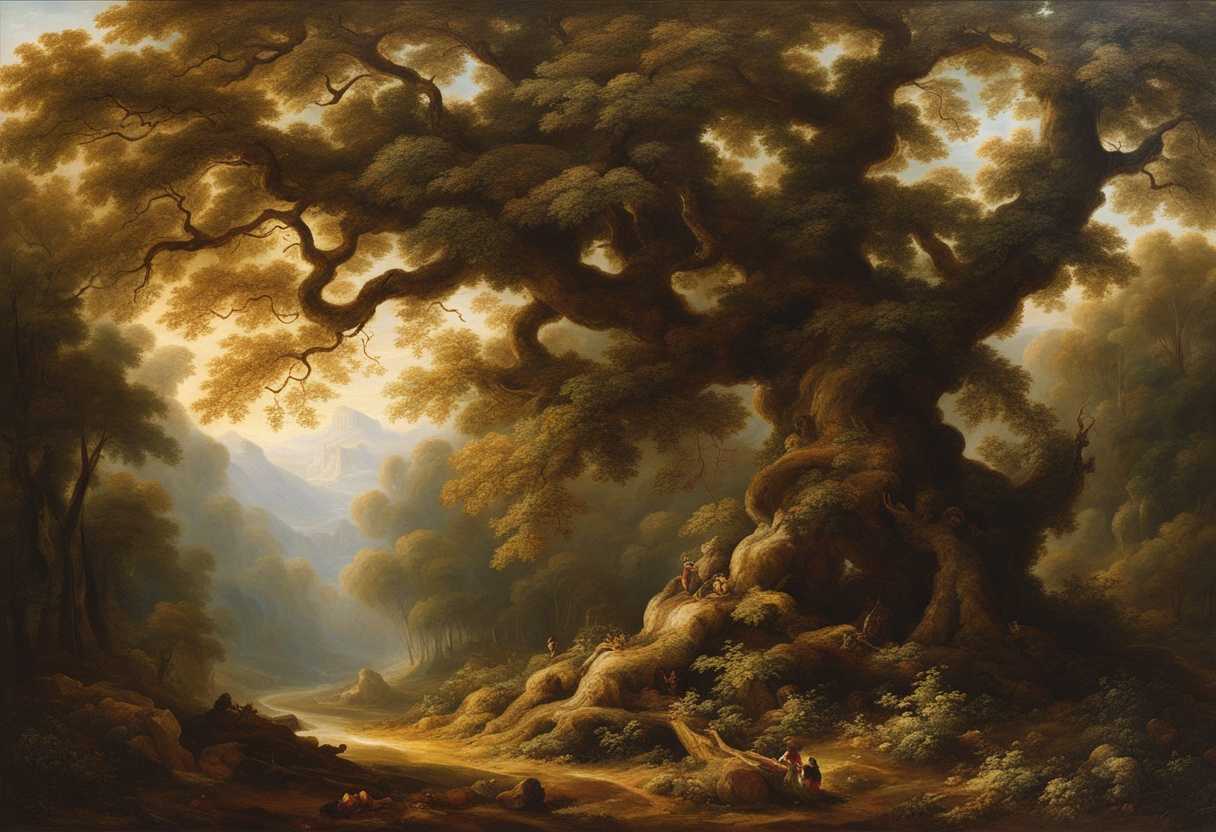
The True Meaning of Ezekiel 31
The book of Ezekiel was written by the prophet Ezekiel, who was a priest and a prophet during the Babylonian exile. He was among the first group of Israelites taken captive to Babylon in 597 BC, and he received his prophetic visions and messages while living in exile. Ezekiel delivers a powerful message about the fate of the mighty nation of Assyria in this chapter, using the analogy of a great cedar tree. The chapter foreshadows the downfall of Assyria, once a dominant force in the ancient Near East, and the subsequent rise of Babylon as the new regional power. Ezekiel’s words also serve as a warning to other nations, including Egypt, that their pride and arrogance will ultimately lead to their demise.
The chapter draws parallels to other biblical passages, such as the creation account in Genesis, where God establishes his sovereignty over all of creation. Ezekiel’s message reminds us that true power and greatness come from the Lord, and that those who exalt themselves will be humbled.
Ezekiel 31:1-9
God begins the passage in Ezekiel 31:1-9 with a proclamation, instructing the prophet Ezekiel to deliver a message to Pharaoh, the king of Egypt, and his multitudes. It describes Egypt as a great and powerful nation, symbolized as a majestic cedar tree in the forest, towering above all other trees. This comparison portrays the exalted status Egypt held among the nations of the ancient world. The height and grandeur of the cedar represent Egypt’s pride, strength, and influence.
The text goes on to depict how the cedar tree grew tall and its branches increased, highlighting the growth and expansion of Egypt’s territorial power and prosperity. Branches would reach to the heavens, symbolizing the nation’s lofty ambitions and achievements. It was a nation that flourished in wealth and influence, much like the cedar tree portrayed in this passage. However, despite its outward magnificence, the passage warns of a looming downfall for Egypt.
The imagery of the mighty tree being felled and cast down to the depths of the earth signals a dramatic and devastating fall from grace for Egypt. This collapse is attributed to God’s judgment, as He states that He will hand Egypt over to a mighty conqueror from the nations to deal with them according to their wickedness. This serves as a reminder of the biblical principle that pride precedes a fall and that no nation, no matter how powerful, is beyond the reach of God’s justice.
This passage serves as a cautionary tale not only for ancient Egypt but for all nations and individuals who exalt themselves in pride and disobedience to God. It emphasizes the transient nature of worldly power and the consequences of turning away from God’s ways. Throughout the Bible, there are numerous instances where proud nations or individuals faced divine judgment for their arrogance and unrighteousness. One notable example is the story of the Babylonian King Nebuchadnezzar in Daniel 4, who was brought low by God due to his pride but later humbled himself and acknowledged the sovereignty of God. Ezekiel 31:1-9 is a powerful reminder of the importance of humility, obedience, and acknowledging God’s sovereignty. It serves as a warning that no matter how mighty or exalted a nation appears to be, it is ultimately accountable to God and subject to His judgment. The passage encourages readers to reflect on their own lives and the state of their hearts, urging them to seek humility and righteousness before God.
Ezekiel 31:10-14
The verse in Ezekiel 31:10-14 describes the downfall of Egypt using the metaphor of the great cedar tree symbolizing Egypt’s pride and grandeur. Let’s break it down section by section:
Verse 10 states, “Therefore thus says the Lord GOD: ‘Because it is exalted in height, and has set its top among the thick boughs, and its heart is lifted up in its height…’” Here, the tall cedar tree represents Egypt, a nation that exalted itself in pride and arrogance. The imagery of the tree setting its top among the thick boughs can be seen as Egypt aligning itself with other powerful nations, seeking alliances and relying on its own strength rather than on God. This verse reflects the danger of pride and self-reliance, illustrating how nations, like individuals, can fall when they rely solely on their own power and forget to humble themselves before God. God declares His judgment upon Egypt in Verse 11, delivering it into the hand of a mighty one of the nations, who shall surely deal with it as God has driven it out for its wickedness. The ‘mighty one of the nations’ could refer to the Babylonians, whom God used as instruments of His judgment against Egypt due to their wickedness and pride. This passage highlights how God uses nations and individuals to carry out His divine plans and execute His justice on those who have strayed from His ways. It serves as a reminder that no nation is beyond God’s judgment, and He will hold them accountable for their actions.
Verse 12 continues, “Alien tyrants of the nations have cut it down and left it; its branches have fallen on the mountains and in all the valleys; its boughs lie broken by all the rivers of the land,” depicting the devastation brought upon Egypt. The ‘alien tyrants of the nations’ could refer to the Babylonians or other conquering nations who brought about Egypt’s downfall. The once majestic cedar tree, representing Egypt’s power and glory, is now broken and scattered, symbolizing the destruction and humiliation that befell Egypt as a consequence of its pride and sin. This serves as a cautionary tale about the consequences of arrogance and disobedience to God’s commands. All great nations made their home in its shadow, all the beasts of the field brought forth their young under its branches, and all the birds of the heavens made their nests in its boughs in Verses 13-14. ‘Thus it was beautiful in greatness and in the length of its branches, because its roots reached to abundant waters.’” These verses emphasize Egypt’s former greatness and influence, where other nations found shelter and prosperity under its protection. Egypt was once like a majestic tree providing shade and sustenance to many, but its roots, which represent its source of strength and prosperity, were shallow as they did not reach deep into God’s abundant waters of grace and mercy. This section underscores the importance of staying rooted in God’s Word and seeking His sustenance rather than relying on worldly power and alliances. The passage in Ezekiel 31:10-14 serves as a powerful reminder of the consequences of national pride, arrogance, and turning away from God. Egypt’s downfall is a cautionary tale for all nations and individuals, urging them to remain humble before God, seek His guidance, and not place their trust solely in their own strength. Any nation or person who strays from the path of righteousness can fall, just as the mighty cedar of Egypt did. This passage echoes themes found throughout the Bible, such as the fall of Babylon in Revelation 18:10 and the importance of humility in Proverbs 16:18, emphasizing the timeless message of God’s sovereignty and the consequences of disobedience.
Ezekiel 31:15-18
The verses in Ezekiel 31:15-18 speak about the downfall of Egypt and its ruler, Pharaoh. Verse 15 mentions how Egypt and all its inhabitants will go down to the realm of the dead. This is a stark reminder of the ultimate consequence of pride and arrogance. Egypt, once a mighty empire, is now facing its downfall due to its haughtiness and reliance on its own strength rather than on God. This is a timeless message that echoes throughout the Bible, highlighting the importance of humility and dependence on God rather than on worldly power and wealth.
Moving on to verse 16, it describes how the other nations and the trees of Eden envied Egypt before its fall. This imagery of the once majestic and flourishing tree being brought low serves as a cautionary tale against boasting in one’s own achievements. Egypt’s power and prosperity were admired by other nations, serving as a reminder that worldly success is fleeting and can crumble in an instant if not grounded in God. Verse 17 discusses the fate of Pharaoh and his multitude. Pharaoh is described as a great and mighty cedar with beautiful branches towering among the clouds. However, his downfall is imminent, and he will be brought down to the realm of the dead along with all those who followed him. This serves as a sobering reminder of the consequences of leadership that is marked by pride, arrogance, and a lack of reverence for God. Pharaoh’s story is a cautionary tale of the dangers of exalting oneself above God, a theme that reverberates throughout the Bible with examples such as King Nebuchadnezzar in Daniel 4 who faced similar consequences for his pride before ultimately humbling himself before God.
Lastly, in verse 18, the chapter concludes with the fate of Egypt being likened to that of Assyria, another powerful ancient empire that fell from grace. This comparison underscores the cyclical nature of history and the inevitable downfall of nations and rulers who reject God and rely solely on their own strength. It is a humbling reminder that no empire or leader is invincible without the grace and guidance of God. Ezekiel 31:15-18 serves as a powerful warning against pride, arrogance, and self-sufficiency. It reminds us of the importance of humility, dependence on God, and the transient nature of worldly power and success. The narratives of Egypt, Pharaoh, and other fallen empires in the Bible stand as poignant reminders of the consequences of turning away from God and placing our trust in earthly treasures rather than in the everlasting Kingdom of God.
After Ezekiel 31
The Lord spoke to me, saying, “Son of man, speak to Pharaoh king of Egypt and to his multitude: ‘Whom are you like in your greatness? Behold, Assyria was a cedar in Lebanon, with beautiful branches and forest shade, and of great height, its top among the clouds. But it was cut down by the mighty one, the terror of the nations, and was left to wither on the mountains. Now Pharaoh, you too will be brought low, for you are no greater than Assyria. Your pride and your lofty stature will be your downfall, for I will bring you crashing down, just as I did Assyria.”
The Lord’s words were a stark warning to Pharaoh. He made it clear that no nation, no matter how mighty, could stand against the power of the Almighty. Assyria had fallen, and now Pharaoh would face the same fate if he continued in his arrogance and defiance of God. This message was a sobering reminder that true greatness comes not from earthly power, but from humble submission to the will of the Lord. I knew as the prophet that I must deliver this warning to Pharaoh, for his very soul hung in the balance. The fate of his kingdom and his people depended on his response. Would he heed the Lord’s words and turn from his wicked ways? Or would he stubbornly refuse to listen, sealing his own destruction? The next chapter would reveal the answer, and I prayed that Pharaoh would have the wisdom to choose life.

Reverend Michael Johnson is an experienced Church Minister with a profound expertise in spirituality and guidance. With a serene presence and a compassionate heart, he has faithfully served his congregation for over 20 years, leading them on a spiritual journey towards inner peace and enlightenment. Reverend Johnson’s extensive knowledge of religious philosophies and profound understanding of human nature have made him a trusted confidant and mentor to many, as he seamlessly weaves his profound wisdom into life teachings. Reverend Johnson’s calming demeanor and empathetic nature continue to uplift and heal souls, nurturing a sense of unity and tranquility within his community.