
Ezekiel 31:10-14 is about God’s warning to the proud and mighty rulers of Egypt and Assyria, using the imagery of a majestic and once-glorious cedar tree that falls due to its pride, symbolizing the consequences of arrogance and reliance on worldly power instead of humility before God.
10 Therefore thus says the Lord God: Because it towered high and set its top among the clouds, and its heart was proud of its height,
11 I will deliver it into the hand of a mighty one of the nations. He shall surely deal with it as its wickedness deserves.
12 Foreigners, the most ruthless of nations, have cut it down and left it. On the mountains and in all the valleys its branches have fallen, and its boughs have been broken in all the ravines of the land, and all the peoples of the earth have gone away from its shadow and left it.
13 On its fallen trunk dwell all the birds of the heavens, and on its branches are all the beasts of the field.
14 All this is in order that no trees by the waters may grow to towering height or set their tops among the clouds, and that no trees that drink water may reach up to them in height. For they are all given over to death, to the world below, among the children of man, with those who go down to the pit.
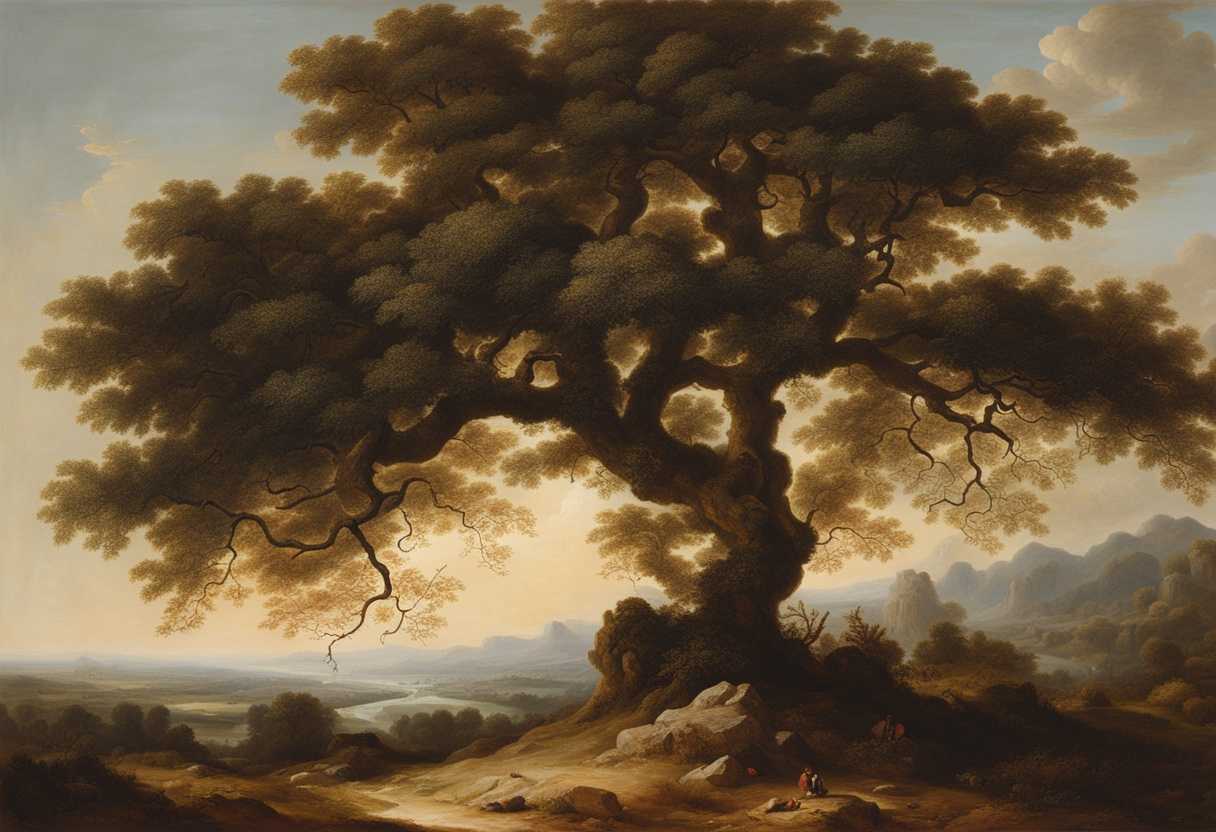
Setting the Scene for Ezekiel 31:10-14
In Ezekiel chapter 31, the prophet Ezekiel uses a powerful metaphor to convey a message from God. The scene is set in a lush and magnificent forest, with towering cedar trees representing the great and powerful nation of Egypt. These majestic trees symbolize the pride and arrogance of Egypt, which had grown to be a dominant force in the region.
Among the trees in this forest stand other nations, represented by various trees of different sizes and strengths. As Ezekiel describes the scene, he paints a vivid picture of the downfall of Egypt and its allies. The once towering cedar of Lebanon, representing Egypt’s Pharaoh, is brought down by God’s judgment, and the other nations are struck with fear and trembling at the sight of this mighty nation’s fall.
Ezekiel’s message serves as a warning to all nations, reminding them of the consequences of pride and arrogance. The scene is filled with tension and awe as the nations witness the power and sovereignty of God, who humbles the proud and exalts the humble. The imagery in this passage is rich and evocative, drawing the listeners into a vivid portrayal of God’s justice and righteousness.
What is Ezekiel 31:10-14 about?
A powerful image of God’s judgment on pride and arrogance is seen in this verse. Egypt, once a mighty and influential empire, is now humbled and brought low by God’s justice. It serves as a reminder that no power or status is too great to escape God’s judgment. When pride consumes a nation or an individual, it can lead to their downfall as they neglect humility and refuse to acknowledge their dependence on God.
Reflecting on this verse, we may ask ourselves, do we allow pride to cloud our judgment and distance us from God? Do we recognize the importance of humility and recognizing our limitations as humans? It prompts us to consider the consequences of unchecked pride and the importance of remaining humble before God. The verse reminds us of the need to approach life with a spirit of humility and gratitude, recognizing that all our achievements and strengths ultimately come from God.
Understanding what Ezekiel 31:10-14 really means
Ezekiel 31:10-14 paints a vivid picture of a once towering tree that symbolizes the pride and downfall of Egypt. The imagery of the tree reaching the clouds signifies the nation’s arrogance and desire to elevate itself above others. This passage serves as a cautionary tale against pride and self-exaltation, emphasizing the severe consequences of such attitudes before God. The heart of Egypt became swollen with pride, not just in its accomplishments but in its perceived superiority over other nations. Ultimately, God’s judgment is depicted as handing Egypt over to the ruler of the nations, a foreign power used as an instrument of divine justice to humble the proud nation.
In the broader biblical context, Ezekiel 31:10-14 aligns with other passages that warn against pride and its inevitable downfall. Proverbs 16:18 succinctly states, “Pride goes before destruction, a haughty spirit before a fall,” reinforcing the timeless truth that arrogance leads to ruin. Isaiah 2:12 and James 4:6 further emphasize God’s opposition to the proud and His favor towards the humble, underscoring the importance of humility in the eyes of the Lord.
The relevance of this passage extends to contemporary society, where self-promotion and success often breed pride. It serves as a poignant reminder of the dangers of arrogance and the necessity of humility in acknowledging God’s sovereignty. Individuals are encouraged to reflect on areas in their lives where pride may have taken root and to actively cultivate humility, placing trust in God rather than in their own achievements.
To illustrate the consequences of pride, consider the story of a successful businessperson who, consumed by their accomplishments, faced a sudden downfall when their company collapsed during a market crash. This anecdote mirrors the message of Ezekiel 31:10-14, highlighting how pride can lead to a fall and emphasizing the vital role of humility in our lives. It serves as a tangible reminder of the importance of remaining humble and reliant on something greater than ourselves.
In conclusion, Ezekiel 31:10-14 serves as a stark warning against pride, showcasing the repercussions of arrogance and advocating for humility before God. Readers are urged to introspect, identifying areas of pride in their lives, and actively striving to nurture humility, placing their trust in God’s wisdom and guidance. Let us heed this biblical admonition, embracing humility as a virtue that aligns us with God’s will and guards us against the pitfalls of pride.
How do we respond when pride leads to destruction?
When pride leads to destruction, it serves as a cautionary tale to remind us of the consequences of arrogance and self-centeredness. Ezekiel likens the downfall of a proud and mighty nation to the felling of a once majestic and towering tree in the passage. The imagery used in the verses portrays how even the most powerful and glorious entities can be brought low when consumed by pride. Ezekiel warns against allowing arrogance to blind us to our vulnerabilities by highlighting the swift and severe judgment that befalls the proud. Unchecked pride in our own accomplishments and abilities can lead us towards ruin, just as the pride of the great nation led to its downfall and destruction. The lesson here is a reminder to stay humble and cognizant of our limitations, rather than succumbing to the dangers of excessive pride.
Application
Reflect on Ezekiel 31:10-14. Let’s bow our heads in humility and let the power and beauty of God’s grace guide us. Examine your heart and actions, and be mindful not to elevate yourself above others. Walk with humbleness, honoring the Creator and His divine plan. Will you humble yourself and recognize God’s sovereignty in all you do?

Reverend Michael Johnson is an experienced Church Minister with a profound expertise in spirituality and guidance. With a serene presence and a compassionate heart, he has faithfully served his congregation for over 20 years, leading them on a spiritual journey towards inner peace and enlightenment. Reverend Johnson’s extensive knowledge of religious philosophies and profound understanding of human nature have made him a trusted confidant and mentor to many, as he seamlessly weaves his profound wisdom into life teachings. Reverend Johnson’s calming demeanor and empathetic nature continue to uplift and heal souls, nurturing a sense of unity and tranquility within his community.