
Sorry, could you provide the specific verse from Ezekiel 32:27 so that I can assist you better in interpreting its underlying meaning?
27 And they do not lie with the mighty, the fallen from among the uncircumcised, who went down to Sheol with their weapons of war, whose swords were laid under their heads, and whose iniquities are upon their bones; for the terror of the mighty men was in the land of the living.
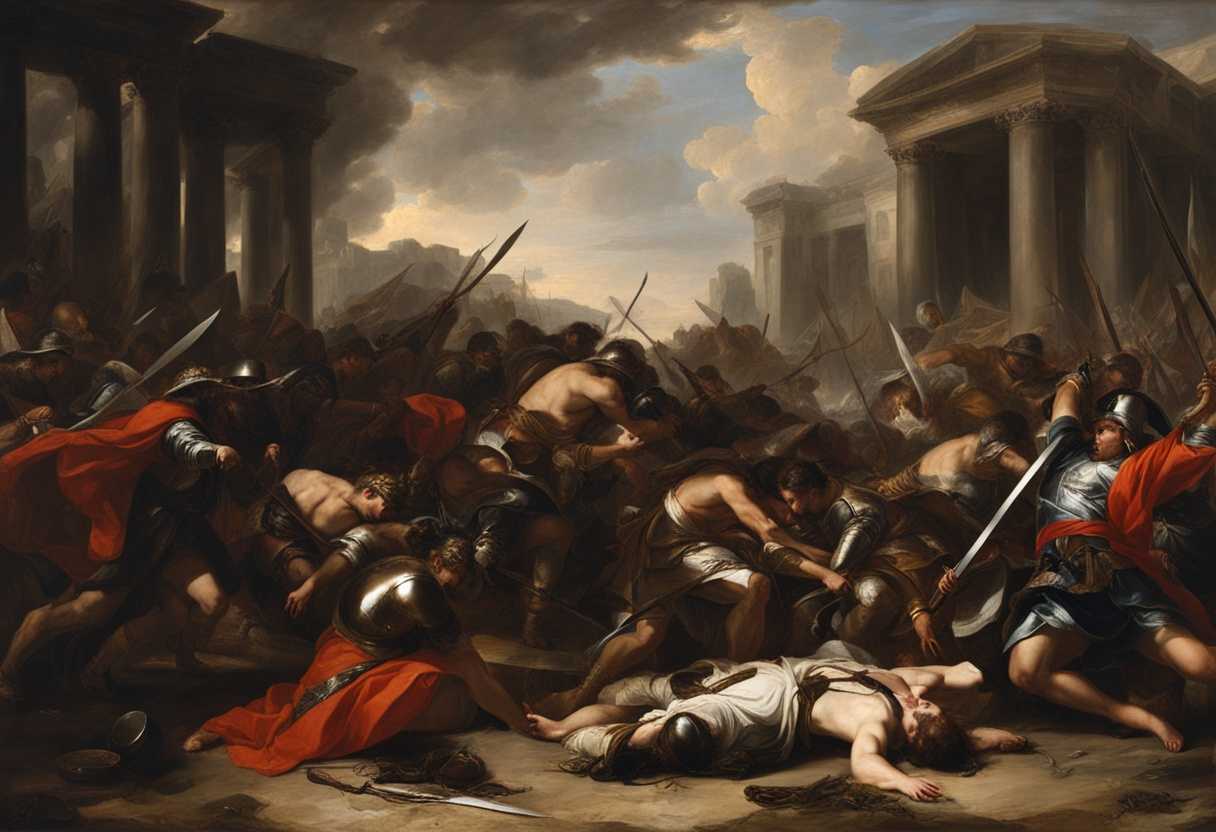
Setting the Scene for Ezekiel 32:27
In Ezekiel chapter 32, the prophet Ezekiel is delivering a message from God concerning the downfall of Egypt. The scene is set in a solemn and somber atmosphere, with Ezekiel standing before a group of exiled Israelites who have gathered to hear his prophecies. The Israelites have been taken captive by the Babylonians and are living in a foreign land, longing for their homeland and seeking guidance from their prophet.
Among the group are prominent figures such as King Jehoiachin and his court officials, who have been taken into exile along with many others from Jerusalem. The setting is a humble dwelling where the exiles have gathered to listen to Ezekiel’s words, seeking comfort and hope in the midst of their despair. The room is dimly lit by oil lamps, casting shadows on the faces of the weary exiles as they listen intently to Ezekiel’s prophetic warnings of judgment and destruction.
As Ezekiel speaks, his words echo off the walls of the room, carrying the weight of God’s judgment upon the nations. The exiles hang on his every word, knowing that only through repentance and turning back to God can they find redemption and restoration. The scene is one of tension and anticipation, as the exiles grapple with the harsh realities of their situation and the hope of a future promised by their faithful prophet.
What is Ezekiel 32:27 about?
This verse from the book of Ezekiel emphasizes the concept of divine judgment and justice. It speaks of how those who are wicked and engage in wrongdoing will eventually face the consequences of their actions. The imagery of being brought down to the depths of the earth symbolizes a harsh and final punishment for their deeds. It serves as a reminder that no one is above accountability and that ultimately, justice will prevail.
Have you ever pondered the idea of justice beyond earthly laws and consequences? This verse invites us to reflect on the concept of divine justice and the belief that there is a higher power that oversees all actions and brings about ultimate justice. It is a message that encourages us to lead a righteous life and to be mindful of our actions, knowing that there will be accountability for our choices. So, as we navigate our lives, let us remember that our actions have consequences, and strive to walk a path of righteousness and goodness.
Understanding what Ezekiel 32:27 really means
Ezekiel 32:27 is nestled within a poignant passage where the prophet Ezekiel mourns over Pharaoh and Egypt, a chapter that unfolds God’s judgment upon nations that have stood against Israel. The verse itself delves into the fate of formidable warriors who have succumbed to death, now resting in the grave alongside the uncircumcised, a term denoting those outside the covenant with God.
In parallel, Isaiah 14:9-11 echoes a sentiment of the fallen mighty, emphasizing the humbling of once-powerful figures. Revelation 20:12-13 shifts the focus to the final judgment and the resurrection, where all are held accountable for their deeds. Psalm 49:10-14, on the other hand, muses on the destiny shared by the wise and the foolish, emphasizing death as the great equalizer.
This verse resonates today as a stark reminder of mortality and the fleeting nature of earthly power and pride. It beckons us to embrace humility and prioritize our spiritual connection with God amidst a world that often exalts success and dominance.
Imagine a prosperous tycoon who amassed wealth and influence but neglected his spiritual well-being. Faced with a terminal illness, he realized the inadequacy of his earthly triumphs in the face of mortality. This epiphany spurred him to seek a deeper communion with God, recognizing that genuine peace and security stem from being in covenant with Him.
Delving into the phrase “lie with the uncircumcised,” we uncover a symbol of disgrace and spiritual estrangement from God. Circumcision symbolized the covenant with God in ancient Israel, hence lying with the uncircumcised signifies aligning with those outside this sacred bond. “Who have gone down to the grave” underscores the irrevocable finality of death, reminding us that regardless of earthly might, death levels all. “With their weapons of war” vividly illustrates the vanity of human power and military prowess, showcasing how even the most valiant warriors succumb to mortality, underscoring the ephemeral nature of human strength.
Reflecting on these insights, we are urged to embrace humility, acknowledge the certainty of death, and prioritize our spiritual relationship with God over transient worldly achievements.
Can our actions in life bring shame in death?
Yes, according to Ezekiel 32:27, our actions in life can bring shame in death. This verse underscores the idea that those who were mighty and renowned in life can be brought low in death, alongside those who go down to the pit. Individuals’ reputation and actions during their time on earth can impact how they are remembered and perceived after death.
The verse serves as a reminder that our actions and choices in life can have lasting consequences, even after we have passed away. It emphasizes the importance of living a life of integrity, humility, and righteousness, as how we live and treat others can ultimately shape our legacy and reputation in death. It ultimately encourages us to strive to make honorable and just choices to avoid the shame that may come in death as a result of our actions.
Application
Think about Ezekiel 32:27 as a mirror reflecting your commitment to faith. In our busy lives filled with work deadlines and family responsibilities, how often do we pause to strengthen our bond with God? Picture your life as a journey; every decision is a step towards a deeper connection with Him. Are you driven to live out His will daily and serve others with boundless love and compassion? What’s stopping you from rising to the challenge right now?

Reverend Michael Johnson is an experienced Church Minister with a profound expertise in spirituality and guidance. With a serene presence and a compassionate heart, he has faithfully served his congregation for over 20 years, leading them on a spiritual journey towards inner peace and enlightenment. Reverend Johnson’s extensive knowledge of religious philosophies and profound understanding of human nature have made him a trusted confidant and mentor to many, as he seamlessly weaves his profound wisdom into life teachings. Reverend Johnson’s calming demeanor and empathetic nature continue to uplift and heal souls, nurturing a sense of unity and tranquility within his community.