
Ezekiel 34:11-17 is about God’s compassionate care for His people, likened to a shepherd seeking out and tending to His flock with love, protection, and guidance.
11 “For thus says the Lord God: Behold, I, I myself will search for my sheep and will seek them out.
12 As a shepherd seeks out his flock when he is among his sheep that have been scattered, so will I seek out my sheep, and I will rescue them from all places where they have been scattered on a day of clouds and thick darkness.
13 And I will bring them out from the peoples and gather them from the countries, and will bring them into their own land. And I will feed them on the mountains of Israel, by the ravines, and in all the inhabited places of the country.
14 I will feed them with good pasture, and on the mountain heights of Israel shall be their grazing land. There they shall lie down in good grazing land, and on rich pasture they shall feed on the mountains of Israel.
15 I myself will be the shepherd of my sheep, and I myself will make them lie down, declares the Lord God.
16 I will seek the lost, and I will bring back the strayed, and I will bind up the injured, and I will strengthen the weak, and the fat and the strong I will destroy. I will feed them in justice.
17 “As for you, my flock, thus says the Lord God: Behold, I judge between sheep and sheep, between rams and male goats.
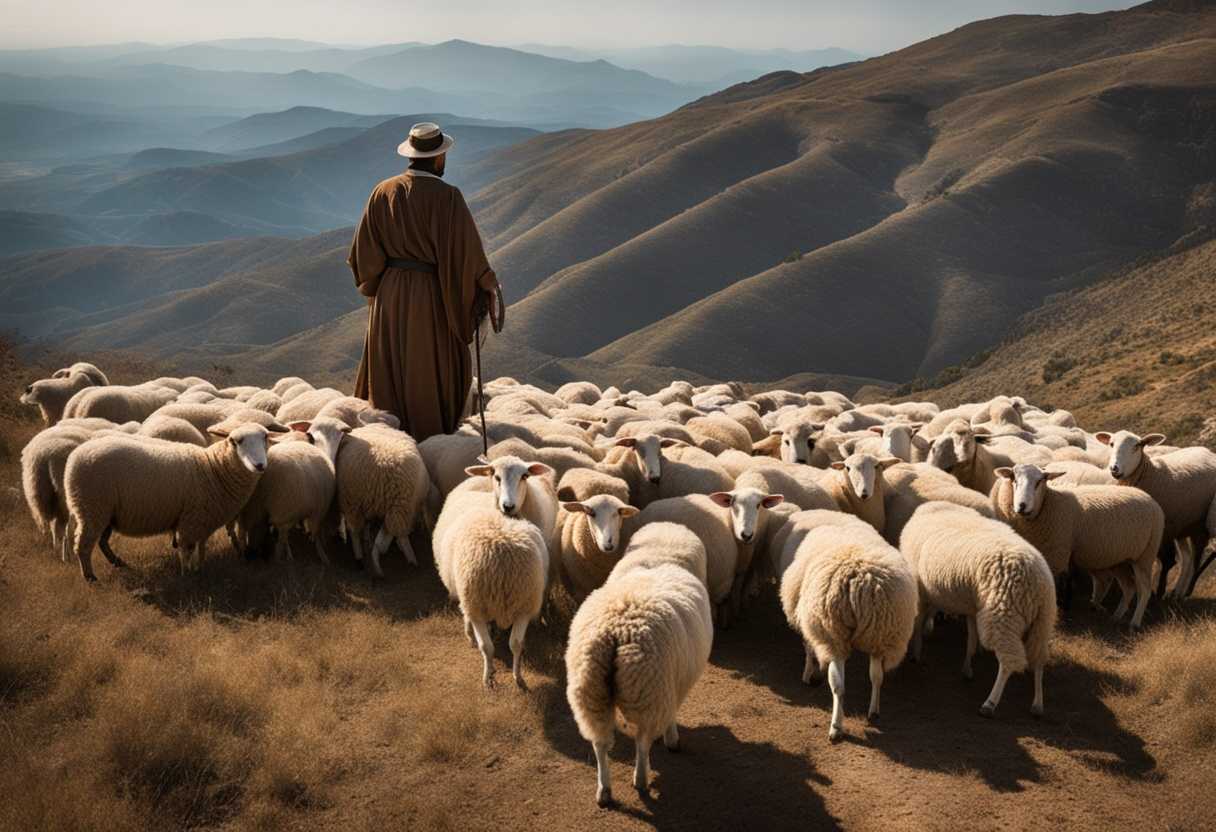
Setting the Scene for Ezekiel 34:11-17
In Ezekiel chapter 34, we find a powerful and poignant scene unfolding in the ancient land of Israel. The prophet Ezekiel, known for his vivid visions and messages from God, stands before a group of weary and scattered sheep. These sheep represent the people of Israel, who have been neglected and mistreated by their leaders, referred to as shepherds in the passage.
Ezekiel, chosen by God to deliver a message of hope and restoration, addresses the sheep with compassion and authority. He speaks of a new shepherd, one who will care for the flock with love and righteousness. The scene is set in a lush green pasture, with the sun shining down and a gentle breeze rustling through the grass. The sheep, once lost and vulnerable, now listen intently to Ezekiel’s words, finding solace in the promise of a brighter future.
As Ezekiel continues to speak, the sheep begin to gather closer, their eyes filled with hope and trust. The scene is a powerful reminder of God’s faithfulness and compassion towards His people, even in their darkest moments. Through Ezekiel’s message, the sheep are reminded of their worth and the unending love that their true shepherd, God, has for them.
What is Ezekiel 34:11-17 about?
How comforting it is to know that we have a shepherd in God who cares for us with such compassion and tenderness. Just like a shepherd diligently tends to their flock, God promises to seek out the lost and bring them back into His loving care. He will not rest until every single one of His children is safe and secure.
Imagine the gentleness and protection a shepherd provides for their sheep, guiding them to green pastures and still waters. This verse reminds us that God is our ultimate protector and provider, always ready to strengthen us when we are weak and lead us on the right path. Our shepherd God is constantly watching over us with unwavering love and dedication, so let us take comfort in knowing that we are never alone.
Understanding what Ezekiel 34:11-17 really means
In the book of Ezekiel, chapter 34, verses 11-17, we find a poignant message from God delivered through the prophet Ezekiel. This passage is situated within a larger prophecy where God addresses the failures of Israel’s leaders, who were meant to shepherd His people but had neglected and exploited them. In response to this dereliction of duty, God promises to take on the role of the shepherd Himself, demonstrating His personal involvement and care for His people.
“I myself will search for my sheep and look after them,” declares the Lord in Ezekiel 34:11. This statement underscores God’s intimate connection with His people, in stark contrast to the neglect shown by the human shepherds of Israel. The imagery of God actively seeking out His scattered flock conveys a profound sense of commitment to gathering His people from places of exile and distress, offering them hope and restoration.
Furthermore, God promises in verse 14 to pasture His people on the mountains of Israel, symbolizing abundant provision and safety under His watchful eye. This image of spiritual nourishment and security speaks to the deep care and protection that God provides for His children. Additionally, the assurance that God will bind up the injured and strengthen the weak showcases His healing and restorative power, reflecting His compassion and mercy towards those in need.
In Psalm 23:1-4, we encounter similar imagery of God as a shepherd, guiding and caring for His flock. This passage complements the themes found in Ezekiel 34:11-17, emphasizing the enduring nature of God’s shepherding care. In John 10:11-16, Jesus identifies Himself as the Good Shepherd, fulfilling the prophecy spoken through Ezekiel. Through His ministry, Jesus exemplifies the promises of care, restoration, and guidance outlined in Ezekiel 34.
The relevance of these themes of divine care, restoration, and guidance extends to people today. Just as God promised to care for the scattered and neglected people of Israel, He continues to extend His loving care to individuals in our modern world. Trusting in God’s provision and guidance remains crucial in navigating personal and communal challenges, finding solace in His promise to shepherd His people.
Consider the story of someone who felt lost and neglected but found hope and restoration through faith in God. This anecdote illustrates the transformative power of God’s care and guidance, mirroring the principles outlined in Ezekiel 34:11-17. It serves as a reminder of the profound impact of trusting in God’s shepherding care, even in the midst of life’s trials.
In conclusion, the message of Ezekiel 34:11-17 resonates with timeless truths of God’s unwavering care and restoration for His people. As we reflect on these words, may we find comfort in God’s promise to shepherd us, guiding us through life’s challenges with His loving hand. Let us trust in His provision and seek His guidance, knowing that He is the Good Shepherd who leads us beside still waters and restores our souls.
How can we model God’s care for His sheep?
God’s care for His sheep can be modeled as that of a loving and diligent shepherd. The shepherd in this passage searches for his scattered flock, gathering them from all the places where they were scattered. He rescues them from all the places where they were dispersed on a day of clouds and darkness. The shepherd tends to the weak, binds up the injured, feeds them with justice, and judges between the sheep. This model of care showcases God’s commitment to seeking out and providing for His people, ensuring their well-being and safety.
Furthermore, the shepherd in this passage not only cares for the physical needs of the sheep but also looks out for their spiritual well-being. He brings back the strays, binds up the injured, and strengthens the weak. This holistic care exemplifies God’s comprehensive love for His people, encompassing both their physical and spiritual needs. We can learn to approach others with compassion, empathy, and a desire to bring healing and restoration in all aspects of their lives by modeling this care. God’s care for His sheep reminds us of His unfailing love and faithfulness towards His people. We are called to embody this love and faithfulness in our relationships with others in the same way. We can strive to be diligent in seeking out the lost, caring for the weak, and providing for the needs of those around us by following the example of the shepherd in Ezekiel 34. This model of care serves as a powerful reminder of God’s enduring commitment to His people and inspires us to reflect that same care and compassion in our interactions with others.
Application
Imagine God as the boss who never stops looking out for each of us, His valued team members. Just as He seeks out the scattered, let’s find time to reach those in our lives—family, friends, or coworkers—who need our support. In a chaotic workplace and hectic family life, be the colleague or the parent who offers a shoulder and a hand. Show the same compassion that God shows to you. How will you step up and show love and care to someone today?

Reverend Michael Johnson is an experienced Church Minister with a profound expertise in spirituality and guidance. With a serene presence and a compassionate heart, he has faithfully served his congregation for over 20 years, leading them on a spiritual journey towards inner peace and enlightenment. Reverend Johnson’s extensive knowledge of religious philosophies and profound understanding of human nature have made him a trusted confidant and mentor to many, as he seamlessly weaves his profound wisdom into life teachings. Reverend Johnson’s calming demeanor and empathetic nature continue to uplift and heal souls, nurturing a sense of unity and tranquility within his community.