
Ezekiel 44:1-3 is about the holiness and exclusivity of the temple, symbolizing the need for purity and separation from sin in order to approach God.
Then he brought me back to the outer gate of the sanctuary, which faces east. And it was shut.
2 And the Lord said to me, “This gate shall remain shut; it shall not be opened, and no one shall enter by it, for the Lord, the God of Israel, has entered by it. Therefore it shall remain shut.
3 Only the prince may sit in it to eat bread before the Lord. He shall enter by way of the vestibule of the gate, and shall go out by the same way.
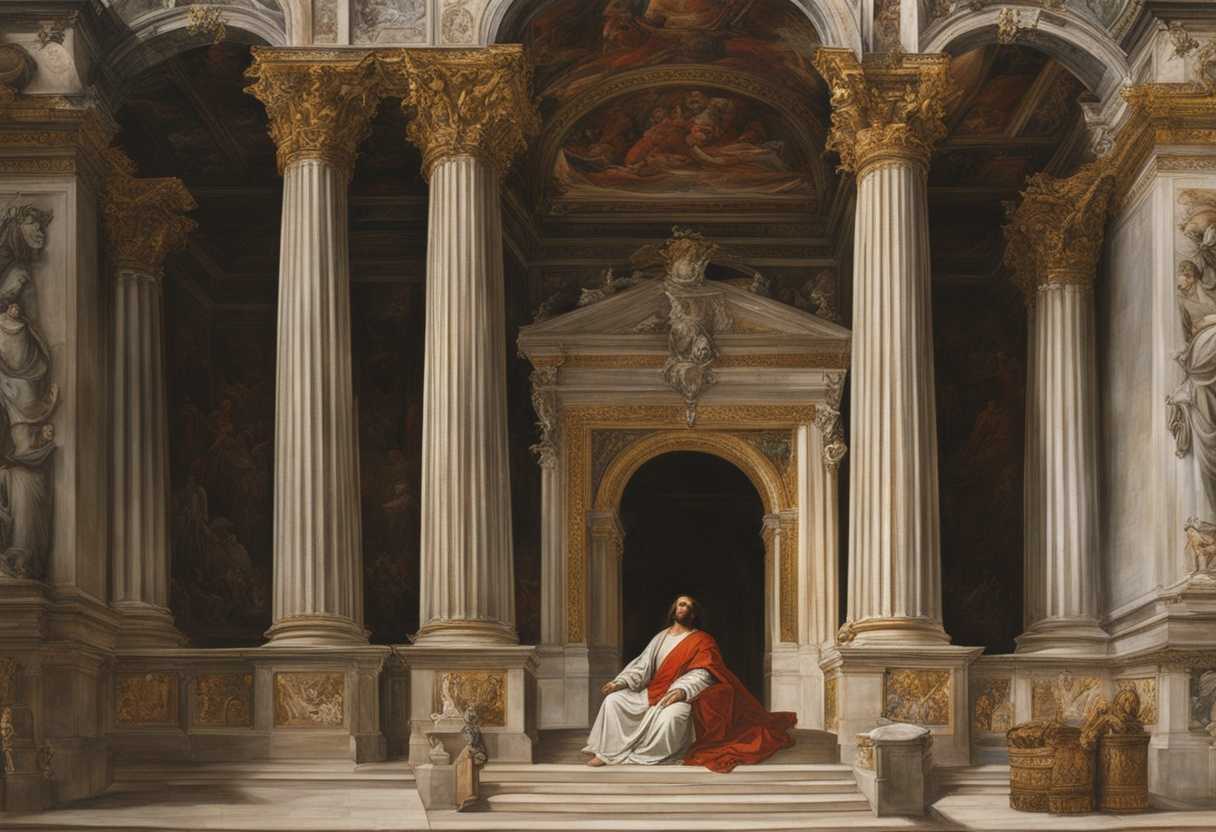
Setting the Scene for Ezekiel 44:1-3
In Ezekiel 44:1-3, the prophet Ezekiel finds himself standing at the eastern gate of the temple in Jerusalem. The gate had been closed for years as a sign of the departure of God’s glory from the temple due to the people’s disobedience. As Ezekiel stands there, he witnesses a powerful and awe-inspiring sight. The gate suddenly opens, and the glory of the Lord enters the temple once again, filling it with His presence.
Surrounding Ezekiel are the priests of the temple, who had been defiled by their idolatry and sin. They had been serving in the temple, but without the presence of God. Now, as the glory of the Lord returns, they are filled with awe and reverence. The scene is one of redemption and restoration, as God’s presence returns to dwell among His people.
The atmosphere is charged with a sense of holiness and reverence as Ezekiel and the priests witness this miraculous event. The temple, once desolate and abandoned, is now filled with the glory of the Lord. It is a powerful reminder of God’s faithfulness and His willingness to forgive and restore His people when they turn back to Him.
What is Ezekiel 44:1-3 about?
Imagine standing with Ezekiel at the eastern gate, looking upon its closed doors. The weight of God’s holiness and righteousness emanates from those sealed gates, and we can feel it in that moment. The closed gate serves as a powerful symbol of the separation between humanity and God due to sin. It challenges us to reflect on our own lives and the areas where we may need to repent and turn back to God.
Why is the gate closed? What must we do to open it? These questions arise as we contemplate the significance of this verse. It calls us to examine our own hearts and actions, recognizing the need for repentance and a return to God’s ways. The closed gate reminds us of the barriers that sin creates between us and God, urging us to seek reconciliation and restoration through sincere repentance. We should meditate on this image, consider how we can humble ourselves before God, seek forgiveness, and strive to live in alignment with His holiness.
Understanding what Ezekiel 44:1-3 really means
Written by the prophet Ezekiel during the Babylonian exile, the Book of Ezekiel delves into themes of judgment, restoration, and the presence of God. Within this context, Ezekiel 44:1-3 unfolds as part of a vision detailing the regulations for the use of the new temple. The mention of “the gate facing east” holds symbolic significance, representing the direction from which God’s glory enters the temple, often associated with new beginnings and divine intervention. The gate’s closure signifies the sanctity and exclusivity of God’s presence, reserved for divine purposes rather than common use. Additionally, the presence of the prince at the gate emphasizes a leader’s role as a mediator under divine authority.
In Ezekiel 43:4-5, the glory of the Lord entering the temple from the east reinforces the importance of the eastern gate. Similarly, Psalm 24:7-10 depicts gates lifting their heads for the King of Glory, symbolizing the entrance of God’s presence. Revelation 21:25-27 describes the eternal accessibility of God’s presence for the redeemed through the gates of the New Jerusalem, never shut to symbolize continuous communion with God.
The passage’s relevance today lies in its call for sanctity and reverence in approaching God. In a world that often overlooks the sacred, Ezekiel 44:1-3 reminds us to approach the divine with awe and respect. Furthermore, the prince’s unique access to the gate underscores the responsibility of leaders to maintain a close relationship with God, emphasizing the significance of spiritual integrity for those in positions of influence.
To illustrate the concept further, envision a small town with a historic church featuring a special door only opened on significant occasions. Just as the townspeople treat this door with reverence and anticipation, recognizing its importance, we are called to approach God with similar respect and acknowledge the significance of His presence in our lives. Ezekiel’s vision of the eastern gate serves as a poignant reminder of God’s holiness and the need for a reverent attitude towards Him, as well as the crucial role of spiritual integrity for leaders. Reflecting on this passage can deepen our appreciation for the sacred and inspire us to honor God’s presence in our daily lives.
How can we allow God to enter our hearts?
To allow God to enter our hearts, we must heed His call to open the gates that have been closed off from Him. We must be attentive to the state of our hearts and make the conscious decision to open them to God, just as Ezekiel was instructed to pay close attention to what was happening at the temple gate. We create space for His love, peace, and guidance to dwell within us by being aware of His presence and actively inviting Him in. We must be willing to remove any barriers that prevent God from entering in order to fully experience His presence in our hearts. This means letting go of pride, selfishness, doubt, and any other obstacles that hinder our relationship with Him. We can create a welcoming environment for God to enter and work within us by humbling ourselves and seeking His forgiveness and grace. We allow Him to transform our lives from the inside out as we surrender to His will and trust in His plans for us.
Application
Dear friend, let’s take a moment to ponder Ezekiel 44:1-3 and apply it to our own lives. Like the gate meant for the prince to embrace the divine, let’s keep our hearts receptive to the presence of God. This scripture prompts us to introspect and realign our spiritual path with God’s intentions. Will you join me in opening your heart to invite the Lord’s presence in?

Reverend Michael Johnson is an experienced Church Minister with a profound expertise in spirituality and guidance. With a serene presence and a compassionate heart, he has faithfully served his congregation for over 20 years, leading them on a spiritual journey towards inner peace and enlightenment. Reverend Johnson’s extensive knowledge of religious philosophies and profound understanding of human nature have made him a trusted confidant and mentor to many, as he seamlessly weaves his profound wisdom into life teachings. Reverend Johnson’s calming demeanor and empathetic nature continue to uplift and heal souls, nurturing a sense of unity and tranquility within his community.