
Ezekiel 48:1-7 is about the division of the land among the tribes of Israel, symbolizing the restoration and prosperity that God promises to His people.
1 These are the names of the tribes: Beginning at the northern extreme, beside the way of Hethlon to Lebo-hamath, as far as Hazar-enan (which is on the northern border of Damascus over against Hamath), and extending from the east side to the west, Dan, one portion.
2 And by the border of Dan, from the east side to the west, Asher, one portion.
3 “On the east side, the boundary shall run between Hauran and Damascus; along the Jordan between Gilead and the land of Israel; to the eastern sea and as far as Tamar. This is the east side.”
4 And by the border of Naphtali, from the east side to the west, Manasseh, one portion.
5 “Adjoining the territory of Manasseh, from the east side to the west, Ephraim, one portion.
6 “And alongside the portion set apart as the holy district, you shall assign for the property of the city an area five thousand cubits broad and twenty-five thousand cubits long. It shall belong to the whole house of Israel.
7 And alongside the territory of the priests, the Levites shall have an allotment 25,000 cubits in length and 10,000 in breadth. The whole length shall be 25,000 cubits and the breadth 20,000.
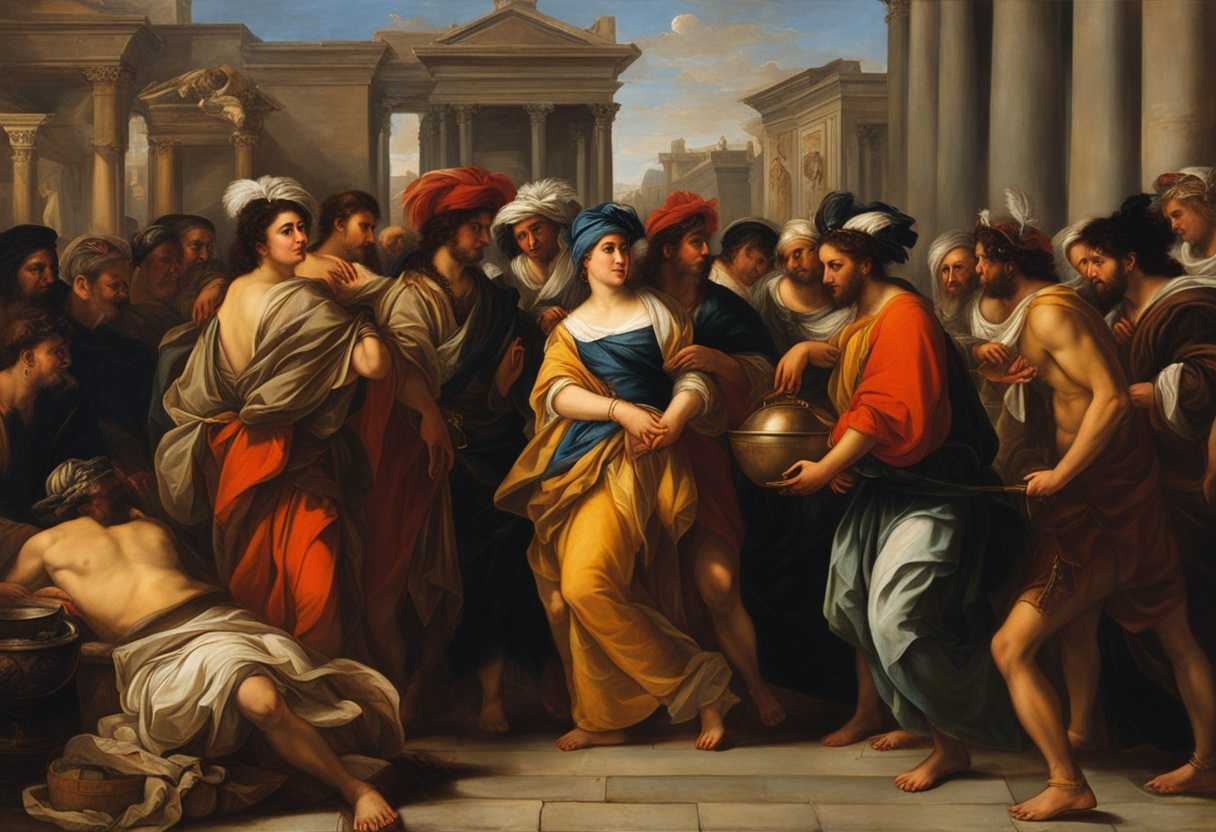
Setting the Scene for Ezekiel 48:1-7
In the scene described in Ezekiel 48:1-7, the prophet Ezekiel is standing before a group of Israelite leaders, including representatives from each of the twelve tribes. They have gathered together to hear Ezekiel’s vision of the future division of the land among the tribes of Israel. The setting is a large open space, possibly a courtyard or a meeting place within the city.
As Ezekiel begins to speak, the leaders listen intently as he describes how the land will be divided among the tribes, with specific portions allocated to each tribe according to their inheritance. The leaders are filled with anticipation and hope as they hear about the restoration and prosperity that awaits them in the promised land.
Surrounding the group are the walls of the city, which have been rebuilt and restored, symbolizing the renewal and revival of the nation of Israel. The sun is setting in the distance, casting a warm glow over the scene and adding to the sense of hope and promise for the future that Ezekiel’s vision brings to the people gathered before him.
What is Ezekiel 48:1-7 about?
Ezekiel 48:1-7 presents us with a vision of the future division of the land among the tribes of Israel. This passage illustrates the concept of fairness and equity in the allocation of resources among different groups. It symbolizes the importance of harmony and balance within a society, ensuring that every individual or group receives their rightful share.
Imagine a society where resources are distributed based on needs and communal well-being rather than individual gain. This vision in Ezekiel reminds us of the importance of justice and compassion in our interactions with others. It challenges us to reflect on how we can create a more equitable and inclusive world where everyone has access to the resources they need to thrive. Let us consider how we can work towards creating a society that values generosity, fairness, and unity as we contemplate the implications of this passage. Let us promote equality and justice in our communities by striving to emulate the principles outlined in Ezekiel, thus building a more harmonious and prosperous future for all.
Understanding what Ezekiel 48:1-7 really means
The Book of Ezekiel, filled with themes of restoration and hope, culminates in its final chapters with a detailed account of the division of the land among the tribes of Israel. These chapters hold significant importance as they not only provide a practical blueprint for the distribution of land but also symbolize the fulfillment of God’s promises to His people.
“Now these are the names of the tribes,” begins the detailed description of the tribal allotments, highlighting the foundational role of the twelve tribes of Israel in the nation’s history and spiritual identity. This enumeration echoes back to Genesis 49, where Jacob blesses his sons, laying the groundwork for the tribes’ destinies.
Moving from the northern border along specific landmarks, such as the road to Hethlon, the geographical markers in the division of land serve to define the boundaries of the Promised Land. This delineation harkens back to Numbers 34, where the borders of the land allotted to the Israelites are outlined, emphasizing the divine precision in fulfilling God’s covenant.
As each tribe receives its portion, we encounter the historical and spiritual significance of tribes like Dan, Asher, Naphtali, Manasseh, Ephraim, Reuben, and Judah. These portions not only represent physical inheritance but also carry the weight of each tribe’s unique journey, struggles, blessings, and prophecies spoken over them by their forebears.
The relevance of these tribal divisions extends to modern-day believers, reminding us of the themes of restoration, hope, unity, and diversity. Just as God faithfully apportioned the land to each tribe, we are encouraged to trust in His promises for our own lives, finding assurance in His unwavering faithfulness.
In reflecting on Ezekiel 48:1-7, may we find inspiration in the unity amidst diversity, the promise of restoration, and the faithfulness of God. Let us draw strength from the tribes’ inheritance and remember that just as each tribe had its portion, God has a unique plan and promise for each of us.
How can we create unity and harmony in community?
Unity and harmony in the community can be fostered by ensuring that each member of the community has their own place and role to play. Just like in a city where different tribes are allotted specific portions of the land, having a sense of belonging and purpose can help individuals feel valued and connected to the community as a whole. When each person knows their place and contributes positively, it can lead to a cohesive and harmonious environment.
Furthermore, establishing clear boundaries and guidelines can help prevent conflicts and misunderstandings within the community. Individuals can work together more effectively towards common goals by delineating responsibilities and respecting each other’s boundaries. When there is a shared understanding of expectations and mutual respect, it can create a framework for unity and cooperation among community members.
Lastly, fostering inclusivity and ensuring that all members of the community are heard and valued is essential for creating unity. Embracing diversity and promoting inclusivity can enrich the community with different perspectives and talents, just as various tribes were included in the division of the land in Ezekiel. A sense of unity and harmony can be cultivated within the community by acknowledging and celebrating the uniqueness of each individual.
Application
Dear friend, align your resources with purpose, just as the land was divided by God’s design in Ezekiel. Take stock of your time, talents, and treasures and invest them wisely. Let us be diligent custodians of all we have, following God’s will in our actions. Are we truly honoring our responsibilities in this journey of life?

Reverend Michael Johnson is an experienced Church Minister with a profound expertise in spirituality and guidance. With a serene presence and a compassionate heart, he has faithfully served his congregation for over 20 years, leading them on a spiritual journey towards inner peace and enlightenment. Reverend Johnson’s extensive knowledge of religious philosophies and profound understanding of human nature have made him a trusted confidant and mentor to many, as he seamlessly weaves his profound wisdom into life teachings. Reverend Johnson’s calming demeanor and empathetic nature continue to uplift and heal souls, nurturing a sense of unity and tranquility within his community.