
Ezekiel 48:31-34 is about the restoration and division of the land among the tribes of Israel in the future millennial kingdom, emphasizing the importance of God’s presence in the midst of His people.
31 The gates of the city shall be named after the tribes of Israel, three gates to the north: the gate of Reuben, the gate of Judah, and the gate of Levi.
32 And on the east side, four thousand five hundred cubits, and three gates, and the same measurements for the north side.
33 “And the south side shall be five thousand cubits by measure.”
34 The circumference of the city shall be 18,000 cubits. And the name of the city from that time on shall be, The Lord Is There.”
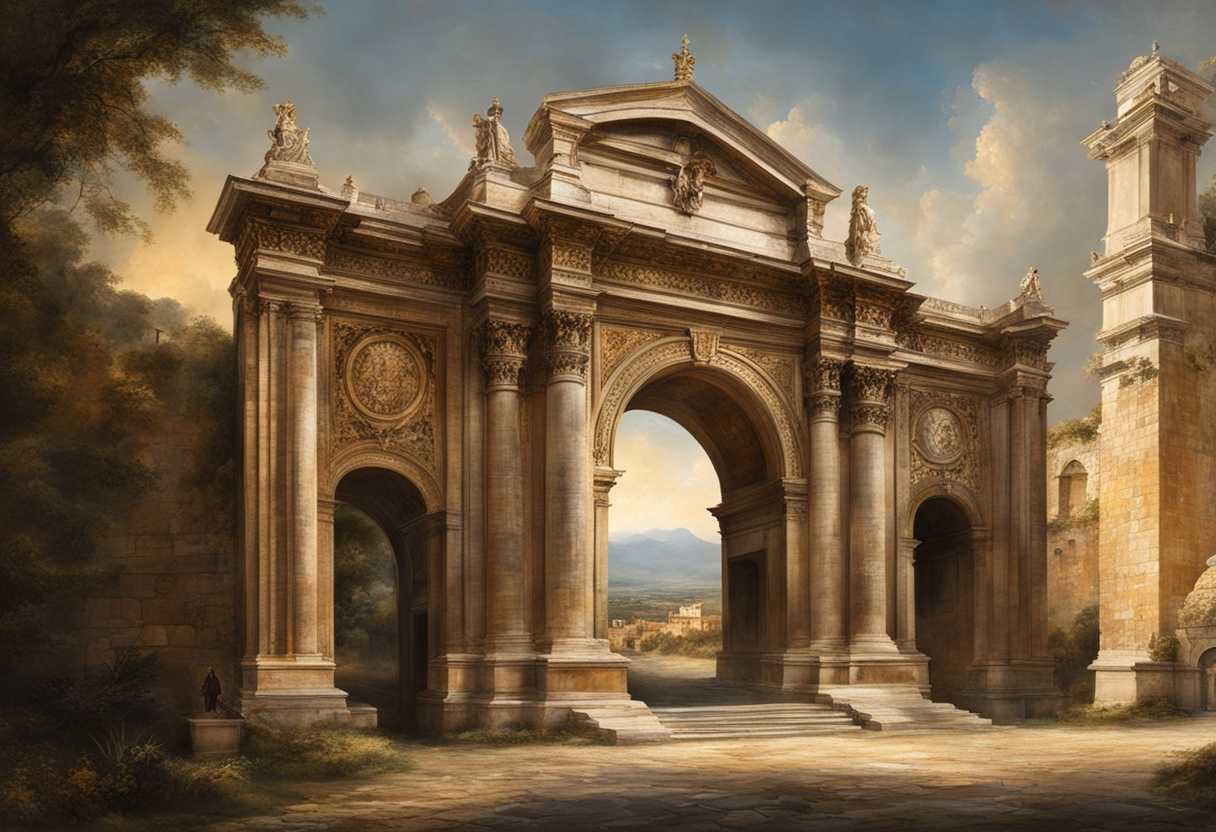
Setting the Scene for Ezekiel 48:31-34
In Ezekiel 48:31-34, the scene is set in the newly envisioned city of Jerusalem as described by the prophet Ezekiel. The city is divided into twelve portions, each named after one of the twelve tribes of Israel. In this particular scene, the focus is on the gates of the city, which are named after the twelve tribes. The gates serve as entrances and exits to the city, symbolizing the unity and representation of all the tribes coming together in worship and community.
The people present in this scene are representatives from each of the twelve tribes of Israel. They have gathered at the gates of the city to offer their worship and sacrifices to the Lord. The atmosphere is one of unity and reverence as the tribes come together in harmony, fulfilling the vision of Ezekiel for a restored and unified Israel. The surroundings are described as majestic and grand, with the gates adorned with the names of the tribes, signifying their importance and significance in the eyes of God.
As the people stand at the gates of the city, they are reminded of their heritage and the covenant that God made with their ancestors. The scene is a powerful symbol of unity and worship, as the tribes of Israel come together to honor and glorify the Lord in the newly established city of Jerusalem.
What is Ezekiel 48:31-34 about?
The description of the gates of the new Jerusalem in Ezekiel 48:31-34 signifies a sense of unity and coherence within the community of God’s people. Each gate is named after one of the twelve tribes of Israel, symbolizing the inclusivity and connection of all the descendants of Jacob. This imagery emphasizes the importance of every individual tribe and their role in the larger tapestry of God’s plan. We can ponder the idea of diversity and unity coexisting harmoniously as we reflect on this verse. We too bring our own distinctiveness to the larger community, just as each tribe has its unique identity and characteristics. The naming of the gates after the tribes serves as a reminder of the value of every individual within the collective body of believers. It prompts us to consider how we can embrace our differences while working together towards a common purpose, much like the distinct gates that lead to the unified city of God.
Understanding what Ezekiel 48:31-34 really means
Ezekiel 48:31-34 paints a vivid picture of the gates of the New Jerusalem, each bearing the name of one of the tribes of Israel. This imagery is not merely symbolic but carries profound significance in understanding God’s plan for His people. It is part of Ezekiel’s vision of a restored land and temple, symbolizing the presence of God and the fulfillment of His promises throughout history.
In Revelation 21:12-13, a similar depiction of the New Jerusalem with twelve gates named after the tribes of Israel reinforces the continuity of God’s plan from the Old to the New Testament. This connection highlights the consistency of God’s covenant with His people across time, emphasizing His unchanging faithfulness. Looking back at Genesis 49 and Numbers 2 provides additional context on the significance of the tribes of Israel and their positioning around the Tabernacle, showcasing God’s order and presence among His chosen people.
The naming of the gates after the tribes of Israel speaks to the unity and diversity within God’s people. Each tribe had its unique characteristics and role, yet all were integral parts of God’s covenant community. This inclusivity assures believers of their place in God’s eternal kingdom, emphasizing the human need for belonging and identity. The detailed description of the gates symbolizes the fulfillment of God’s promises, offering hope and assurance that He is faithful to His word.
Imagine a family reunion where every member, despite their differences, is welcomed and celebrated. Each person has a unique story and contribution, yet they all belong to the same family. This analogy mirrors the vision of the New Jerusalem, where every tribe has a gate, symbolizing their place in God’s eternal family. The equal distribution of gates around the city signifies accessibility and inclusiveness, welcoming people from all directions and backgrounds into God’s kingdom.
“The gates of the city shall be named after the tribes of Israel” underscores the importance of each tribe in God’s plan, regardless of their past failures and differences. The distribution of gates on all sides of the city emphasizes the inclusiveness of God’s kingdom, where people from every corner are welcomed. The proclamation that “THE LORD IS THERE” encapsulates the essence of the vision, assuring believers of God’s perpetual presence and the ultimate fulfillment of His promise to dwell among His people.
Ezekiel 48:31-34 offers a profound vision of hope, unity, and fulfillment. It reminds us of our place in God’s eternal kingdom, highlighting His inclusiveness and faithfulness. This passage encourages us to live with the assurance that we are part of God’s grand design, welcomed and valued in His eternal family.
How can we align our lives with God’s perfect plan?
To align our lives with God’s perfect plan as described in Ezekiel 48:31-34, we must first seek a deep understanding of God’s will through prayer, meditation, and studying His Word. We can gain wisdom and insight into the specific ways God wants us to live our lives by immersing ourselves in scripture and seeking guidance through prayer. This active pursuit of God’s will allows us to discern His plan and make decisions that are in alignment with His desires for us.
Additionally, we can align our lives with God’s perfect plan by surrendering our own will and submitting to His authority. This requires humility, obedience, and a willingness to follow God’s leading even when it may not align with our own desires or understanding. We can navigate life’s challenges with faith and confidence in God’s wisdom and sovereignty, trusting that His plan is ultimately for our good and His glory.
Furthermore, living in alignment with God’s perfect plan involves actively seeking to live out His principles of love, justice, mercy, and compassion in our everyday interactions and decisions. We can be vessels of His light and love to those around us by reflecting God’s character in our words and actions, fulfilling our purpose to bring glory to Him in all that we do.
Application
Embrace the power of worship and unity portrayed in Ezekiel 48:31-34. Allow these verses to inspire you to connect with your spiritual community, similar to the tribes of Israel gathering at the temple. Nurture bonds with your church family, fostering a culture of togetherness and reverence. Will you pledge to engage wholeheartedly in worship and fellowship, mirroring the teachings from Ezekiel?

Reverend Michael Johnson is an experienced Church Minister with a profound expertise in spirituality and guidance. With a serene presence and a compassionate heart, he has faithfully served his congregation for over 20 years, leading them on a spiritual journey towards inner peace and enlightenment. Reverend Johnson’s extensive knowledge of religious philosophies and profound understanding of human nature have made him a trusted confidant and mentor to many, as he seamlessly weaves his profound wisdom into life teachings. Reverend Johnson’s calming demeanor and empathetic nature continue to uplift and heal souls, nurturing a sense of unity and tranquility within his community.