
Ezekiel 4:4-8 is about Ezekiel symbolically acting out the siege of Jerusalem in order to represent the consequences of Israel’s disobedience and the severity of God’s judgment on the nation.
4 Then lie on your left side, and place the punishment of the house of Israel upon it. For the number of the days that you lie on it, you shall bear their punishment.
5 For I assign to you a number of days, 390 days, equal to the number of the years of their punishment. So long shall you bear the punishment of the house of Israel.
6 And when you have completed these, you shall lie down a second time, but on your right side, and bear the punishment of the house of Judah. Forty days I assign you, a day for each year.
7 And you shall set your face toward the siege of Jerusalem, with your arm bared, and you shall prophesy against the city.
8 And behold, I will put cords upon you, so that you cannot turn from one side to the other, till you have completed the days of your siege.
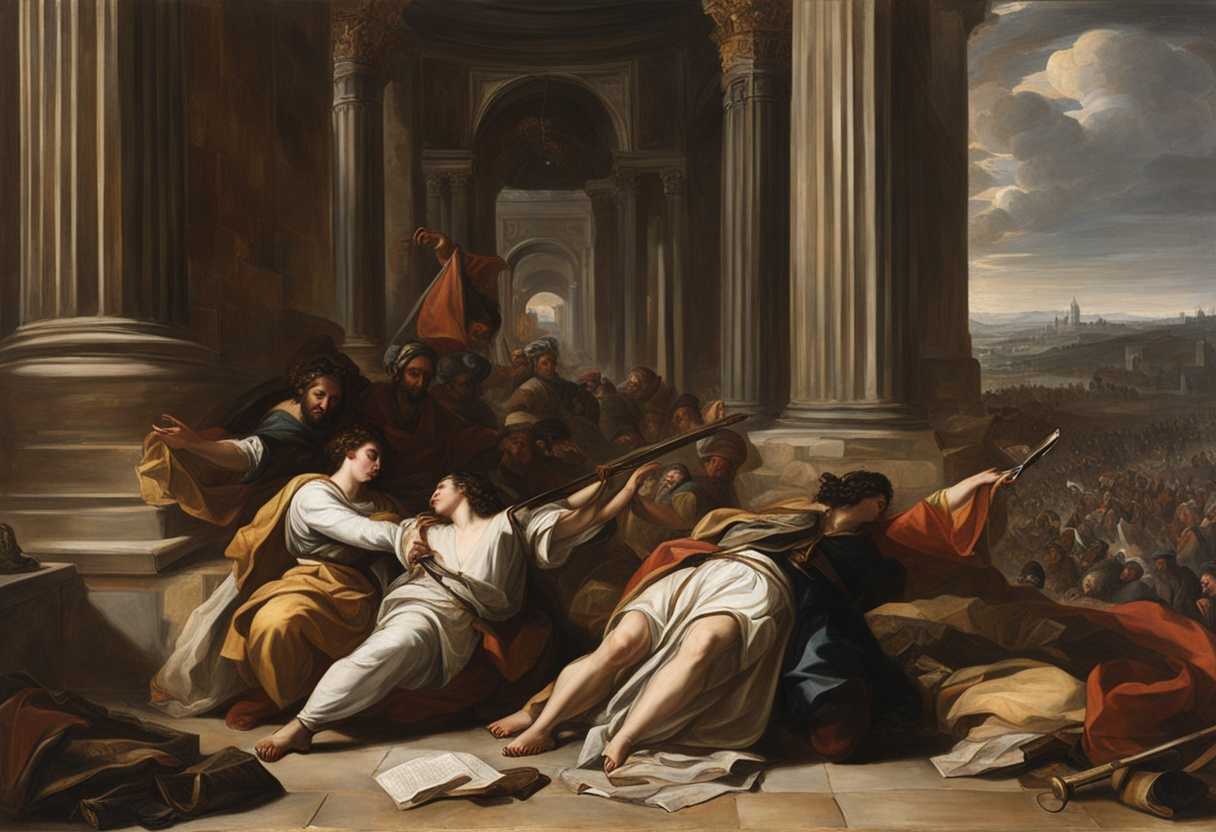
Setting the Scene for Ezekiel 4:4-8
In Ezekiel 4:4-8, the prophet Ezekiel is commanded by God to act out a symbolic representation of the siege of Jerusalem. The scene is set in a desolate place, representing the desolation that will come upon Jerusalem due to its disobedience and sin. Ezekiel is alone, with only God’s instructions guiding him.
Ezekiel is instructed to take a brick and portray the city of Jerusalem on it. He then sets up an iron pan as a wall between himself and the brick, symbolizing the siege walls that will surround Jerusalem. Ezekiel is to lie on his left side for 390 days, representing the years of punishment for the house of Israel, and then on his right side for 40 days, representing the years of punishment for the house of Judah.
The scene is solemn and heavy with the weight of impending judgment. Ezekiel’s obedience to God’s command serves as a powerful visual reminder of the consequences of disobedience and the faithfulness of God to fulfill His word. The desolation and isolation of the setting mirror the spiritual condition of the people Ezekiel is called to prophesy to, urging them to repent and turn back to God before it is too late.
What is Ezekiel 4:4-8 about?
Imagine standing beside Ezekiel as he performs dramatic acts to convey a powerful message to the people of Jerusalem. Ezekiel in this verse is engaging in a symbolic portrayal of the impending siege that the city will face as a consequence of their disobedience and sin. He is grabbing the attention of the people and emphasizing the severity of the situation they are in by physically acting out the siege.
Have you ever felt a message so urgent that you needed to visually demonstrate it to ensure it was understood? Ezekiel’s actions serve as a vivid warning to the people about the consequences of their actions and the judgment that awaits them if they do not repent. This verse conveys the depth of Ezekiel’s commitment to delivering God’s message, even if it means using unconventional methods to get through to the people he is trying to reach. Let us consider the significance of using creative and bold ways to convey important messages as we reflect on this verse. Are we willing to go to great lengths to communicate the truth and warn others about the consequences of their actions? We may also be inspired to find impactful ways to share messages of truth and righteousness with those around us, just as Ezekiel acted out the siege of Jerusalem to convey a message of impending judgment.
Understanding what Ezekiel 4:4-8 really means
In the book of Ezekiel, we encounter a profound and symbolic act that the prophet is called to perform by God. Ezekiel, living during the Babylonian exile, is tasked with conveying divine messages to the Israelites through actions that carry deep meaning. One such act is described in Ezekiel 4:4-8, where he is instructed to lie on his side, bearing the iniquity of both Israel and Judah. This symbolic gesture serves as a visual representation of the burden of sin that the nations have carried due to their disobedience towards God.
The key phrases in these verses hold significant meanings that shed light on the gravity of Ezekiel’s actions. By lying on his left side, Ezekiel symbolically takes upon himself the sins of the people of Israel, signifying the weight of their transgressions. Each day he remains in this position represents a year of Israel’s sin, emphasizing the prolonged period of their rebellion against God. Furthermore, when instructed to lie on his right side to bear the sins of Judah, it underscores the accountability of both kingdoms for their disobedience.
This act of Ezekiel being tied up and unable to turn from one side to the other until the designated time is completed signifies the inevitability of God’s judgment. It serves as a stark reminder of the consequences of prolonged disobedience and the inescapable nature of divine justice. The parallelism between Ezekiel’s symbolic act and other biblical passages, such as Isaiah 53:4-5 and Lamentations 1:14, further emphasizes the theme of bearing the burden of sin and the suffering that accompanies it.
The relevance of Ezekiel’s actions extends to people today, prompting us to reflect on the weight of sin in our lives and communities. Just as Ezekiel interceded for Israel and Judah, we are called to intercede for others, bearing their burdens through prayer and support. This symbolic act also points to the hope of redemption through repentance and God’s mercy, reminding us that despite judgment, there is always room for forgiveness and transformation.
To illustrate the impact of bearing the burdens of others, consider a community leader who immerses themselves in the struggles of the marginalized to advocate for change. This act of solidarity and empathy mirrors Ezekiel’s symbolic gesture, inspiring action and compassion in the hearts of those witnessing it. In conclusion, Ezekiel 4:4-8 serves as a poignant reminder of the consequences of sin, the significance of intercession, and the promise of redemption. It challenges us to examine our own lives, seek forgiveness, and extend support to others on their spiritual journeys.
How will we respond to God’s call?
We respond to God’s call by being obedient and following His instructions. We are called to listen to God’s voice and act accordingly, just as the prophet Ezekiel was given specific tasks to carry out in obedience to God’s will. This may involve difficult or challenging actions, but our trust and faith in God should be unwavering.
When we respond to God’s call, we show our commitment and dedication to Him. We demonstrate our faith by being willing to step out in obedience, even when the tasks seem unusual or difficult. We allow God to work through us and accomplish His purposes by following His guidance. Our obedience to God’s call is a reflection of our love for Him and our desire to serve Him wholeheartedly.
Application
Just like Ezekiel followed God’s commands, let’s show our commitment to our values in all we do. Let’s stay steadfast in our faith, even when things get tough. Will you stand strong in your beliefs and actions today?

Reverend Michael Johnson is an experienced Church Minister with a profound expertise in spirituality and guidance. With a serene presence and a compassionate heart, he has faithfully served his congregation for over 20 years, leading them on a spiritual journey towards inner peace and enlightenment. Reverend Johnson’s extensive knowledge of religious philosophies and profound understanding of human nature have made him a trusted confidant and mentor to many, as he seamlessly weaves his profound wisdom into life teachings. Reverend Johnson’s calming demeanor and empathetic nature continue to uplift and heal souls, nurturing a sense of unity and tranquility within his community.