
Ezekiel 6:1-7 is about God’s declaration of judgment against the idolatrous practices of the ancient Israelites and His promise to bring consequences for their unfaithfulness.
1 The word of the Lord came to me:
2 And the word of the Lord came to me:
3 and say, You mountains of Israel, hear the word of the Lord God! Thus says the Lord God to the mountains and the hills, to the ravines and the valleys: Behold, I, even I, will bring a sword upon you, and I will destroy your high places.
4 Your altars shall become desolate, and your incense altars shall be broken, and I will cast down your slain before your idols.
5 And I will lay the dead bodies of the people of Israel before their idols, and I will scatter your bones around your altars.
6 In all your dwelling places the cities shall be laid waste, and the high places shall be desolate, so that your altars will be laid waste and made desolate, your idols broken and destroyed, your incense altars cut down, and your works wiped out.
7 And the slain shall fall in your midst, and you shall know that I am the Lord.
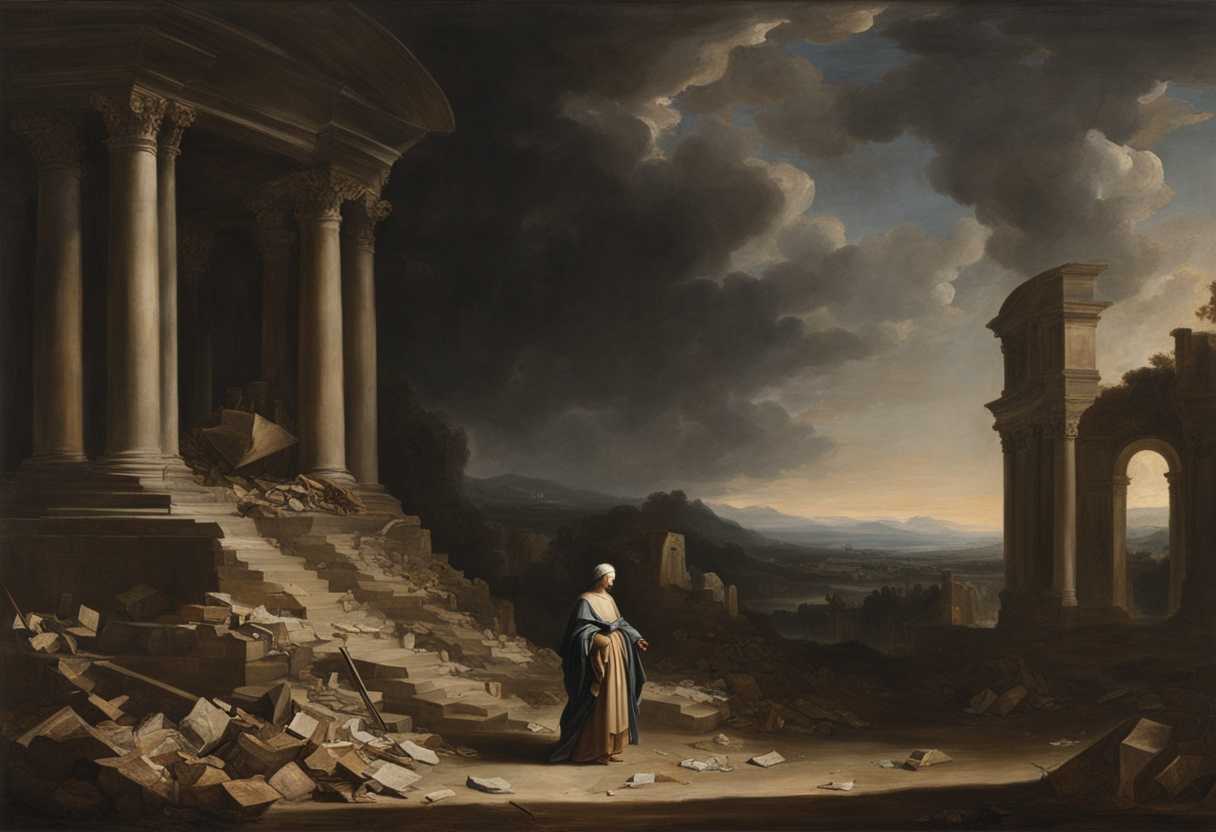
Setting the Scene for Ezekiel 6:1-7
The scene in Ezekiel 6:1-7 takes place in the ancient land of Israel, specifically in the mountains and hills where the people of Judah have gathered to worship their idols. The prophet Ezekiel, a chosen messenger of God, stands amidst the people, delivering a powerful message of judgment and warning. The atmosphere is tense, as Ezekiel’s words are filled with sorrow and urgency, urging the people to repent and turn away from their idolatrous ways.
The people surrounding Ezekiel are a mix of priests, elders, and common folk, all of whom have been drawn to the mountains to offer sacrifices to their false gods. They have strayed far from the path of righteousness, forsaking the one true God for idols made of wood and stone. Ezekiel’s presence among them is a stark reminder of their transgressions and the impending consequences if they do not heed his words.
As Ezekiel speaks, his voice echoes through the valleys and hills, carrying the weight of divine judgment. The people listen in silence, some with fear and others with defiance. The scene is set against a backdrop of rugged terrain, with the sun setting in the distance, casting long shadows over the gathered crowd. It is a moment of reckoning, a pivotal point in the history of the people of Judah, as they stand at a crossroads between repentance and destruction.
What is Ezekiel 6:1-7 about?
A powerful message about the consequences of idolatry and disobedience is seen in this verse. The imagery of mountains being destroyed and altars left desolate conveys a sense of destruction and abandonment. Think about how significant mountains are in nature – their strength and majesty. The idea of them being destroyed symbolizes the complete upheaval and devastation that comes when we turn away from God and worship other things. It serves as a stark warning of the repercussions of placing our faith and devotion in anything other than the one true God.
But amidst this destruction, there is a silver lining – the survivors will know that God is the Lord. This shows that even in the midst of judgment and chaos, there is still room for redemption and realization. It is a reminder that God’s ultimate goal is not to punish or destroy, but to bring His people back to Him. The survivors who witness the consequences of idolatry will come to a profound understanding of the sovereignty and power of God. It is a call to reflection and repentance, urging us to examine our own hearts and ensure that our worship is directed towards the One who truly deserves it.
Understanding what Ezekiel 6:1-7 really means
In the book of Ezekiel, we find a prophet speaking during the Babylonian exile, delivering messages of judgment and warning to the people of Israel. The passage in Ezekiel 6:1-7 is a poignant reflection of God’s response to Israel’s idolatry and unfaithfulness. As we delve into this text, we are confronted with the gravity of sin and the call to repentance that echoes through the ages.
As Ezekiel is instructed to “set your face toward the mountains of Israel,” we see a symbolic gesture towards addressing the entire nation. The mountains, often seen as symbols of stability and permanence, represent the enduring nature of God’s judgment. The impending doom is vividly portrayed as God declares, “I will bring a sword against you,” signifying the imminent consequences of their disobedience.
The desolation of altars and the destruction of idols underscore the severity of God’s judgment. The once-holy places of worship become desolate, highlighting the end of idolatry and the powerlessness of false gods. This imagery serves as a stark reminder of the futility of placing anything above the one true God.
Drawing parallels from related biblical passages such as Deuteronomy 12:2-3, Jeremiah 19:4-5, and Isaiah 2:18, we see a consistent theme of God’s demand for exclusive worship and the dire consequences of idolatry. These passages reinforce the timeless message of God’s sovereignty and the need for repentance.
In our modern context, idolatry may not manifest in the form of physical idols but can take on subtler forms such as materialism or career obsession. The call to repentance, echoed through Ezekiel’s prophecy, urges us to examine our lives and realign our priorities with God at the center.
Consider a scenario where someone prioritizes their career above all else, neglecting their relationships and spiritual well-being. When faced with a crisis like losing their job, they are forced to reassess their values and priorities. This anecdote mirrors the wake-up call presented in Ezekiel, prompting us to reflect on our own lives and ensure that we are not veering off course.
In conclusion, Ezekiel 6:1-7 serves as a poignant reminder of the consequences of straying from God’s path and the importance of maintaining a faithful relationship with Him. Let us heed the call to repentance, examining our hearts and removing any idols that hinder our devotion to the one true God.
How can we ensure our worship is sincere?
To ensure that our worship is sincere, we must truly understand and believe in the greatness and holiness of God. When we recognize God’s majesty and acknowledge His sovereignty over all creation, our worship becomes more genuine and heartfelt. We should approach our worship with reverence and awe, knowing that we are coming before the Almighty God who deserves our adoration and praise.
Additionally, sincerity in worship requires us to align our actions and intentions with our beliefs. It is not enough to go through the motions of worship without truly engaging our hearts and minds. We must worship God with genuine love and devotion, offering Him our whole selves in adoration and thanksgiving. This authentic worship stems from a deep relationship with God and a desire to honor Him in all that we do. Our worship should characterize humility and gratitude. When we approach God with a humble and grateful heart, we demonstrate our dependence on Him and recognize His goodness and grace in our lives. Sincere worship flows from a heart that is grateful for the blessings and salvation that God has provided, leading us to praise Him with sincerity and joy.
Application
Reflect on Ezekiel 6:1-7 – are idols hindering your spiritual journey? It’s time to break free from distractions and renew your devotion to God. Take a moment to declutter your heart and mind, removing any barriers to a deep connection with your Heavenly Father. Let’s dismantle the idols in our lives, allowing God’s light to shine through without obstruction. Will you make room for true worship and honor in your life?

Reverend Michael Johnson is an experienced Church Minister with a profound expertise in spirituality and guidance. With a serene presence and a compassionate heart, he has faithfully served his congregation for over 20 years, leading them on a spiritual journey towards inner peace and enlightenment. Reverend Johnson’s extensive knowledge of religious philosophies and profound understanding of human nature have made him a trusted confidant and mentor to many, as he seamlessly weaves his profound wisdom into life teachings. Reverend Johnson’s calming demeanor and empathetic nature continue to uplift and heal souls, nurturing a sense of unity and tranquility within his community.