
Ezekiel 7:19 is about the devastating consequences of prioritizing material possessions and wealth over spiritual righteousness, leading to a loss of value and worth in the eyes of God.
19 They cast their silver into the streets, and their gold is like an unclean thing. Their silver and gold are not able to deliver them in the day of the wrath of the Lord. They cannot satisfy their hunger or fill their stomachs with it. For it was the stumbling block of their iniquity.
Setting the Scene for Ezekiel 7:19
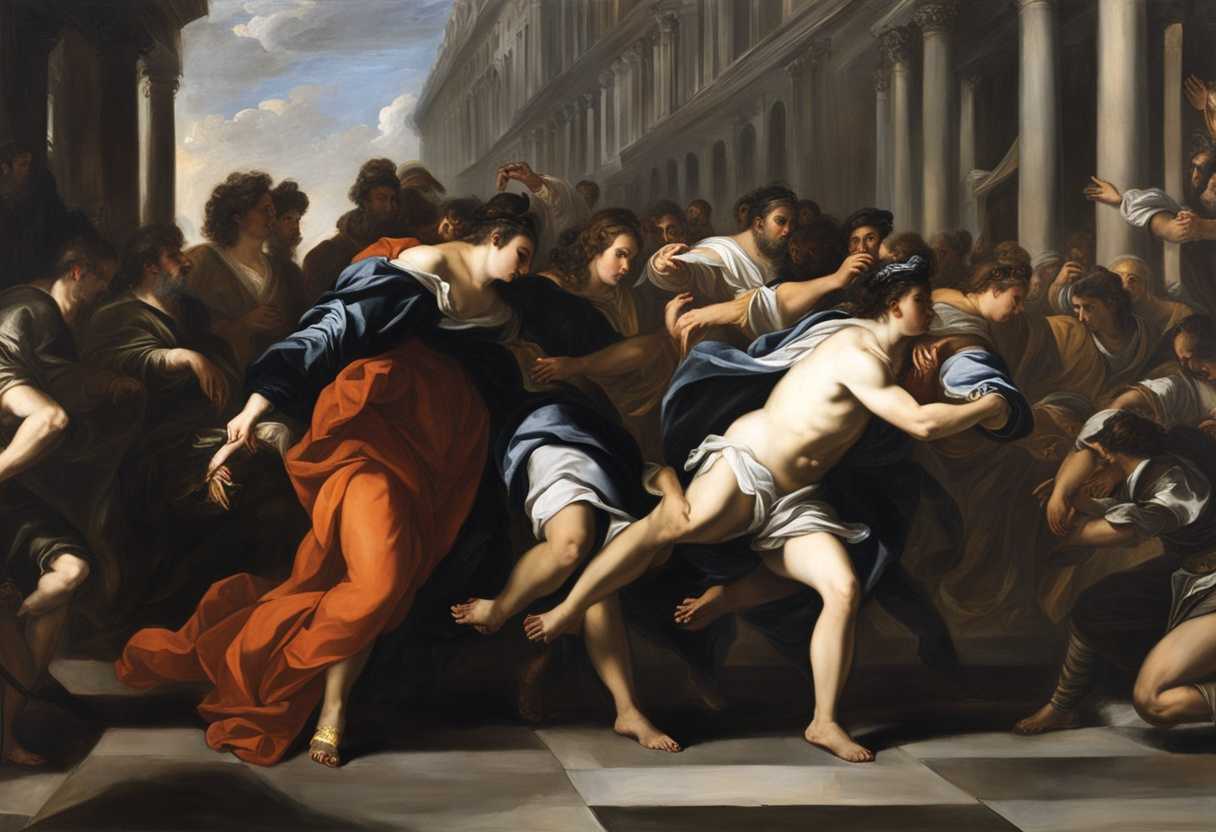
In Ezekiel chapter 7, the prophet Ezekiel is standing in the midst of a bustling marketplace in the city of Jerusalem. The scene is chaotic and filled with noise as merchants shout out their wares and customers haggle over prices. The air is thick with the smell of spices, incense, and livestock.
Ezekiel is surrounded by a diverse group of people – from wealthy merchants in fine robes to humble farmers in tattered clothing. Some are there to buy food for their families, while others are looking to make a profit from their goods. The prophet’s presence in the marketplace draws attention, as his reputation for delivering messages from God has spread throughout the city.
As Ezekiel watches the transactions taking place around him, he is struck by the greed and corruption that has taken hold of the people of Jerusalem. He knows that judgment is coming upon the city for their sins, and he is filled with a sense of urgency to deliver God’s warning to the people. Amidst the chaos of the marketplace, Ezekiel raises his voice to proclaim the impending destruction that will come upon them if they do not repent.
What is Ezekiel 7:19 about?
This verse paints a vivid picture of a drastic change in the value system and priorities of individuals. The act of throwing silver into the streets, along with considering gold as unclean, signifies a complete rejection of material wealth and possessions. It suggests a shift from valuing material possessions to valuing spiritual or moral values. This verse stresses the futility and worthlessness of worldly riches in comparison to more significant spiritual or ethical principles.
Have you ever thought about the true value of material possessions in your life? How much of your identity and worth do you attach to the things you own? This verse challenges us to reflect on what truly holds value and significance in our lives and to consider whether we are placing too much importance on material wealth at the expense of more important virtues like kindness, compassion, and justice. It prompts us to question our relationship with material possessions and encourages us to reassess our priorities to ensure they align with deeper, more meaningful values.
Understanding what Ezekiel 7:19 really means
In the book of Ezekiel, specifically in chapter 7, we find a prophecy foretelling the impending judgment on Israel. The nation’s sins and idolatry have provoked divine wrath, and Ezekiel 7:19 highlights the futility of wealth in the face of this impending judgment. The verse paints a vivid picture of desperation as it describes people throwing their silver into the streets and treating their gold as unclean, emphasizing that material riches hold no value in the eyes of God’s impending judgment.
To truly grasp the weight of Ezekiel 7:19, we must delve into the historical context of Israel’s disobedience and idolatry. The nation had strayed far from God’s commands, engaging in practices that provoked divine anger. The looming Babylonian exile served as a stark reminder of the consequences of forsaking God. Ezekiel’s message resonates with broader themes of God’s certain judgment and the urgent call to repentance before it’s too late.
The key phrases in Ezekiel 7:19 carry profound meanings that transcend the material realm. “They will throw their silver into the streets” symbolizes the utter worthlessness of material wealth in the face of divine reckoning. “Their gold will be treated as a thing unclean” underscores the radical shift in perception, where even the most precious of metals lose their value in times of crisis. The verse’s stark declaration that silver and gold cannot deliver from the wrath of the Lord serves as a sobering reminder of the limitations of earthly riches.
Drawing parallels from other biblical passages enriches our understanding of Ezekiel 7:19. In Matthew 6:19-21, Jesus urges storing treasures in heaven rather than on earth, highlighting the eternal value of spiritual investments. Proverbs 11:4 echoes the sentiment that wealth is futile in the day of wrath, emphasizing the redemptive power of righteousness. James 5:1-3 issues a warning to the rich about the impending misery due to their misplaced trust in hoarded wealth.
The relevance of Ezekiel 7:19 extends beyond its historical context, speaking directly to the modern-day obsession with material wealth. In a world consumed by consumerism and the pursuit of riches, this verse serves as a poignant reminder to prioritize spiritual well-being over material possessions. It challenges us to reassess our values and consider where true fulfillment lies.
Consider the story of a successful businessperson who, amidst an economic downturn, lost everything they had amassed. In that moment of crisis, they discovered that their wealth offered no solace or security. Turning to faith and community, they found a deeper sense of purpose and contentment that transcended material possessions. This anecdote mirrors the timeless truth conveyed in Ezekiel 7:19, urging us to seek lasting treasures that endure beyond earthly wealth.
In conclusion, Ezekiel 7:19 compels us to reflect on our priorities and reevaluate the worth we ascribe to material wealth. It prompts us to consider the transient nature of earthly riches and the enduring value of spiritual investments. Let us heed the wisdom of this verse, choosing to build our lives on foundations that withstand the tests of time and aligning our pursuits with God’s eternal truths.
Do we prioritize material wealth over spiritual values?
The verse highlights the fleeting nature of material wealth and possessions. It emphasizes how silver and gold will not be able to provide any form of comfort or security in times of distress or turmoil. This notion suggests that putting too much emphasis on material wealth may lead to disappointment and a false sense of security.
On the other hand, spiritual values such as compassion, kindness, empathy, and love are enduring and provide a deeper sense of fulfillment and purpose in life. Prioritizing these spiritual values over material wealth can lead to a more meaningful and balanced existence, contributing to one’s overall well-being and happiness. The verse ultimately serves as a reminder to focus on cultivating spiritual values that enrich our lives and relationships with others, rather than becoming overly attached to material possessions and wealth. Prioritizing spiritual values can help us experience a sense of inner peace and contentment that transcends the fleeting nature of material wealth.
Application
Think of your life as a finely balanced scale between work and family. Are you tipping it toward fleeting wealth or lasting values? Ezekiel 7:19 pushes us to rethink what we chase every day. Prioritize spiritual richness and righteousness over mere material gains. Will you let God guide your choices instead of being caught in the endless cycle of acquiring more?

Reverend Michael Johnson is an experienced Church Minister with a profound expertise in spirituality and guidance. With a serene presence and a compassionate heart, he has faithfully served his congregation for over 20 years, leading them on a spiritual journey towards inner peace and enlightenment. Reverend Johnson’s extensive knowledge of religious philosophies and profound understanding of human nature have made him a trusted confidant and mentor to many, as he seamlessly weaves his profound wisdom into life teachings. Reverend Johnson’s calming demeanor and empathetic nature continue to uplift and heal souls, nurturing a sense of unity and tranquility within his community.