
Ezra 10:26-29 is about the Israelites confessing and repenting for their intermarriage with foreign women, symbolizing the need for spiritual purity and allegiance to God.
26 and of the sons of Elam, Jeshaiah the son of Athaliah, and with him 70 males.
27 Of the sons of Zattu, Elioenai, Eliashib, Mattaniah, Jeremoth, Zabad, and Aziza.
28 Of the sons of Bebai, Jehohanan, Hananiah, Zabbai, and Athlai.
29 And of the sons of Bani, Meshullam, Malluch, Adaiah, Jashub, Sheal, and Jeremoth.
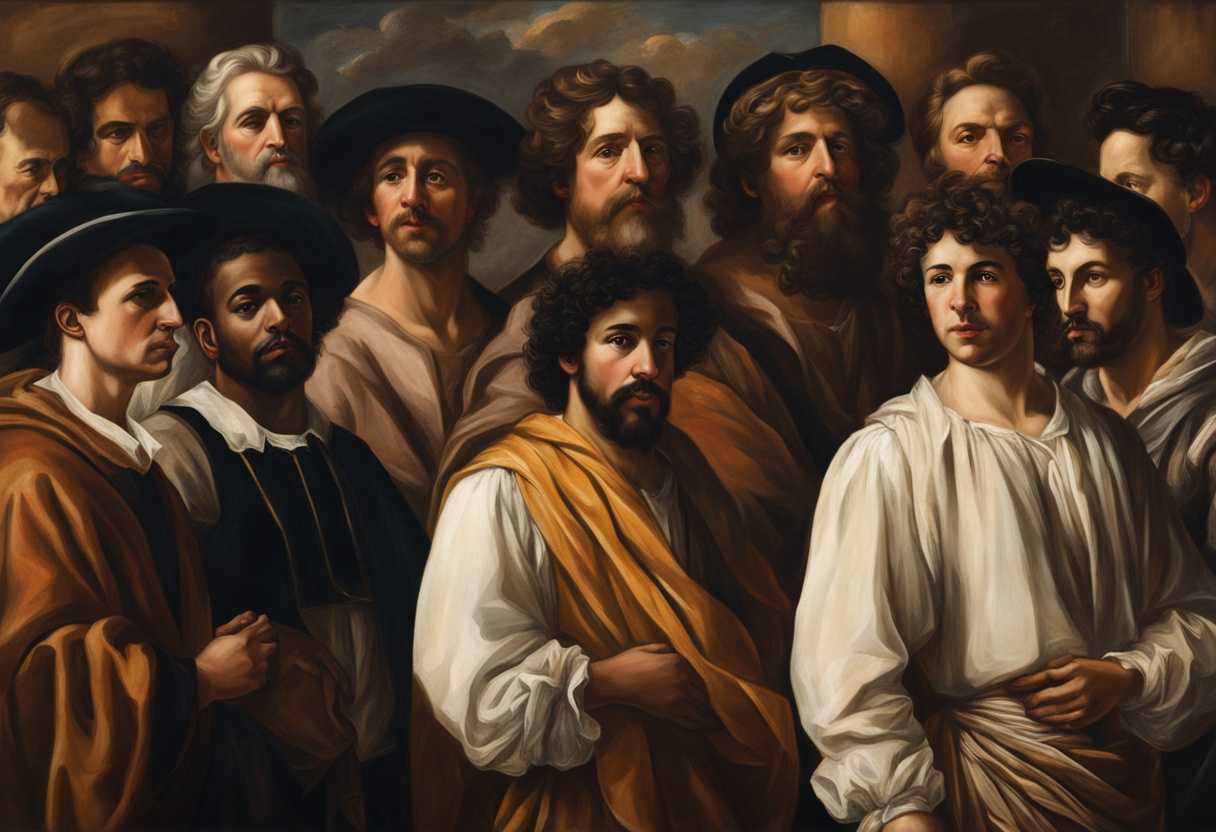
Setting the Scene for Ezra 10:26-29
In Ezra chapter 10, we find a scene unfolding in the courtyard of the temple in Jerusalem. The sun is setting, casting a warm golden glow over the gathered group of Israelites. Ezra, the scribe and priest, stands at the center, his face etched with concern and determination. Surrounding him are the repentant Israelites who have assembled in response to his call for them to confess their sins and separate themselves from their foreign wives.
Among the crowd, we see individuals like Shecaniah, a prominent leader who steps forward to address Ezra, acknowledging the people’s guilt and committing to follow through with the necessary actions to make things right with God. The atmosphere is heavy with emotion as families are torn apart, husbands bidding farewell to wives who they can no longer remain with due to the laws of God. The courtyard is filled with a mix of sorrow, resolve, and a glimmer of hope for a renewed relationship with their Creator. As the evening progresses, prayers are lifted up, and sacrifices are made, marking a turning point in the spiritual journey of these repentant Israelites.
What is Ezra 10:26-29 about?
Priests and Levites are making a difficult decision to divorce their foreign wives in Ezra 10:26-29. This passage reflects a period in Israel’s history when they were striving to remain faithful to their covenant with God. The priests and Levites realized that their marriages to foreign women were not in alignment with God’s commands to maintain purity and loyalty to Him. Their actions as leaders within the community symbolized a collective effort to purify their society and renew their commitment to following God’s laws. We dive deeper into these verses, prompting us to reflect on the complexities of upholding religious principles in the face of personal relationships. The priests and Levites were faced with a moral dilemma that required them to prioritize their spiritual obligations over their individual desires. This serves as a powerful reminder of the challenges that arise when our faith and personal choices come into conflict. The decision made by these religious leaders underscores the importance of seeking alignment between our beliefs and actions, even when it involves making sacrifices or facing difficult consequences. The narrative in Ezra 10:26-29 ultimately conveys a message of spiritual devotion and the willingness to make sacrifices for the sake of faithfulness to God. By examining this passage, we encourage contemplation of the ways in which we navigate our own relationships and commitments in light of our religious beliefs. It prompts us to consider the implications of our choices and the importance of living with integrity and obedience to our faith, even when it requires making challenging decisions.
Understanding what Ezra 10:26-29 really means
The Book of Ezra provides a historical account of the return of Jewish exiles from Babylon and the reconstruction of the Temple in Jerusalem. In Ezra 10, the focus shifts to the issue of intermarriage between the Israelites and neighboring nations, a practice deemed contrary to God’s commandments. Verses 26-29 specifically call out individuals who had taken foreign wives, urging them to repent and separate from these unions. This highlights the communal nature of the transgression and emphasizes the need for collective repentance among the Israelites.
“The sons of Elam” signifies a particular family or clan within Israel, emphasizing the communal aspect of the transgression. The phrase “had taken foreign wives” underscores the central issue at hand, highlighting the potential for these marriages to lead the Israelites astray from their covenant with God. When it mentions that “they gave their hands in pledge to put away their wives,” it shows the seriousness with which they approached repentance, making a solemn commitment to rectify their wrongs.
Related biblical passages like Deuteronomy 7:3-4, Nehemiah 13:23-27, and Malachi 2:11 further emphasize the prohibition against intermarriage with foreign nations and the spiritual implications of such unions. Today, this passage serves as a reminder of the importance of faithfulness and the need to avoid influences that may compromise one’s values and beliefs. It prompts individuals to evaluate relationships and influences that could potentially lead them away from their spiritual commitments.
Consider a scenario where a young professional faces ethical challenges in their workplace. Initially conforming to unethical practices to fit in, they eventually realize the impact on their integrity and faith. Inspired by Ezra 10, they choose to take a stand, even if it means making significant sacrifices like changing jobs or confronting colleagues. This decision, though difficult, leads to a renewed sense of peace and alignment with their values.
In conclusion, Ezra 10:26-29 serves as a poignant reminder of aligning our lives with our faith and being willing to make tough choices to maintain that alignment. It prompts reflection on relationships and influences, ensuring they support rather than hinder our spiritual journey. The passage also underscores the value of community in holding each other accountable and supporting one another in living out our faith.
How can we show genuine repentance for our sins?
Genuine repentance for our sins involves taking concrete steps to rectify our wrongdoings. This may include seeking forgiveness from those we have wronged, making amends for the harm caused, and actively striving to change our behavior and avoid repeating the same mistakes. When we truly repent, we demonstrate humility, sincerity, and a genuine desire to make things right.
Repentance also requires a deep sense of remorse and regret for our sins. It involves acknowledging our faults and taking responsibility for our actions, without making excuses or shifting blame onto others. True repentance involves a sincere commitment to self-reflection, introspection, and spiritual growth, as we strive to become better individuals and live in accordance with our values and beliefs. Genuine repentance entails seeking guidance and forgiveness from a higher power, acknowledging our shortcomings, and turning to God with a contrite heart. We open ourselves up to God’s forgiveness, grace, and transformative power by humbling ourselves before Him and seeking His mercy and guidance. Through genuine repentance, we can experience healing, redemption, and a renewed sense of purpose and spiritual connection.
Application
Reflect on your path and see where change is needed, just like the Israelites. Are you ready to take the steps toward aligning your life with what God asks of you? Let this message ignite a fire within you and guide you towards a fresh start in your connection with God. Will you respond to the call for change and obedience now?

Reverend Michael Johnson is an experienced Church Minister with a profound expertise in spirituality and guidance. With a serene presence and a compassionate heart, he has faithfully served his congregation for over 20 years, leading them on a spiritual journey towards inner peace and enlightenment. Reverend Johnson’s extensive knowledge of religious philosophies and profound understanding of human nature have made him a trusted confidant and mentor to many, as he seamlessly weaves his profound wisdom into life teachings. Reverend Johnson’s calming demeanor and empathetic nature continue to uplift and heal souls, nurturing a sense of unity and tranquility within his community.